
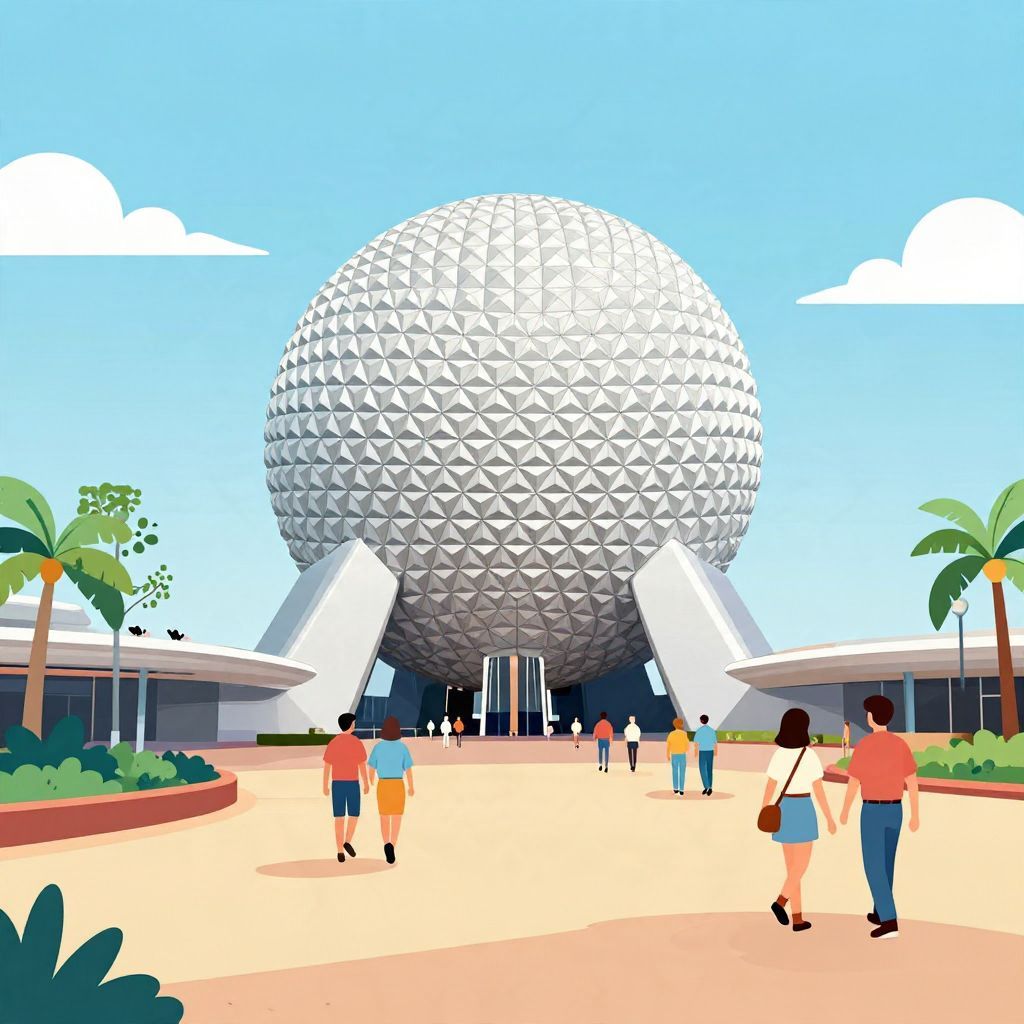
When did Epcot open? The park officially opened on October 1, 1982, at Walt Disney World in Florida. It debuted as the second theme park at the resort and was originally known as EPCOT Center, a name that reflected Walt Disney’s ambitious idea for a futuristic “Experimental Prototype Community of Tomorrow.”
The opening marked a major moment in Disney history and in the development of large-scale themed entertainment. Epcot was designed to combine technology, international culture, and optimism about the future in a way that set it apart from traditional amusement parks.
When Did Epcot Open?
Epcot opened on October 1, 1982. The park opened to the public at Walt Disney World in Lake Buena Vista, Florida, as EPCOT Center. Its debut came 11 years after Walt Disney World first opened in 1971 and introduced a new kind of Disney experience focused less on rides alone and more on education, innovation, and world culture.
Why Epcot Was Created
Epcot grew out of Walt Disney’s larger vision for a planned community and future-oriented showcase. Before his death in 1966, Disney imagined an experimental city that would test new ideas in transportation, urban design, and daily life. That original city concept was never built in the form he described, but parts of the idea later inspired the theme park that opened in 1982.
After Walt Disney’s death, the company chose to adapt the concept into a theme park rather than a working city. The result was a park that blended two major themes: human achievement in science and industry, and the cultures of the nations represented in its World Showcase area.
From city concept to theme park
The original EPCOT idea was much more ambitious than the park that eventually opened. Walt Disney imagined a living community where new technologies could be tested and where residents would experience constant innovation. That plan was not carried forward as a city after his death, partly because of the scale, cost, and practical challenges involved.
Instead, Disney executives transformed the name and spirit of the project into a theme park that could still communicate progress, imagination, and international cooperation. This shift is important historically because it shows how Disney repurposed a utopian urban idea into a commercial and educational attraction.
What Happened on Opening Day in 1982?
The opening of Epcot on October 1, 1982, was a major public event. The park launched with two principal sections: Future World and World Showcase. Future World focused on technology, science, and human progress, while World Showcase featured pavilions representing different countries and cultures.
Opening day also included ceremonies and a strong emphasis on the park’s educational mission. Unlike the more whimsical tone of Magic Kingdom, Epcot was presented as a place where visitors could learn while being entertained. That approach reflected early-1980s confidence in technology and global exchange.
The original layout
- Future World highlighted innovation, communication, energy, transportation, and imagination.
- World Showcase opened with several national pavilions, each designed to evoke the architecture, food, and cultural identity of a country.
- The park’s central icon, Spaceship Earth, became its visual symbol and one of its best-known attractions.
How Epcot Fit Into Walt Disney World History
Epcot was the second theme park to open at Walt Disney World, following the Magic Kingdom in 1971. Its opening expanded the resort from a single fantasy park into a broader destination with multiple experiences. This was a significant step in Disney’s strategy, because it encouraged longer stays and made the resort a more varied tourist destination.
In historical terms, Epcot also represented a change in what a theme park could be. Rather than relying only on fairy tales and thrill rides, it used exhibitions, pavilions, and immersive environments to present ideas about science, society, and the wider world. That made it distinctive even among Disney parks.
Why the opening mattered
The 1982 opening mattered for three main reasons. First, it confirmed Disney’s ability to build a second major park at Walt Disney World. Second, it showed that a theme park could be organized around ideas as well as entertainment. Third, it helped establish the resort as a major cultural and economic force in central Florida.
The Historical Timeline of Epcot’s Opening
The story of Epcot’s opening is best understood as a sequence of planning, redesign, and launch. The park did not appear suddenly in 1982; it was the result of years of corporate planning and a long transformation of Walt Disney’s original vision.
- 1960s: Walt Disney develops his ideas for a futuristic planned community and experimental city.
- 1966: Walt Disney dies, leaving the city concept without its original champion.
- 1970s: Disney executives rework the idea into a theme park for Walt Disney World.
- October 1, 1982: Epcot officially opens to the public as EPCOT Center.
- Later years: The park evolves, with attractions and areas changing over time while retaining its core identity.
What Did Epcot Mean in 1982?
In 1982, Epcot was widely understood as a park about the future. Its original name, EPCOT Center, signaled that it was intended as a kind of showcase or hub for ideas rather than a conventional amusement park. The term “center” suggested a place for exhibits, demonstrations, and learning.
The park’s opening reflected a particular moment in American culture. The early 1980s were marked by interest in computers, communications, energy systems, and global competition. Epcot tapped into that atmosphere by presenting technology as exciting, useful, and hopeful.
Future World and World Showcase
The two-part structure of the park was central to its identity. Future World looked forward, emphasizing progress and innovation. World Showcase looked outward, presenting national pavilions that offered visitors a stylized encounter with different cultures. Together, they gave Epcot a unique identity that no other Disney park had at the time.
This dual structure also reveals something about the park’s historical moment. The early 1980s were a period when many Americans were fascinated by both technological advancement and international awareness. Epcot translated those interests into a physical experience.
How Epcot Changed After Opening
Although Epcot opened in 1982, it did not remain frozen in that form. Like most major theme parks, it changed over time as attractions were updated, replaced, or reimagined. Some original features disappeared, while others were redesigned to fit new audiences and technologies.
These changes do not erase the importance of the opening date. Instead, they show how theme parks evolve while still preserving a historical core. Epcot’s 1982 debut remains the key moment when the park’s identity was first established.
Why the name changed in common usage
For many years, the park was officially called EPCOT Center. Over time, the name was shortened in everyday use to Epcot, and the park’s branding gradually shifted. This reflected broader changes in Disney’s presentation of the park, especially as the company moved away from the highly educational tone of the original concept.
Even so, the park’s opening in 1982 remains the foundational date for understanding its history. Whether called EPCOT Center or Epcot, the park began as a bold attempt to turn a futuristic idea into a public attraction.
Historical Significance of Epcot’s Opening
Epcot’s opening is significant because it shows how entertainment companies can shape public ideas about the future. The park was not a neutral museum or a scientific institution, but it did present technology, global exchange, and human ingenuity as worthy of celebration. In that sense, it was both a business venture and a cultural statement.
It also matters because it preserved part of Walt Disney’s original legacy in a new form. The park did not become the city he once imagined, but it carried forward his belief that design, innovation, and storytelling could improve how people experience the world.
Lasting influence
Epcot influenced later theme park design by proving that a park could be organized around broad themes like science, culture, and international identity. Its opening helped expand the idea of what themed entertainment could do, moving beyond pure fantasy into education, exhibition, and conceptual storytelling.
Quick Answer: When Did Epcot Open?
Epcot opened on October 1, 1982, at Walt Disney World in Florida. It opened as EPCOT Center and was designed around two themes: future-oriented innovation and international culture. Its debut marked a major milestone in Disney history and in the evolution of modern theme parks.
If you are exploring Disney history further, you may also want to read about the opening of Walt Disney World and the development of Disney theme parks. Epcot’s 1982 debut remains one of the clearest examples of how a historical idea can be reshaped for a new era while still preserving its original spirit.