
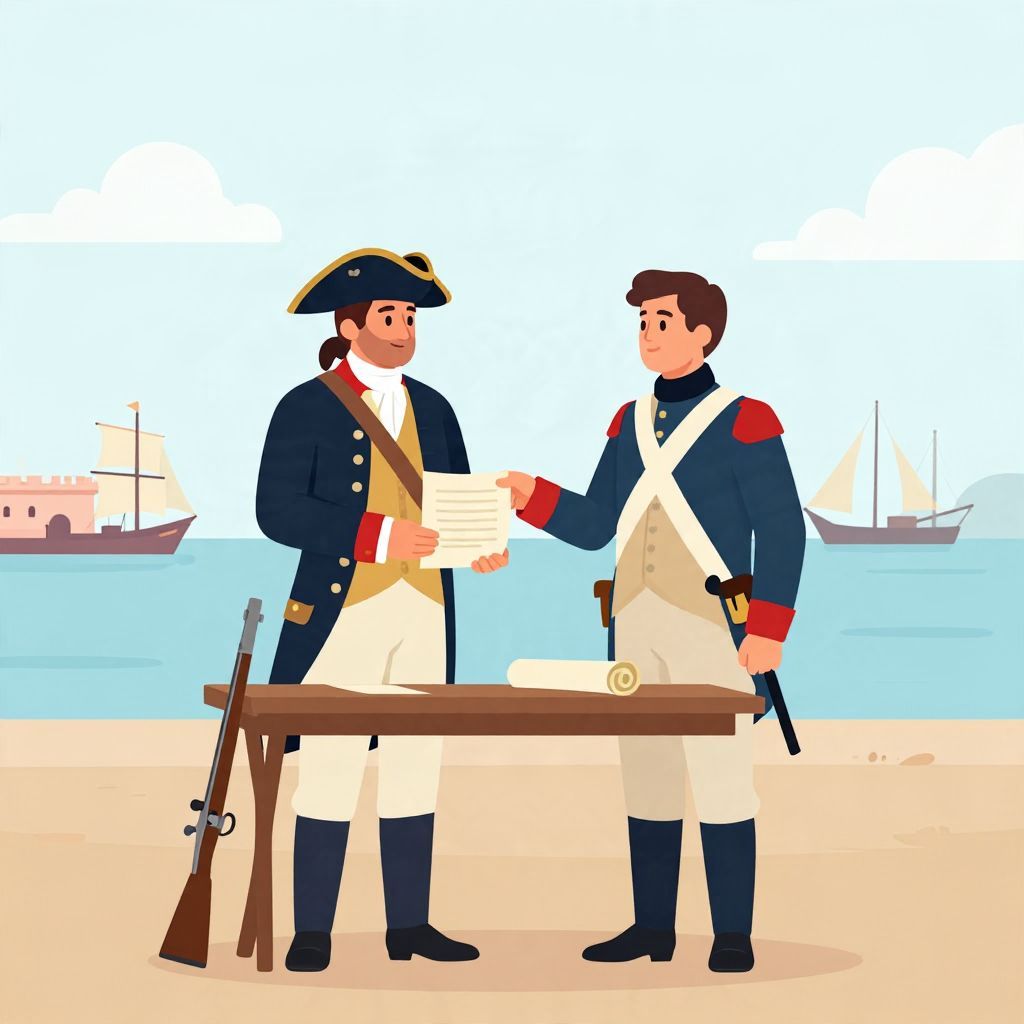
The Revolutionary War ended in stages, but the fighting that secured American independence effectively stopped in 1781 after the British surrender at Yorktown. The war was not officially over, however, until the Treaty of Paris was signed on September 3, 1783. That treaty recognized the United States as an independent nation and set the terms for peace with Great Britain.
So, if you ask when the Revolutionary War ended, the most precise answer is: 1783. If you mean the decisive military end of the conflict, the key turning point was October 19, 1781, when British forces under Lord Cornwallis surrendered at Yorktown.
When Did Revolutionary War End?
The Revolutionary War ended officially on September 3, 1783, when the United States and Great Britain signed the Treaty of Paris. The war’s decisive military conclusion came earlier, with the British surrender at Yorktown on October 19, 1781. In other words, the fighting largely ended in 1781, but peace was not formally secured until 1783.
Why There Are Two End Dates
People often give different answers because wars can end in more than one way. A battlefield victory may make further fighting unlikely, but a war is not usually considered finished until a formal peace agreement is signed. For the Revolutionary War, Yorktown ended Britain’s ability to continue the conflict effectively, while the Treaty of Paris legally ended it.
Military end vs. legal end
- Military end: October 19, 1781, at Yorktown.
- Legal end: September 3, 1783, with the Treaty of Paris.
- Practical end: Most large-scale fighting stopped after Yorktown, though smaller actions and uncertainty continued before peace was finalized.
Key Timeline of the Revolutionary War
The war unfolded over eight years, beginning with open conflict in 1775 and ending formally in 1783. The timeline helps explain why the final date can seem confusing: the struggle moved from battles in the colonies to diplomacy in Europe, where the peace was negotiated.
- April 19, 1775: Fighting begins at Lexington and Concord.
- July 4, 1776: The Declaration of Independence is adopted.
- 1777: American victory at Saratoga helps win French support.
- 1778: France enters the war as an American ally.
- October 19, 1781: Cornwallis surrenders at Yorktown.
- November 30, 1782: Preliminary peace articles are signed.
- September 3, 1783: The Treaty of Paris is signed.
- April 12, 1784: Britain ratifies the treaty, completing the peace process on its side.
What Happened at Yorktown in 1781?
Yorktown was the decisive campaign of the war. In the autumn of 1781, American and French forces trapped British General Charles Cornwallis at Yorktown, Virginia. With the French navy blocking escape by sea and combined land forces surrounding the town, Cornwallis surrendered his army. This did not instantly create peace, but it made Britain far less willing to continue the war.
Why Yorktown mattered
Yorktown mattered because it showed that Britain could no longer easily defeat the rebellion. The British public and government had already grown weary of the war, which was expensive and difficult to sustain across the Atlantic. After Yorktown, negotiations became the realistic path forward.
The Treaty of Paris and the Official End of the War
The Treaty of Paris was the document that formally ended the Revolutionary War. Signed on September 3, 1783, it recognized the independence of the United States and established the boundaries of the new nation. It also addressed fishing rights, debts, and the evacuation of British troops from American territory.
Important terms of the treaty
- Great Britain recognized the United States as independent.
- American territory was extended to the Mississippi River in the west.
- Britain agreed to withdraw its remaining troops.
- Both sides were to recommend the return of confiscated property, though enforcement was uneven.
- Debts owed to British creditors were to remain payable.
The treaty was not just a symbolic document. It created the legal framework for peace and shaped the future borders and diplomacy of the United States.
Who Signed the Treaty of Paris?
The American peace commissioners were Benjamin Franklin, John Adams, and John Jay. They negotiated with British representatives in Paris. Their work reflected both military realities and diplomatic strategy, especially the fact that France, Spain, and the Netherlands were also involved in the wider conflict against Britain.
Diplomatic context
The war was part of a broader international struggle. France supported the American cause to weaken Britain, and that alliance was crucial in bringing the war to a close. The peace negotiations were therefore not just about the colonies; they were also about European power politics.
Did the Revolutionary War End on One Day?
Not exactly. Historians usually distinguish between the end of major combat, the signing of preliminary peace terms, and the final ratification of the treaty. This is why the war can be described as ending in 1781, 1782, or 1783 depending on the context. For most purposes, 1783 is the correct answer to “When did the Revolutionary War end?”
Different ways to frame the end
- For military history: Yorktown in 1781 is the key date.
- For diplomacy and law: September 3, 1783, is the official end.
- For everyday colonial life: the transition was gradual, as news and troop withdrawals took time to spread.
What Changed After the War Ended?
The end of the Revolutionary War created a new political reality. The thirteen former colonies became an independent republic, but independence also brought major challenges. The new nation had to build governments, manage debt, define its borders, and decide how power would be shared between the states and a central authority.
Immediate consequences
- British troops gradually left American territory.
- American leaders began the difficult work of governing under the Articles of Confederation.
- Questions about western lands, trade, and national unity became urgent.
- The war’s outcome inspired later democratic and republican movements, though the new nation still excluded many people from political rights.
The war also left unresolved tensions. Loyalists who had supported Britain faced uncertainty, enslaved people sought freedom in different ways, and Native nations confronted expanding American settlement. So while the war ended in 1783, its consequences continued for decades.
Historical Facts About the Revolutionary War’s End
A few facts help clarify the end of the war and correct common misunderstandings. The war did not end with the Declaration of Independence in 1776, because that document declared independence but did not secure it. Nor did Yorktown alone legally end the war, because formal peace still had to be negotiated and signed.
Fast facts
- War began: April 19, 1775
- Independence declared: July 4, 1776
- British surrender at Yorktown: October 19, 1781
- Preliminary peace terms: November 30, 1782
- Treaty of Paris signed: September 3, 1783
- British ratification: April 12, 1784
So, When Did the Revolutionary War End?
The best single answer is September 3, 1783, when the Treaty of Paris was signed and the Revolutionary War officially ended. If you are referring to the moment the British military cause effectively collapsed, then October 19, 1781, at Yorktown, is the most important date. Both matter, but 1783 is the formal end of the war.
For more context on the broader historical setting, you may also be interested in what western civilization is and other general history topics. The Revolutionary War’s end marked not only the birth of the United States, but also the beginning of a long struggle to define what that independence would mean.