
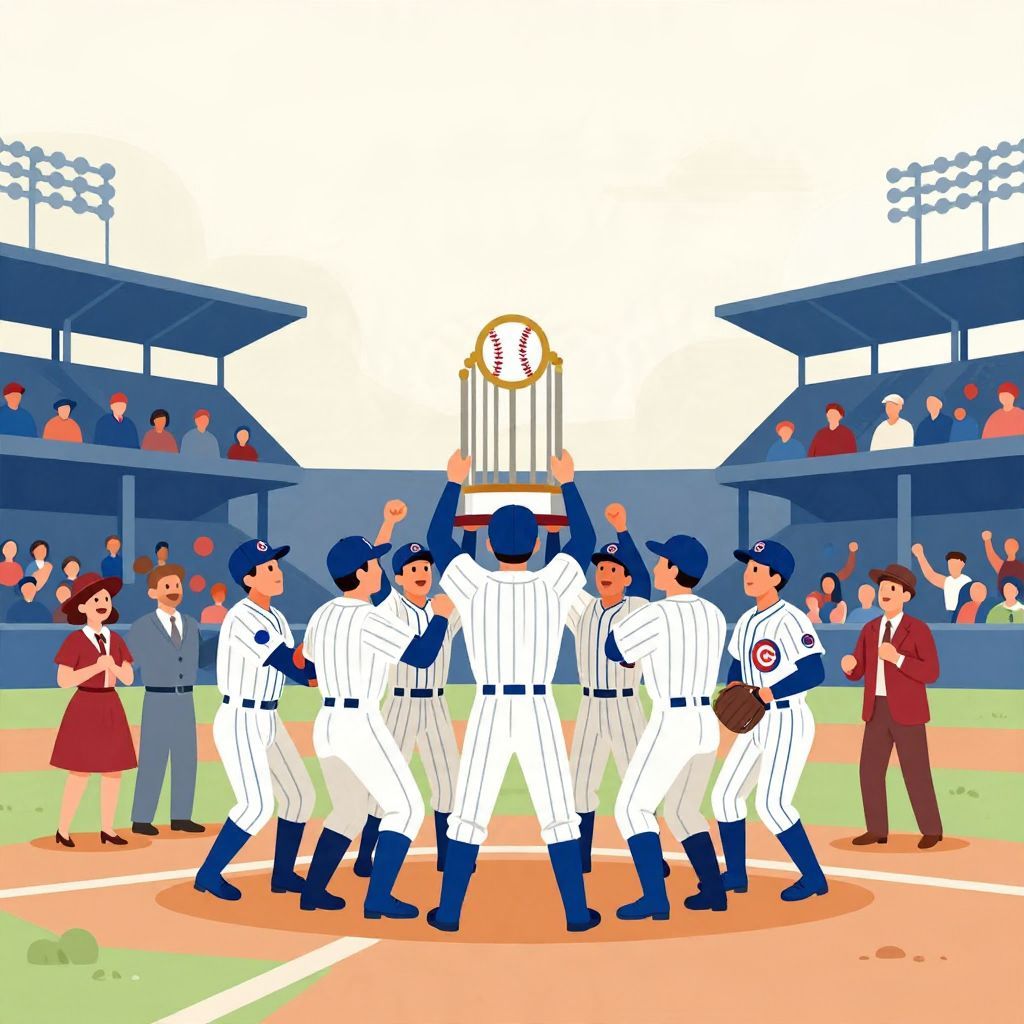
When did the Cubs win the World Series? The Chicago Cubs won the World Series on November 2, 2016, defeating the Cleveland Indians in Game 7 of the Fall Classic. It was one of the most famous championships in American sports history because it ended a title drought that had lasted since 1908.
The 2016 victory was more than a single game result. It capped a dramatic postseason run, revived a long-suffering fan base, and became a major cultural moment in Chicago and beyond.
When did the Cubs win the World Series?
The Cubs won the World Series on November 2, 2016, when they beat the Cleveland Indians 8–7 in Game 7 at Progressive Field in Cleveland. Chicago had last won the championship in 1908, so the 2016 title ended a 108-year drought and is widely remembered as one of baseball’s most historic moments.
The 2016 World Series in context
The 2016 World Series was the 112th edition of Major League Baseball’s championship series. The Cubs entered the series as the National League champions after defeating the Los Angeles Dodgers in the National League Championship Series. Cleveland, meanwhile, represented the American League after beating the Toronto Blue Jays.
The matchup drew enormous attention because both teams carried long championship droughts. Cleveland had not won the World Series since 1948, while the Cubs’ last title dated to the early 20th century. That made the series especially compelling even before the first pitch was thrown.
Why the Cubs’ title meant so much
For generations, the Cubs were associated with near-misses, heartbreak, and the idea of “next year.” The team’s history included the famous 1969 collapse, the 1984 and 2003 postseason disappointments, and years of frustration at Wrigley Field. By 2016, the championship drought had become part of the team’s identity.
That is why the 2016 win resonated far beyond baseball. It was not simply a championship; it was the end of a long-running historical narrative that had shaped the club’s image for more than a century.
How the 2016 World Series unfolded
The Cubs and Indians played a tense, back-and-forth series that went the full seven games. Chicago took an early lead in the series, Cleveland answered, and the teams traded momentum in a contest that felt increasingly dramatic as it progressed. Game 7 became the decisive chapter.
Key games in the series
- Game 1: Cubs won 6–0.
- Game 2: Indians won 7–2.
- Game 3: Cubs won 5–1.
- Game 4: Indians won 7–2.
- Game 5: Indians won 7–2.
- Game 6: Cubs won 9–3.
- Game 7: Cubs won 8–7 in extra innings.
That sequence shows how evenly matched the teams were. Neither side could fully seize control, and the championship remained undecided until the final game went beyond nine innings.
Game 7 and the rain delay
Game 7 is remembered not only for the score, but also for the suspense surrounding it. A rain delay interrupted play after the ninth inning, briefly pausing what was already an emotionally charged night. When the game resumed, the Cubs pushed ahead in extra innings and held on for the victory.
The extra-inning finish added to the legend of the game. In a season built around the idea of breaking a long curse, the title was decided in the most dramatic way possible.
The historical background of the Cubs’ championship drought
The Cubs’ last World Series title before 2016 came in 1908, when the team was still known as the Chicago Cubs and baseball was a very different sport. That earlier championship also marked the last time the franchise had reached the summit of the game for more than a century.
Over the decades, the Cubs became one of baseball’s most iconic teams precisely because of their repeated failures to win another title. Their drought became a cultural story, passed down through generations of fans and repeated in newspapers, broadcasts, and popular conversation.
The “Curse of the Billy Goat”
One of the most famous explanations for the Cubs’ long drought was the so-called “Curse of the Billy Goat.” According to popular lore, a tavern owner and Cubs fan named William Sianis was asked to leave Wrigley Field with his goat during the 1945 World Series, and he allegedly declared that the Cubs would never win again. This story became part of baseball folklore.
Historically, curses are not evidence-based explanations. The Cubs’ losses over the years were the result of ordinary sporting factors: roster construction, injuries, luck, and strong opponents. Still, the curse narrative mattered because it gave fans a memorable way to frame a long period of disappointment.
Who made the 2016 Cubs champions?
The 2016 Cubs were built around a talented core assembled through strong drafting, development, and trades. Several players and coaches became central to the team’s success, and manager Joe Maddon played a major role in shaping the club’s identity and confidence.
Important figures on the 2016 team
- Joe Maddon – manager, known for his calm and flexible style.
- Anthony Rizzo – first baseman and clubhouse leader.
- Kris Bryant – third baseman and one of the team’s biggest stars.
- Javier Báez – infielder known for his defensive skill and energy.
- Jon Lester – veteran pitcher and key postseason arm.
- Aroldis Chapman – closer who helped stabilize the bullpen late in the year.
The team’s success was not built on one player alone. It came from a balanced roster, strong pitching, and a lineup capable of scoring in different ways. That combination helped the Cubs survive the pressure of October baseball.
Why the 2016 win mattered in baseball history
The Cubs’ 2016 championship is important because it ended one of the longest title droughts in American professional sports. In a sport that places great value on tradition, history, and continuity, the end of a 108-year wait carried symbolic weight far beyond Chicago.
The victory also showed how modern baseball teams are built. The Cubs combined analytics, player development, and veteran leadership in a way that reflected the sport’s evolving strategies. Their title became a case study in how a franchise can rebuild and eventually break through after years of frustration.
A citywide celebration
When the Cubs won, the celebration in Chicago was immediate and massive. Fans gathered at Wrigley Field, in downtown Chicago, and in neighborhoods across the city. The parade and rally that followed were among the largest civic celebrations in Chicago sports history.
For many fans, the emotional power of the moment came from family memory. Grandparents, parents, and children could all share the same victory after hearing stories about the 1908 team for decades. The championship became a rare sporting event that connected multiple generations at once.
Timeline of the Cubs’ road to the title
To understand the 2016 championship, it helps to place it in a broader timeline of the franchise’s history.
- 1908: The Cubs win their previous World Series title.
- 1945: The “Curse of the Billy Goat” story enters Cubs folklore.
- 1969: The Cubs suffer a famous late-season collapse.
- 1984: The team reaches the postseason but falls short.
- 2003: Another painful near-miss deepens the team’s reputation for heartbreak.
- 2015: The Cubs reach the National League Championship Series and signal a new era.
- November 2, 2016: The Cubs win the World Series, defeating Cleveland in Game 7.
This timeline shows that the 2016 title was not an isolated event. It was the result of a long organizational rebuild and a franchise history marked by both loyalty and disappointment.
What happened after the Cubs won?
The 2016 championship changed the way the Cubs were discussed in American sports culture. The team was no longer defined only by failure. Instead, it became a symbol of persistence and the possibility that even the longest droughts can end.
In the years after the win, the Cubs remained a major draw and a central part of Chicago’s sports identity. The title did not erase the team’s history, but it transformed it. The old story of waiting became a story of finally arriving.
Quick answer: the Cubs’ World Series win date
If you are looking for the direct answer, the Cubs won the World Series on November 2, 2016. They defeated the Cleveland Indians in Game 7, 8–7 in extra innings, ending a 108-year championship drought and creating one of the most memorable moments in baseball history.
For readers interested in other major turning points, it can also be useful to compare the Cubs’ 2016 breakthrough with broader historical milestones such as what happened in 2016 and earlier landmark years like what happened in 2010. The Cubs’ victory remains a reminder that history is often made not only by empires and wars, but also by a single game that ends a century of waiting.