
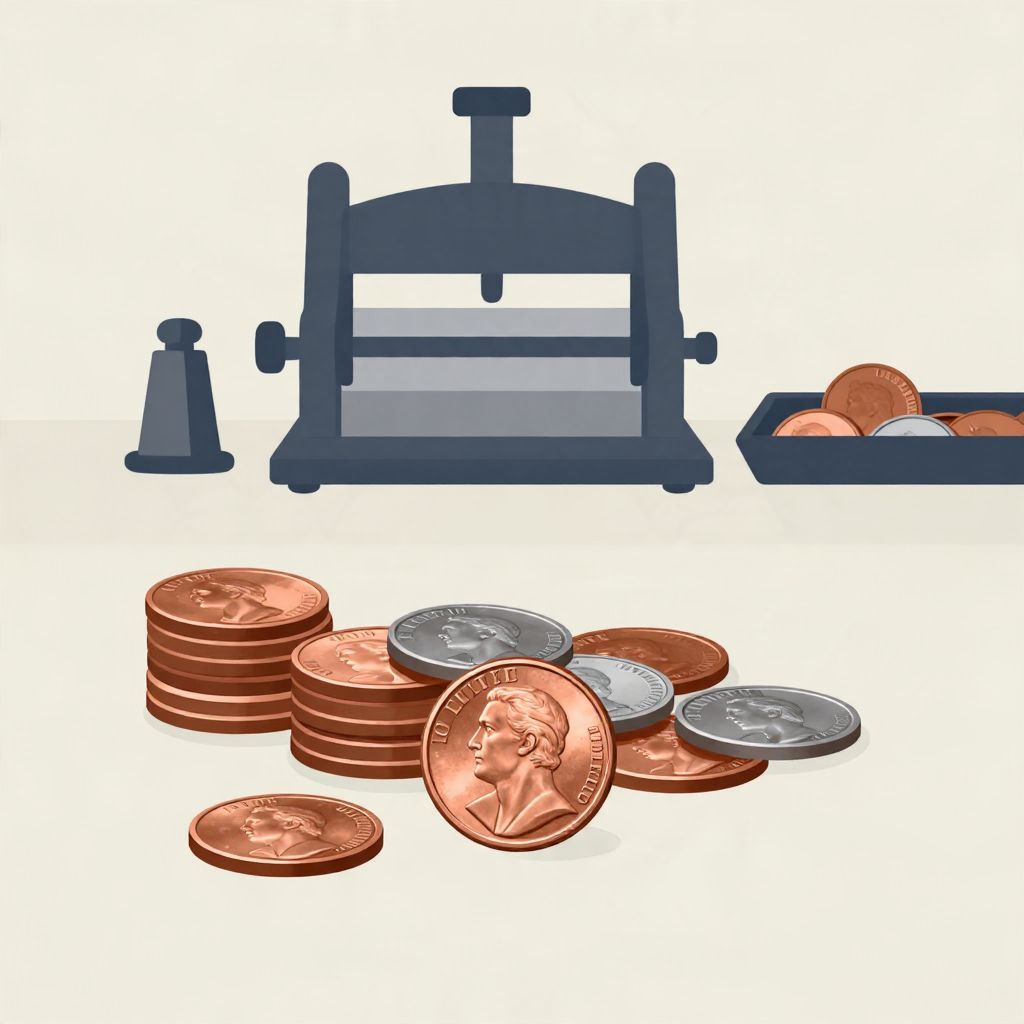
When did they stop making copper pennies? The short answer is that the United States stopped making pennies from pure copper in 1982. After that year, the penny’s core changed to zinc with a thin copper coating, although a few 1982 pennies were still made with the older copper composition during the transition.
That shift was driven by rising metal costs, not by a sudden redesign of the coin’s appearance. The familiar copper-colored penny remained in circulation, but its internal metal changed as the U.S. Mint adapted to economics, manufacturing, and supply concerns.
When did they stop making copper pennies?
The U.S. Mint stopped producing pure copper pennies in 1982. Before that change, pennies were made mostly of copper; afterward, they were made primarily of zinc with copper plating. Because 1982 was a transition year, both compositions exist from that year, which is why some 1982 pennies are more valuable to collectors.
Why the penny changed in 1982
The reason was simple: copper became too expensive relative to the penny’s face value. By the late 1970s and early 1980s, the metal in a penny was approaching, and at times exceeding, one cent in value. Minting coins that cost nearly as much as they were worth made little economic sense, so the government changed the penny’s composition.
The cost problem
For much of U.S. history, the penny was made mostly of copper. That made sense when copper was cheap enough to use in large quantities. But inflation, commodity price changes, and the rising market value of copper made the old formula unsustainable. The Mint needed a cheaper metal that could still be struck efficiently and accepted by the public without changing the coin’s size or color too dramatically.
The switch to zinc
The solution was a copper-plated zinc penny. Zinc was much less expensive than copper, and a thin copper coating preserved the traditional appearance. This allowed the penny to remain recognizable while reducing production costs. The change also simplified the government’s effort to keep the coin in circulation without regularly losing money on each piece produced.
What happened in 1982?
In 1982, the U.S. Mint used two different penny compositions. Most pennies from that year were made of zinc with a copper coating, but some were still struck in the older copper-based alloy. This makes 1982 a key date in U.S. coin history and a point of interest for collectors who study mint marks, weights, and composition varieties.
The two 1982 penny types
- Pre-1982 style: 95% copper and 5% zinc/tin, the traditional composition used for decades.
- Post-change style: 97.5% zinc with 2.5% copper plating, introduced in 1982 and continued afterward.
Because the transition happened during the year rather than on January 1, 1982 pennies are not all the same. Collectors often weigh them or compare varieties to determine which composition they have. The copper pennies are heavier than the zinc ones, which is one reason the difference matters beyond numismatics.
A brief timeline of the U.S. penny
The penny’s metal history reflects changing economics and technology over more than a century. Here is the basic chronology:
- 1793: The first U.S. cents were struck in the early republic, using copper-based metals.
- 1864: The cent’s composition changed during the Civil War era, reflecting wartime metal shortages and shifting mint practices.
- 1909: The Lincoln cent was introduced, becoming one of the most familiar coins in American life.
- 1943: During World War II, steel cents were made temporarily because copper was needed for the war effort.
- 1944–1981: Pennies returned to a mostly copper composition.
- 1982: The Mint shifted to copper-plated zinc, ending regular production of pure copper pennies.
This timeline shows that the penny’s metal has changed several times in response to national needs. The 1982 change was not the first time the U.S. altered its coinage, but it was the most important modern shift in the penny’s everyday composition.
Were pennies ever 100% copper?
Strictly speaking, most U.S. pennies were not 100% copper, even before 1982. The classic pre-1982 penny was usually a bronze-like alloy, commonly described as 95% copper and 5% zinc and tin. In everyday language, however, people still call those older pennies “copper pennies” because copper was by far the dominant metal and gave the coin its characteristic look and feel.
Why the wording matters
When people ask when the U.S. stopped making copper pennies, they usually mean when the Mint stopped making the old copper-based cent and switched to the zinc version. That happened in 1982. If someone uses “copper penny” to mean a penny that is mostly copper, then 1982 is still the right answer. If they mean a penny made of pure copper, the answer is a little more technical: the coin was generally an alloy rather than pure copper even before the switch.
How to tell a copper penny from a zinc penny
For coins from the transition period, the easiest clue is weight. Copper pennies are heavier than zinc pennies. The difference is noticeable to collectors and coin dealers, and it is one reason 1982 pennies are examined so closely.
Common identifying features
- Weight: Copper pennies are heavier than zinc pennies.
- Year: Pennies dated 1982 may be either copper or zinc.
- Appearance: Both types look similar on the surface because both have a copper color.
- Condition: Wear, corrosion, and cleaning can make identification harder.
Because the visual difference is small, collectors often use scales or specialized methods to distinguish them. That practical challenge is part of what makes 1982 pennies such a famous date in U.S. coin collecting.
Why the government did not remove the penny entirely
Changing the metal was easier than eliminating the coin. The penny remained useful for pricing, cash transactions, and public habit, even as debates about its long-term value continued. The government kept the denomination but reduced production costs by changing its composition.
Public habits and economic reality
Coins are not only metal objects; they are also part of everyday commerce and public expectation. Businesses, banks, and consumers were accustomed to the penny’s role in pricing and change-making. A composition change preserved continuity while addressing the Mint’s cost problem. In that sense, the 1982 shift was a compromise between tradition and economics.
Historical significance of the copper penny change
The end of regular copper pennies marks a broader historical trend: governments adapting coinage to market conditions. In earlier centuries, coin metals were often tied to the intrinsic value of the coin itself. By the late 20th century, however, the face value of small coins often mattered more than the metal inside them. The 1982 penny is a clear example of that modern shift.
It also illustrates how ordinary objects can reflect larger historical forces. Inflation, industrial supply chains, and federal budgeting all influenced a coin that millions of people handled without thinking about its composition. The penny’s story is therefore not just about currency; it is about how a modern state manages the practical realities of money.
Common misconceptions about copper pennies
One common misconception is that all older pennies were pure copper. As noted above, that is not quite accurate. Another is that the U.S. “stopped making copper pennies” on a single exact day. In reality, 1982 was a transition year, and both old and new compositions were produced during the changeover.
What collectors should remember
For numismatic purposes, 1982 is the key year to examine closely. For historical purposes, it marks the moment when the penny’s long copper era effectively ended. Both statements are true, depending on whether the question is about official policy or the physical coins themselves.
So, when did they stop making copper pennies?
They stopped making regular copper pennies in 1982, when the U.S. Mint switched the penny’s composition from a mostly copper alloy to copper-plated zinc. Because 1982 was a transition year, a limited number of copper pennies were still produced that year, which is why the date matters so much to collectors and historians alike.
If you want to explore the topic further, you may also find these related articles useful: when pennies stopped being copper and what year they stopped making copper pennies.