
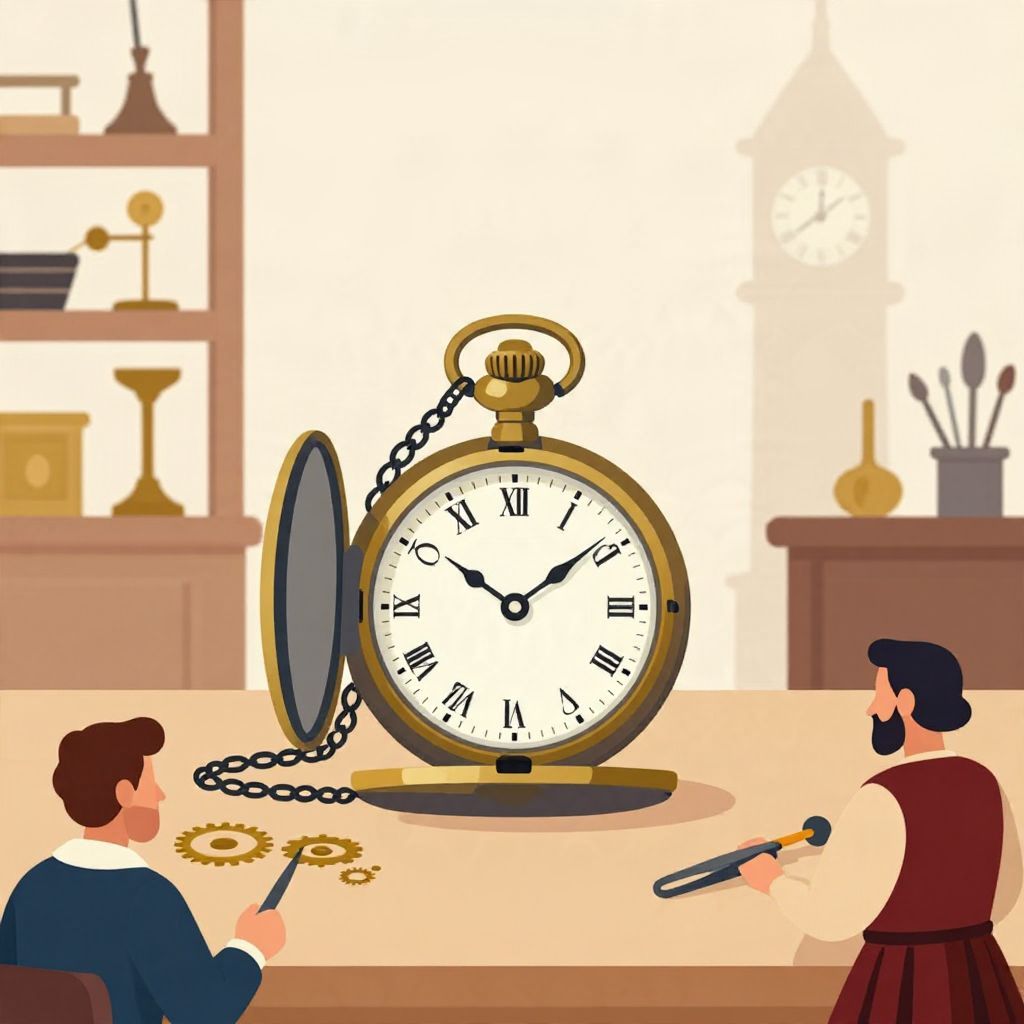
When were watches invented? The shortest accurate answer is that portable timekeeping began in the early 16th century, but the modern watch emerged gradually over several centuries. Early watches were not accurate by today’s standards, and they first appeared as luxury objects for elites rather than everyday tools.
The history of watches is really the history of shrinking clocks: from large mechanical public timekeepers to pocket watches, then wristwatches, and finally the quartz and digital watches of the 20th century. Their invention reflects changing technology, fashion, warfare, and the growing need to measure time more precisely.
When were watches invented?
Watches were invented in the early 1500s, when German clockmakers began making small spring-driven portable timepieces. These early watches were usually worn as pendants or carried in pockets, and they were far less accurate than later watches. The wristwatch, however, did not become common until the late 19th and early 20th centuries.
How the first watches emerged in the 16th century
Before watches, people relied on sundials, water clocks, candles, hourglasses, and large mechanical clocks in towers or churches. The key breakthrough that made watches possible was the mainspring, a coiled spring that could store energy in a small case. This allowed clockmakers to build portable timepieces without weights.
From clocks to portable timekeepers
The earliest watches appeared in central Europe, especially in German-speaking regions, during the first decades of the 1500s. They were often called “clock watches” or “portable clocks” because they were closer to tiny clocks than to precise modern watches. Their cases were usually made of metal and sometimes richly decorated, which made them status symbols as much as practical instruments.
These early devices had a major flaw: they were not very reliable. The balance spring and escapement mechanisms that later improved accuracy had not yet been perfected. As a result, early watches could lose or gain large amounts of time each day. Still, they represented a real technological leap because they made personal timekeeping possible.
The first watches: what they looked like and how they worked
Early watches were often bulky, oval, or drum-shaped, and many were worn on chains. They usually had only an hour hand at first; the minute hand became more common later, as accuracy improved. Because they were expensive and delicate, watches were owned mainly by nobles, wealthy merchants, and courtiers.
Why early watches were so inaccurate
Several technical limits held them back:
- They lacked a reliable balance spring in the earliest period.
- Their movements were affected by position, temperature, and friction.
- They were powered by springs that delivered uneven force.
- Craftsmanship varied widely before standardized production methods developed.
For that reason, early watches were often more decorative than practical. They could signal wealth, learning, or refinement, but they were not yet the dependable everyday tools we associate with watches today.
Important developments that made watches more useful
The story of watches is not a single invention but a sequence of improvements. Several milestones transformed watches from curiosities into accurate instruments.
17th century: the balance spring
One of the most important advances came in the mid-17th century, when the balance spring greatly improved the regularity of portable timekeepers. This development is often associated with the Dutch scientist and inventor Christiaan Huygens, who helped refine the principle in the 1670s. The balance spring made watches far more accurate and practical.
18th century: precision and craftsmanship
During the 1700s, watchmakers improved escapements, gears, jewel bearings, and casing methods. These refinements helped watches become more dependable for navigation, astronomy, and commerce. In Britain, France, Switzerland, and elsewhere, watchmaking became an important craft and industry.
By this period, watches were no longer just luxury ornaments. They were increasingly useful tools for people who needed to coordinate travel, trade, and appointments. As cities grew and economic life became more time-conscious, personal timekeeping mattered more than ever.
19th century: mass production and the pocket watch
In the 1800s, the pocket watch became the standard form of personal timekeeping for many men in Europe and North America. Industrialization made watches cheaper and more widely available. Railways, factories, and expanding business networks created a stronger demand for punctuality and standardized time.
Railroad timekeeping was especially important. Train schedules required far more precision than local church bells or sundials could provide. This helped push watchmaking toward better accuracy and broader ownership. Watches were becoming part of modern industrial life.
When did wristwatches appear?
Although watches were invented in the 1500s, the wristwatch is a later development. Small watches were sometimes mounted on bracelets or worn on the wrist in the 18th and 19th centuries, but these were uncommon and often regarded as feminine accessories or novelty items. The wristwatch became truly important in the late 1800s and early 1900s.
From jewelry to practical tool
Wristwatches gained wider acceptance after military needs changed attitudes. Soldiers, especially during the Boer War and then World War I, needed quick access to time without digging into a pocket. A wristwatch was more practical in combat than a pocket watch, especially for coordinating artillery, movement, and communication.
After World War I, wristwatches spread rapidly among civilians. What had once seemed unusual or even unmanly to some observers became normal, fashionable, and practical. By the 1920s and 1930s, the wristwatch had largely overtaken the pocket watch in everyday use.
How watchmaking changed society
Watches did more than tell time. They helped change how people organized daily life. As watches became more common, time became more exact, more personal, and more disciplined. This shift affected work, travel, schooling, religion, and social behavior.
Time discipline in the modern world
Before portable watches, many communities lived by shared rhythms: sunrise, bells, seasons, and local custom. Watches encouraged a more precise sense of schedule. This mattered in factories, offices, railways, and militaries, where coordination depended on exact time rather than rough estimates.
In that sense, the history of watches is tied to the broader history of modernity. They helped people think of time as a measurable resource that could be saved, spent, and wasted. That cultural change was as important as the mechanical invention itself.
From mechanical watches to quartz and digital timekeeping
The invention of watches did not end with the pocket watch or wristwatch. In the 20th century, new technologies transformed them again. The most important of these was the quartz watch, introduced in the 1960s and commercialized in the 1970s. Quartz crystals vibrate at a highly regular rate, making these watches much more accurate than traditional mechanical watches.
The quartz revolution
Quartz watches were cheaper to produce, easier to maintain, and more precise than many mechanical watches. They helped trigger the so-called Quartz Crisis, which challenged older Swiss mechanical watchmakers and reshaped the global watch industry. Digital watches soon followed, displaying time electronically instead of through hands and gears.
Even so, mechanical watches never disappeared. They remained valued for craftsmanship, design, and tradition. In the modern era, many people wear watches not only to tell time but also as fashion statements, heirlooms, or collector’s items.
So what is the real answer to “when were watches invented”?
If you mean the first portable watches, the answer is the early 16th century. If you mean the modern wristwatch, the answer is much later: it became common in the late 19th and early 20th centuries. And if you mean accurate, mass-produced watches, those belong to the industrial and quartz eras.
That is why historians usually treat watches as a long technological evolution rather than a single invention. The first watch appeared when clockmakers learned to miniaturize timekeeping; the modern watch emerged only after centuries of refinement, social change, and industrial innovation.
Why the invention of watches matters
Watches are one of the clearest examples of how a device can reshape everyday life. They made time personal, portable, and precise. They also reveal how technology develops through layers: invention, improvement, adoption, and reinvention. From Renaissance workshops to battlefields and factories, watches helped define the modern relationship to time.
So, when were watches invented? In their earliest form, in the 1500s. But the watch as most people know it today was the result of centuries of progress, not a single moment. For more on the history of everyday technology, you might also explore related topics such as the history of clocks or the Industrial Revolution.