
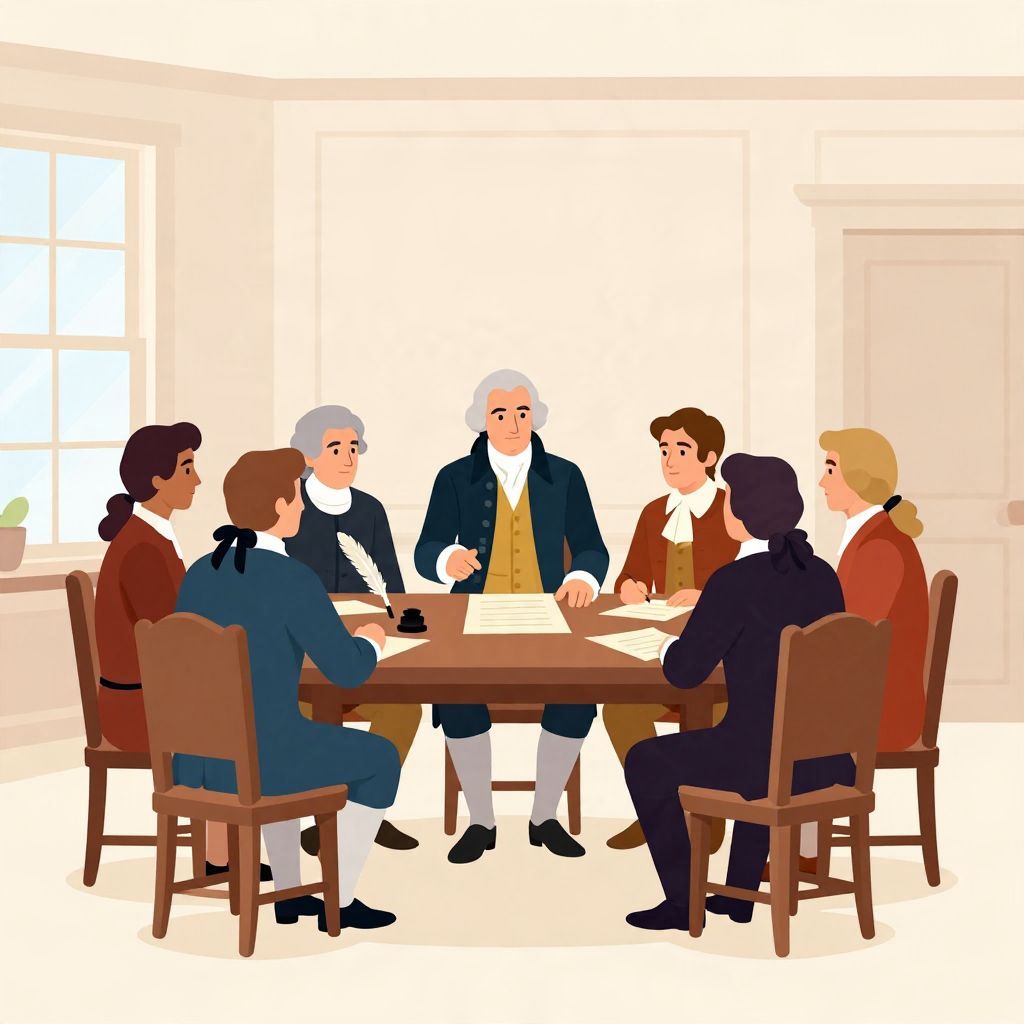
Why is the Declaration of Independence important? Because it did far more than announce that the American colonies were breaking away from Britain. It explained why they believed separation was justified, set out political ideas that would shape the United States, and helped turn a rebellion into a new nation.
Approved on July 4, 1776, the Declaration became one of the most influential political documents in modern history. Its importance lies in both its immediate wartime purpose and its long-term legacy for ideas about rights, government, and equality.
Why Is The Declaration Of Independence Important?
The Declaration of Independence is important because it formally announced that the thirteen American colonies were no longer subject to British rule, justified that decision in political terms, and articulated principles about rights and government that became central to the United States and later democratic movements around the world.
The Historical Problem Behind Independence
By the 1760s and 1770s, relations between Britain and its North American colonies had deteriorated sharply. After the Seven Years’ War, the British government tried to raise revenue and tighten imperial control, while many colonists argued that Parliament was taxing them without proper representation. The conflict was not only about money; it was about authority, rights, and who had the power to govern.
Events such as the Stamp Act, the Townshend duties, the Boston Massacre, and the Boston Tea Party deepened mistrust. Britain responded with punitive measures, and military clashes began in 1775 at Lexington and Concord. By then, many colonists had moved from protest to open resistance. The Declaration emerged from that crisis as a political explanation for a revolution already underway.
What the Declaration Actually Did
The Declaration did three major things. First, it declared independence from Britain. Second, it explained the colonists’ grievances against King George III. Third, it stated the principles that were supposed to justify a government’s legitimacy. In other words, it was both a break-up letter and a political argument.
1. It made independence official
Before July 1776, many colonists were still uncertain about full separation. The Declaration gave the Continental Congress a unified public position. That mattered diplomatically and militarily, because it told the world that the colonies were not simply rebelling for better treatment; they were claiming to be an independent country.
2. It explained why separation was justified
The document listed complaints against the king, including dissolving representative assemblies, interfering with colonial laws, stationing troops, and imposing taxes and courts in ways colonists saw as abusive. These grievances were not random. They were meant to show that the British crown had violated the political rights of the people it ruled.
3. It defined the political theory of the new nation
The most famous part of the Declaration is its statement that governments derive “their just powers from the consent of the governed.” That idea was not invented from nothing, but it was powerfully expressed here. The document argued that when a government becomes destructive of rights, the people may alter or abolish it. This was a radical claim in the eighteenth-century Atlantic world.
The Ideas Behind the Declaration
The Declaration drew on Enlightenment political thought, especially ideas associated with John Locke, who argued that people have natural rights and that government exists to protect them. American revolutionaries adapted these ideas to their own situation. The result was a document that linked independence to a theory of legitimate government rather than to simple resentment or local self-interest.
Natural rights and equality
The Declaration states that “all men are created equal” and are endowed with certain unalienable rights, including “Life, Liberty and the pursuit of Happiness.” Historians generally understand this as a broad political principle, not a description of social reality in 1776. The phrase was powerful, but it coexisted with slavery, restricted voting rights, and inequality for women and many others.
That tension is part of why the Declaration matters historically. It established an ideal that Americans would later use to challenge the nation’s own exclusions. Abolitionists, women’s rights advocates, and civil rights leaders repeatedly returned to the Declaration’s language to argue that the country had failed to live up to its founding claims.
Consent of the governed
The idea that governments require the consent of the governed was especially significant because it challenged monarchy and inherited authority. In the British imperial system, political legitimacy ultimately came from the crown and Parliament. The Declaration instead grounded legitimacy in the people. That shift helped define the United States as a republic rather than a monarchy.
Why July 4, 1776, Became a Turning Point
The Continental Congress voted for independence on July 2, 1776, but the final text of the Declaration was adopted on July 4. That date became the symbolic anniversary of American independence. The document was not the start of the Revolution, but it was the moment when the colonies publicly transformed a political conflict into a national founding story.
It is also important to note that the Declaration did not instantly create a stable country. The Revolutionary War continued until 1783, and the new United States still had to build institutions, win recognition, and settle disputes among states. Even so, the Declaration gave the Revolution a clear purpose and a shared language.
Its Role in the American Revolution
The Declaration mattered in wartime because it helped unify support for independence. A formal declaration made it easier to ask colonists to commit to a long and dangerous war. It also signaled to foreign powers, especially France, that the colonies were serious about becoming a sovereign state.
Foreign recognition was crucial. Once the colonies declared themselves independent, they could seek alliances and loans as a new nation rather than as rebellious subjects. France eventually entered the war as an American ally, and the Declaration helped frame the conflict as an international struggle between a new republic and a great empire.
It changed the meaning of the conflict
Before independence, the war could be portrayed as an internal imperial dispute. After the Declaration, it became a war between two separate political entities. That change influenced diplomacy, recruitment, and morale. It also made compromise harder, because independence was now the stated goal.
Why the Declaration Matters Beyond 1776
The Declaration’s lasting importance lies in how often later generations returned to it. It became a touchstone for debates about liberty, citizenship, and equality. Its language was not always applied fairly, but it provided a standard by which Americans could judge their government.
Influence on later reform movements
In the nineteenth century, abolitionists used the Declaration to argue that slavery contradicted the nation’s founding principles. Women’s rights advocates also pointed to its universal language, even though women were excluded from political rights at the time. In the twentieth century, civil rights leaders continued to invoke the Declaration as evidence that the United States had promised more than it delivered.
Influence beyond the United States
The Declaration also influenced political thought outside America. Its language about rights and popular sovereignty fit into broader Atlantic revolutionary currents that included the French Revolution and later independence movements. It became a model for how a people might justify breaking from an empire by appealing to universal principles rather than lineage or conquest.
What the Declaration Did Not Do
It is easy to treat the Declaration as if it instantly created equality or democracy, but that would be inaccurate. The document did not end slavery, expand voting rights to everyone, or resolve the status of Native nations. In fact, many people living in the new United States remained outside the political community it described.
That gap between principle and practice is one reason historians take the Declaration seriously. It is not important because it perfectly described American society. It is important because it announced ideals that were both revolutionary and unfinished.
Key People Behind the Document
Although Thomas Jefferson is most closely associated with the Declaration, it was a committee project shaped by the Continental Congress. Jefferson drafted the initial text, and others revised it before adoption. John Adams and Benjamin Franklin were among the most prominent members of the drafting committee, but the final document reflected broader congressional debate.
This matters because the Declaration was not the work of a single genius in isolation. It was a political document created through collective action, revision, and compromise. That makes it a better reflection of revolutionary politics than a simple personal manifesto would have been.
Why Historians Still Consider It Important
Historians see the Declaration as important for several connected reasons. It marked the formal birth of the United States as an independent nation. It expressed a theory of government based on rights and consent. It gave the Revolution a moral and political justification. And it created a language that later Americans used to demand a more inclusive democracy.
Its importance is therefore both immediate and symbolic. In 1776, it helped justify independence. Over time, it became a measure of whether the nation was living up to its own ideals. Few documents have had such a strong combination of political force and historical afterlife.
Conclusion
The Declaration of Independence is important because it turned colonial rebellion into a principled claim for self-government, established enduring ideas about rights and legitimacy, and gave the United States a founding statement that still shapes political debate. It was not a perfect document, but it was a transformative one. For related reading, see what two rights are named in the Declaration of Independence and what the Northwest Ordinance was.