
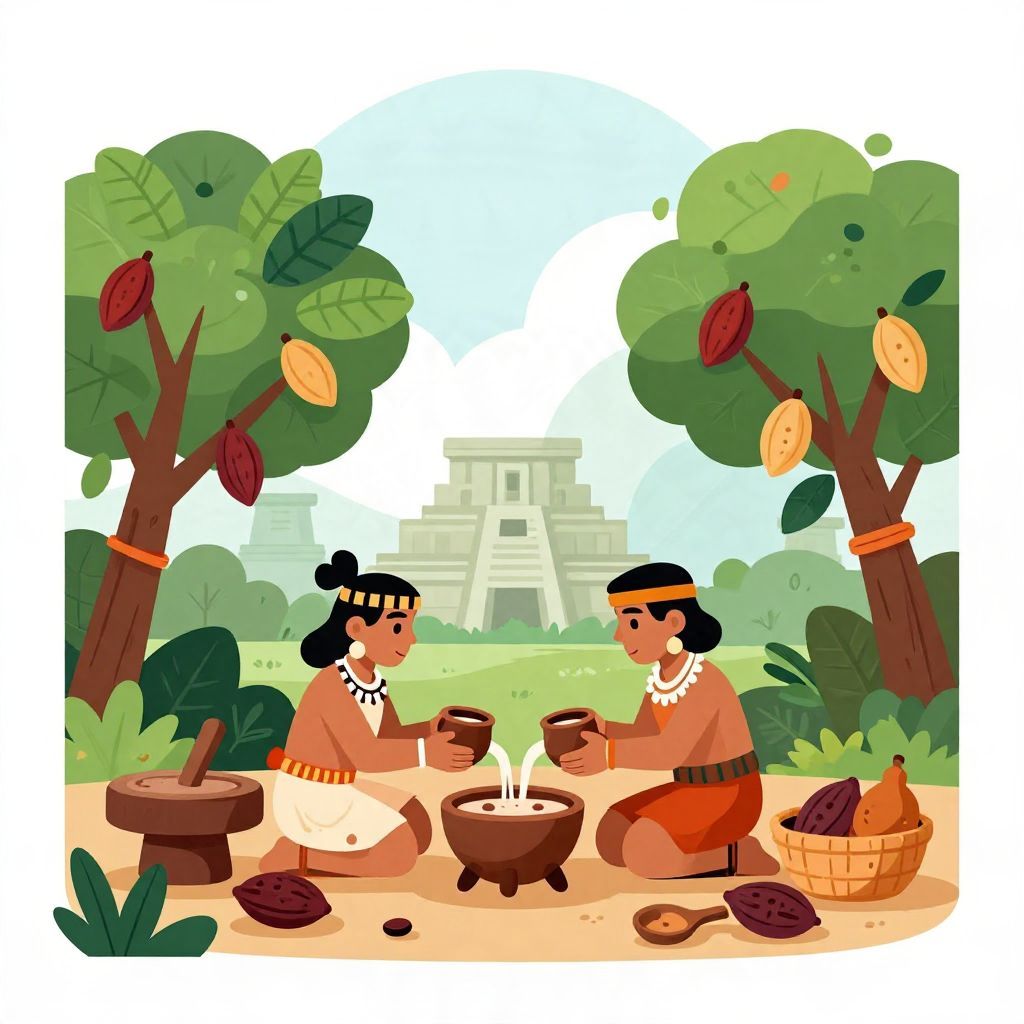
Chocolate has a long history, but its origin is not the Swiss or European chocolate bar familiar today. The earliest evidence points to ancient Mesoamerica, where people first used cacao seeds and cacao-based drinks thousands of years ago. From there, chocolate spread through indigenous American cultures, then across the Atlantic after European contact.
So, where did chocolate originate? The answer is the tropical regions of present-day southern Mexico and Central America, especially among the Olmec, Maya, and later Aztec worlds. Over time, cacao moved from a ceremonial and elite beverage to a global commodity, eventually becoming the sweetened solid chocolate we know now.
Where Did Chocolate Originate?
Chocolate originated in Mesoamerica, most likely in the tropical lowlands of present-day southern Mexico and nearby Central America. The earliest use of cacao was not as a candy bar, but as a drink made from fermented, roasted, and ground cacao seeds. Archaeological and linguistic evidence suggests this tradition began at least by the second millennium BCE, and possibly earlier.
The Earliest Cacao: What We Know
The story of chocolate begins with the cacao tree, Theobroma cacao, which grows naturally in hot, humid forests near the equator. Long before modern chocolate factories, people in Mesoamerica learned how to harvest cacao pods, remove the seeds, and prepare them into a bitter beverage. Because cacao does not preserve well in the archaeological record, scholars rely on residue analysis, pottery, iconography, and later written sources to trace its early history.
Olmec beginnings
The Olmec civilization, flourishing roughly between 1500 and 400 BCE in the Gulf Coast region of present-day Mexico, is often associated with the earliest known use of cacao. Direct proof is difficult, but many historians think the Olmec were among the first to process cacao into a drink. Their role is important because later Mesoamerican cultures inherited and transformed many Olmec traditions.
Maya cacao culture
By the time of the Maya, cacao was firmly embedded in elite and ritual life. The Maya used cacao in feasts, diplomacy, and religious ceremonies. In Maya art and writing, cacao appears as a valued prestige item, not an everyday sweet. Cacao beverages may have been flavored with chili, maize, flowers, honey, or spices, producing a drink very different from modern hot chocolate.
Chocolate in the Aztec World
Among the Aztec, cacao had both social and economic importance. In the late pre-Columbian period, cacao beans circulated as a form of tribute and even as a medium of exchange in some contexts. The Aztec elite drank cacao-based beverages, while the beans themselves were prized for their value. This was not “chocolate” in the modern sense, but it was a direct ancestor of it.
Why cacao mattered
Cacao was valuable because it was difficult to grow outside suitable tropical zones. That scarcity made it a luxury good in regions where it had to be imported. Its prestige helped turn cacao into a symbol of status, power, and sacred meaning. In many Mesoamerican societies, drinking cacao was as much about identity and ceremony as about taste.
Was Chocolate Invented in One Place?
There is no single inventor of chocolate. Instead, chocolate emerged through a long process of experimentation and cultural exchange in Mesoamerica. The exact place of origin is still debated, because cacao may have been domesticated in more than one region or spread early through trade networks. What is clear is that the first known chocolate traditions developed in indigenous American societies, not in Europe.
Competing scholarly views
Some researchers emphasize the lowland rainforests of southern Mexico, while others point to broader areas of Central America, including parts of modern Guatemala, Belize, and Honduras. The uncertainty comes from the nature of the evidence: cacao was used over a wide region, and early trade blurred local boundaries. So the safest answer is regional rather than narrowly local.
How Chocolate Reached the Wider World
Chocolate’s global history began after the Spanish conquest of the Americas in the 16th century. Europeans encountered cacao in Mesoamerica and gradually adopted the drink, though they changed it to suit European tastes. Sugar, cinnamon, and later milk transformed the bitter indigenous beverage into a sweeter luxury item.
From bitter drink to sweet treat
In Europe, chocolate first remained a drink consumed by elites. Over time, it spread through royal courts, coffeehouses, and urban markets. The industrial revolution later changed chocolate again, making it cheaper and more widely available. The solid chocolate bar is a much later invention, produced only after technological advances in grinding, conching, and molding during the 19th century.
What “Chocolate” Meant Then and Now
The word “chocolate” today usually means a sweet food made from processed cacao, sugar, and often milk. In the ancient Americas, however, cacao was primarily a beverage ingredient and a cultural symbol. That difference matters. When people ask where chocolate originated, they are often thinking of the modern product, but historically the origin lies in cacao drinks of Mesoamerica.
The role of language
The term itself likely passed into European languages through indigenous American languages, possibly via Nahuatl or related forms, though scholars debate the precise linguistic path. This is another reminder that chocolate’s history is not just about food; it is also about trade, conquest, language, and cultural adaptation.
Why Mesoamerica Was the Birthplace
Mesoamerica was the birthplace of chocolate because it combined the right ecology, agricultural knowledge, and cultural traditions. Cacao trees needed warm, wet conditions, and Mesoamerican peoples developed the skills to cultivate, process, and value them. Once cacao became part of ritual life, elite exchange, and regional trade, it gained lasting importance.
Key reasons cacao flourished there
- The climate supported cacao cultivation.
- Indigenous farmers and traders spread cacao across regions.
- Elite and ceremonial uses gave cacao high social value.
- Complex societies preserved and refined cacao traditions over centuries.
Historical Significance of Chocolate’s Origin
Chocolate’s origin shows how foods can carry deep cultural meaning. What began as a bitter ceremonial drink in ancient Mesoamerica became one of the world’s most familiar sweets. That transformation reflects indigenous innovation, colonial exchange, and industrial production. It also reminds us that many global foods have histories rooted far outside Europe.
In short, chocolate originated in ancient Mesoamerica, especially in the tropical regions of present-day southern Mexico and Central America, where indigenous peoples first cultivated cacao and turned it into a prized drink. If you want to explore more food history, you may also enjoy related articles on the history of sugar and the origins of coffee.