
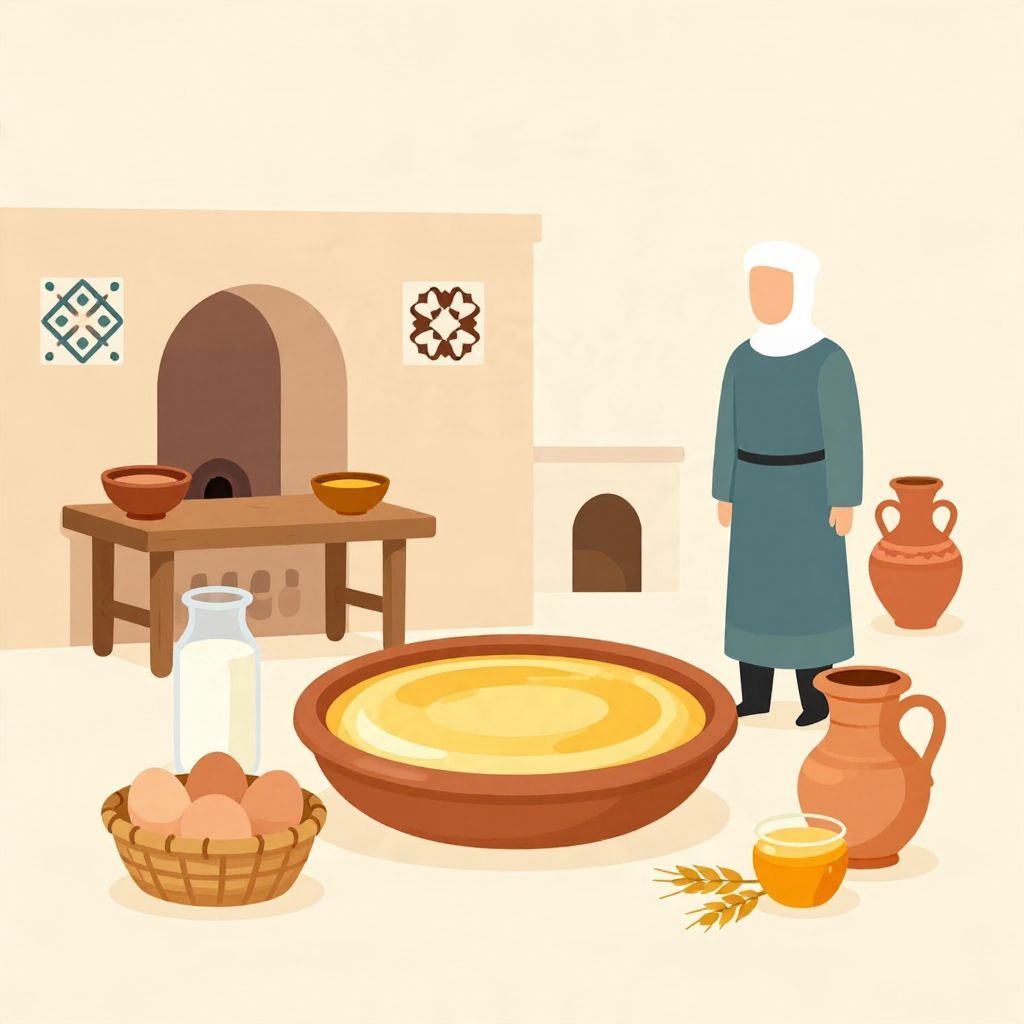
Where did flan originate? The short answer is that flan’s deepest roots lie in ancient Roman cooking, but the dessert we know today developed much later in medieval Europe, especially in Spain and France. Its history is not a single-point invention so much as a long evolution of custard-making, sugar use, and regional adaptation.
Because “flan” can mean different things in different countries, the origin story depends on whether you mean the original savory Roman dish or the modern caramel-topped dessert. Both are historically connected, but they belong to different culinary eras.
Where Did Flan Originate?
Flan originated in ancient Rome as a dish made from eggs and milk, often cooked into a savory or lightly sweetened custard. The word later spread through medieval Europe, where Spanish and French cooks transformed it into the dessert-style flan familiar today, especially after sugar became more widely available.
The Roman Roots of Flan
The earliest ancestor of flan appears in Roman cuisine. Romans prepared egg-based dishes that were set in molds and baked or steamed, a technique that produced a firm custard. These dishes were not always desserts; many were savory and seasoned with ingredients such as pepper, herbs, or fish sauce.
What the Romans made
Roman cooks were skilled at using eggs as a binding and thickening agent. This mattered because eggs could turn milk or cream into a stable dish that could be sliced or unmolded. In Roman households, especially among wealthier families, such preparations fit a broader taste for refined, molded foods.
The Roman version of flan was less about caramel and more about technique. The key idea was the custard: a mixture that could hold its shape after cooking. This basic method survived long after the Roman Empire fell.
The Latin word behind the name
The modern word “flan” is usually traced through medieval Latin and Old French, with connections to terms meaning a flat cake or disk. Over time, the word came to refer to molded custards and tart-like dishes. The name changed as the recipe changed, which is common in food history.
How Flan Changed in Medieval Europe
After Rome, custard dishes remained popular across Europe. Medieval cooks inherited Roman techniques and adapted them to local tastes and available ingredients. By the Middle Ages, flan could mean a wide range of baked dishes, from savory pies to sweet custards.
Spain and France shaped the modern dessert
Spain is especially important in the history of flan because Spanish cuisine preserved and refined many egg-based custards. In medieval and early modern Spain, flan became a recognizable sweet dish, often flavored with milk, eggs, and sugar. French cuisine developed similar custards and tart-like preparations, helping standardize the broader idea of a flan.
These regional traditions mattered because they helped separate flan from its older Roman savory forms. As European sugar production expanded, sweet custards became more common and more desirable among elite and eventually broader households.
The role of sugar
Sugar was a luxury ingredient in medieval Europe. As trade expanded and sugar became more available, cooks used it to sweeten custards and desserts. This shift helped transform flan from a general baked custard into the sweet, delicate dessert now associated with caramel or syrup.
In other words, flan’s history is tied not only to recipe development but also to economic history. The spread of sugar changed what people could make and how often they could make it.
Why Flan Means Different Things in Different Places
Today, “flan” does not refer to exactly the same dessert everywhere. In Spanish-speaking countries, flan usually means a smooth baked custard, often topped with caramel. In parts of Europe, related words may refer to tartlets, pastry shells, or custard-based desserts. This variation reflects centuries of regional change.
Latin America and the Spanish colonial legacy
Flan became especially widespread in Latin America through Spanish colonial influence. Spanish settlers, missionaries, and households carried culinary traditions across the Atlantic, where they blended with local ingredients and customs. As a result, flan became deeply rooted in many Latin American food cultures.
In the Americas, flan often took on local forms. Some versions use condensed milk, evaporated milk, coconut milk, or regional flavorings. These are later adaptations, but they still belong to the same historical family of custard desserts.
Caramel flan is a later development
The caramel layer that many people associate with flan is not part of the oldest Roman tradition. It became popular much later, especially in modern versions of the dessert. The caramel adds sweetness and visual appeal, and it helps define the dessert in many contemporary kitchens.
So if someone asks where flan originated, it is important to separate the base idea from the modern presentation. The base idea is ancient; the caramel-topped dessert is a later culinary evolution.
A Simple Timeline of Flan’s History
Flan’s development can be understood as a sequence of culinary changes rather than a single invention.
- Ancient Rome: Egg-and-milk dishes are cooked into molded custards, often savory.
- Late antiquity and the Middle Ages: Roman techniques survive and spread through Europe.
- Medieval Spain and France: Sweet custards become more common as sugar use expands.
- Early modern period: Flan becomes a familiar dessert in Iberian and French-influenced kitchens.
- Colonial era and beyond: Spanish flan spreads widely in Latin America and evolves regionally.
Was Flan Invented in One Place?
Not exactly. Flan is better understood as a dish with layered origins. Its cooking method likely began in the Roman world, but the dessert form emerged through centuries of adaptation in medieval and early modern Europe. Spain played a major role in shaping the version most people recognize today.
This is why historians are cautious about giving flan a single birthplace. Food traditions often move across borders, changing with language, trade, religion, and available ingredients. Flan is a good example of that process.
How Historians Think About Food Origins
When historians study a dish like flan, they usually ask several questions: Where was the technique first used? Where did the name come from? Where did the modern version become popular? The answers are often different, because recipes travel and evolve.
Technique, name, and modern identity
For flan, the technique is ancient Roman, the name developed through medieval European language, and the modern dessert identity was shaped most strongly in Spain and later in Latin America. Each part of the story is real, but no single place explains everything.
This layered history is common in cuisine. Many familiar foods are the result of long exchange rather than one inventor or one moment of creation.
Why Flan’s Origin Story Still Matters
Flan’s history shows how everyday food can preserve traces of empire, trade, and cultural exchange. A simple custard carries the memory of Roman kitchens, medieval sugar markets, Spanish culinary traditions, and Latin American reinvention. That makes flan more than just a dessert; it is a historical artifact on a plate.
So, where did flan originate? Its earliest roots are in ancient Rome, but the dessert most people know today took shape in Spain and broader medieval Europe before spreading widely through the Spanish-speaking world. For more food origin stories, you might also enjoy reading about where sushi originated and where falafel is from.