
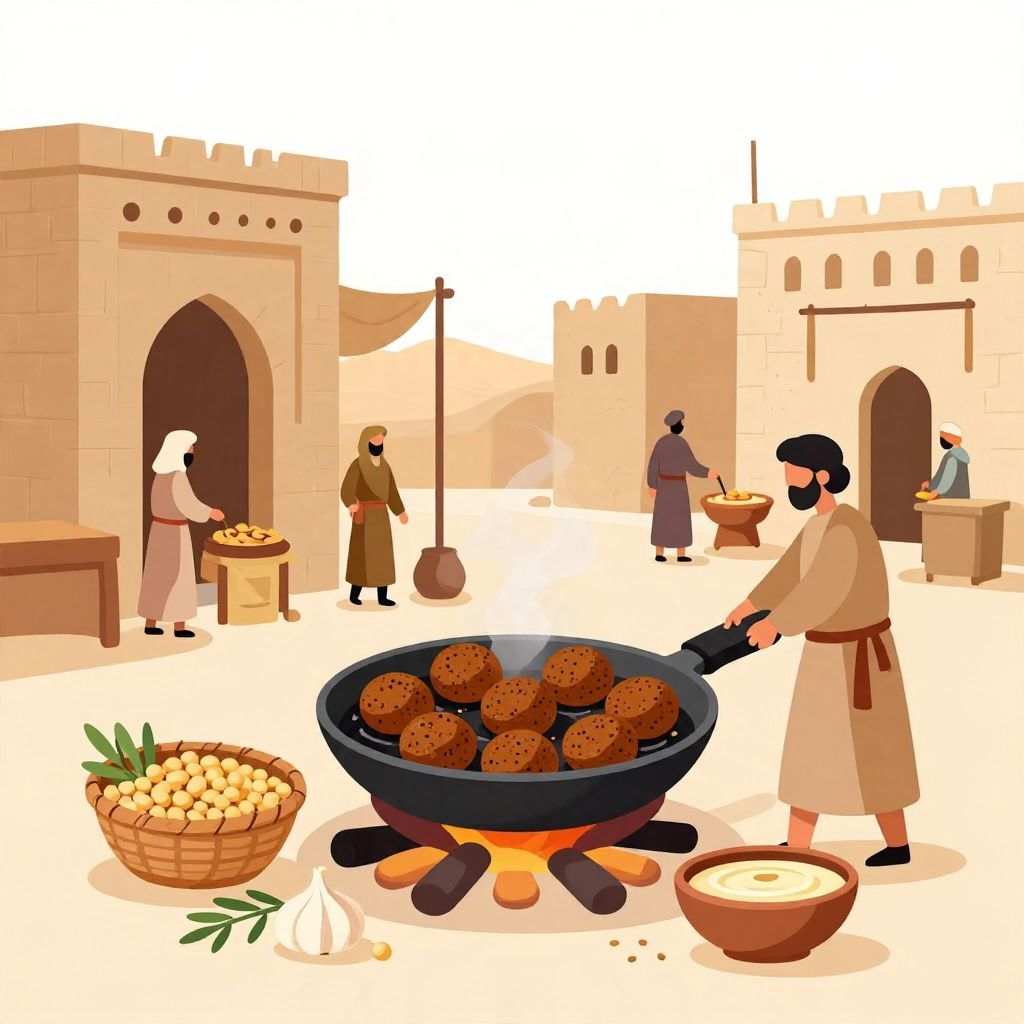
Falafel is one of the Middle East’s best-known foods, but its exact birthplace is harder to pin down than many people assume. The dish is strongly associated today with Egypt, the Levant, and the wider Arab world, yet its earlier history is debated and shaped by migration, trade, religion, and changing ingredients.
The short answer is that falafel most likely emerged in Egypt, probably as a food made by Coptic Christians, and then spread across the eastern Mediterranean and Middle East, where it was adapted in different forms. Its modern popularity reflects a long history of regional exchange rather than a single, fixed origin point.
Where Is Falafel From?
Falafel is most commonly traced to Egypt, where a related version called ta‘miya is made from fava beans. Over time, the dish spread north into the Levant, where chickpeas became more common. Because the recipe changed as it moved, falafel is best understood as a regional food with Egyptian roots and a broader Middle Eastern history.
The Egyptian Origins of Falafel
Most historians and food scholars place falafel’s earliest known form in Egypt, likely in the medieval or early modern period. The Egyptian version, ta‘miya, is traditionally made with fava beans rather than chickpeas. This distinction matters because it suggests that falafel did not begin as one fixed recipe, but as a family of similar fried bean cakes.
Coptic Christian connections
A common explanation links the dish to Egypt’s Coptic Christian community, who may have used bean-based fritters during periods when meat was restricted, especially in fasts and religious observances. This is plausible, but the precise chain of evidence is limited. The Coptic connection is widely repeated, yet it should be treated as a historically reasonable tradition rather than a fully documented certainty.
Why beans mattered in Egypt
Beans were a practical food in the Nile Valley. They were affordable, filling, and suited to a climate and agricultural system that supported legumes well. Fava beans, in particular, had long been part of Egyptian diets. Frying mashed beans into small cakes created a portable, protein-rich meal that fit everyday urban life.
How Falafel Spread Across the Middle East
Falafel did not remain confined to Egypt. As people moved through trade, pilgrimage, imperial administration, and urban migration, the dish traveled with them. By the late Ottoman period and into the modern era, falafel was established in many cities across the eastern Mediterranean, especially in Palestine, Lebanon, Syria, and Jordan.
From fava beans to chickpeas
One of the clearest signs of falafel’s spread is the shift from fava beans to chickpeas. In Egypt, the bean-based form remained dominant. In the Levant, chickpeas became the standard ingredient. This regional adaptation likely reflected local agriculture, taste, and culinary habit. The name and technique were shared, but the ingredients changed.
Urban food culture and street vendors
Falafel became especially popular as a street food in growing cities. Fried, inexpensive, and easy to serve in bread with herbs, pickles, and sauces, it suited the pace of urban life. By the 19th and early 20th centuries, falafel was part of everyday food culture in many Middle Eastern towns and cities, not just a festive or religious dish.
When Did Falafel Become “Middle Eastern”?
Falafel is now often described as a pan-Middle Eastern dish, but that identity developed over time. In earlier periods, people would have known it more locally: as an Egyptian bean fritter, a Levantine street food, or a regional specialty. The broader “Middle Eastern” label became more common in the modern era, especially through migration and global restaurants.
The Ottoman and modern periods
Under the Ottoman Empire, the eastern Mediterranean was connected by routes of commerce, administration, and movement. Foods circulated across these networks, and falafel likely benefited from that exchange. In the 20th century, nationalism, urbanization, and diaspora communities helped turn local dishes into symbols of regional identity.
Falafel in diaspora communities
As migrants from the Middle East and North Africa settled in Europe, the Americas, and elsewhere, falafel became one of the most recognizable foods associated with the region. It was inexpensive, adaptable to vegetarian diets, and easy to prepare in commercial kitchens. In this way, a local street food became an international emblem of Middle Eastern cuisine.
Is Falafel Israeli, Lebanese, Palestinian, or Egyptian?
People sometimes ask whether falafel “belongs” to one modern nation. Historically, that question is difficult because falafel predates the modern nation-states of the region. Its roots are older than today’s political borders, and different communities have long claimed it as their own. The most careful answer is that falafel has Egyptian origins and a shared regional history.
Food and national identity
In the 20th century, falafel became part of national and cultural identity debates, especially in places where cuisine was used to define heritage. That does not mean there is a single owner of the dish. Rather, it shows how foods can become symbols in modern politics. A recipe can be both local and widely shared.
Why origin disputes happen
Origin disputes often arise when a food becomes globally famous. Once a dish enters international restaurants and packaged food markets, people begin to ask who invented it first. But many traditional foods were not invented in one moment by one person. They evolved gradually, and falafel is a good example of that process.
What Is the Historical Evidence for Falafel’s Origins?
Historical evidence for falafel comes from culinary traditions, later written references, and the continuity of bean-fritter recipes in Egypt and the Levant. The evidence is enough to support a general origin story, but not enough to identify a single inventor or exact year. That is why careful historians describe the origin as probable rather than absolute.
What we can say confidently
- Falafel is a Middle Eastern fried legume dish with deep regional roots.
- The earliest widely accepted origin is Egypt, especially in the form of fava-bean ta‘miya.
- The dish spread into the Levant, where chickpeas became more common.
- Its modern identity was shaped by urban street food culture and migration.
What remains uncertain
- The exact date of its first appearance.
- Whether it began specifically within Coptic Christian communities or more broadly in Egyptian society.
- The precise route by which it spread from Egypt into neighboring regions.
Falafel’s Ingredients Tell Its Story
The ingredients themselves help explain falafel’s history. Fava beans and chickpeas were both important crops in the Middle East and eastern Mediterranean. Herbs, onions, garlic, cumin, coriander, and sesame-based sauces reflect a long culinary tradition of seasoning and preserving flavor in practical, everyday food. Falafel is simple, but it is not culturally isolated.
Fava beans versus chickpeas
The difference between Egyptian ta‘miya and Levantine falafel is more than culinary trivia. It shows how a recipe can adapt to local conditions. In Egypt, fava beans were deeply rooted in the diet. In the Levant, chickpeas were often more familiar or preferred. The result was a shared dish with regional variations.
How falafel is usually eaten
Falafel is often served in flatbread with salad, pickles, tahini, and herbs. This serving style helped make it portable and affordable, which is one reason it became such a successful street food. The sandwich form is relatively modern compared with the underlying fried-bean tradition, but it helped spread falafel far beyond its place of origin.
Why Falafel Became So Popular
Falafel’s popularity comes from a combination of taste, affordability, religious flexibility, and convenience. It can be eaten by people observing dietary restrictions, and it works well as a meatless meal. In societies where meat was expensive or limited, falafel offered a satisfying alternative without requiring rare ingredients.
A food of everyday life
Unlike elite court dishes, falafel belongs to the history of ordinary people. It was sold by vendors, made at home, and eaten by workers, students, and travelers. That everyday status helped it survive political change and cross social boundaries. Many famous foods endure because they are practical as well as delicious.
From local staple to global symbol
In the 20th and 21st centuries, falafel moved from regional staple to global vegetarian icon. Today it appears in restaurants, food trucks, and supermarket products around the world. Yet its international fame can obscure its older history as a food of Egyptian and Levantine daily life.
So, Where Is Falafel From?
Falafel is best traced to Egypt, where the earliest form was likely made from fava beans and known as ta‘miya. From there, it spread across the Middle East, especially into the Levant, where chickpea-based versions became common. Its history is regional, layered, and shared rather than singular.
In other words, falafel is not just “from” one place in the modern national sense. It is a dish with Egyptian roots, shaped by centuries of movement across the eastern Mediterranean and the wider Middle East. If you’re interested in how foods travel and change over time, you may also enjoy reading about where tacos originated and where ceviche is from.