
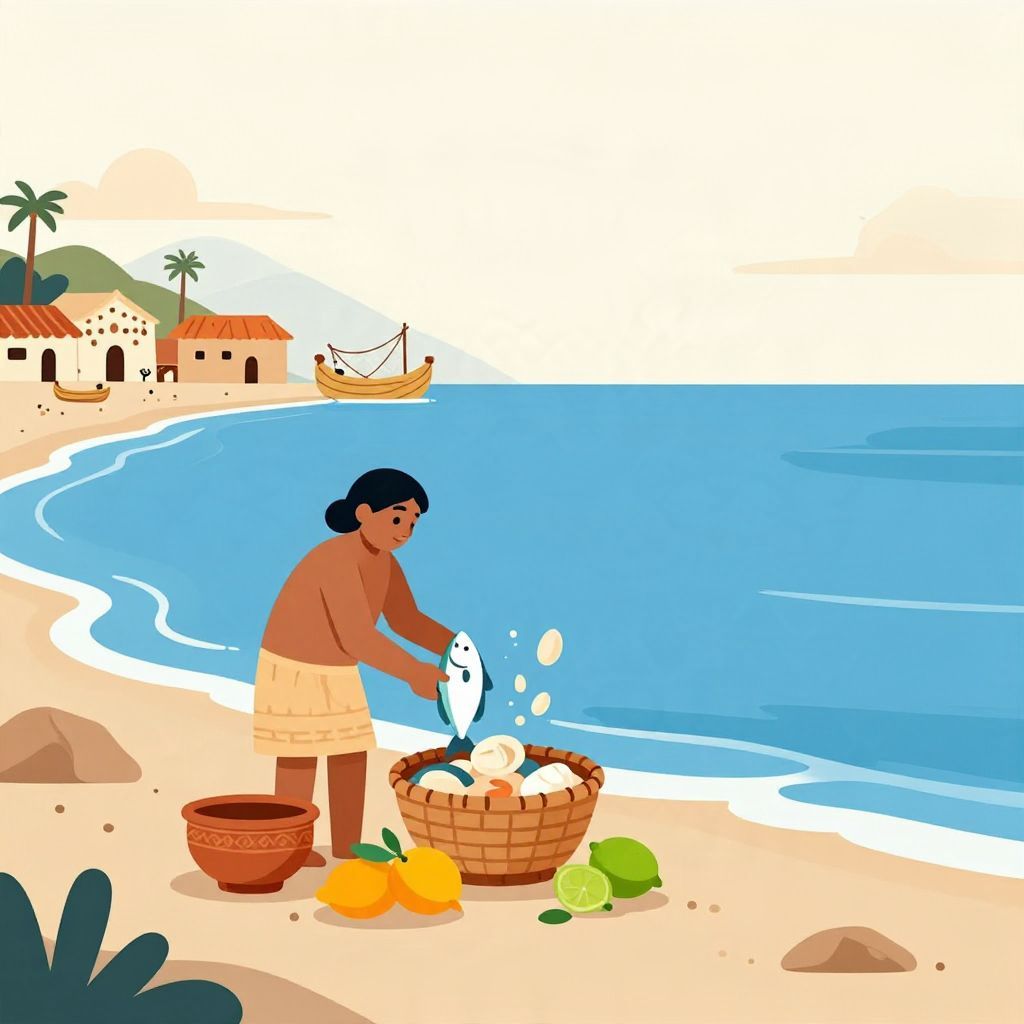
Where is ceviche from? The short answer is that ceviche is most closely associated with the Pacific coast of Peru, where it became a defining national dish. But its deeper history is wider than one country: ceviche grew out of ancient coastal food traditions in the Andes, then changed over time through Indigenous, Spanish, and later Asian influences.
That makes ceviche both a regional food and a historical record. Its ingredients, preparation, and name reflect centuries of exchange along the western coast of South America, especially in the area that is now Peru.
Where is ceviche from?
Ceviche is generally traced to Peru, especially the country’s coastal regions, where fish was traditionally “cooked” in acidic liquids such as fruit juice or fermented drinks. While similar seafood dishes exist across Latin America, the best-documented historical roots of modern ceviche are Peruvian, and Peru is widely recognized as its cultural homeland.
The ancient coastal roots of ceviche
Long before the modern dish took shape, Indigenous peoples along the Pacific coast of South America were preserving and preparing fish in ways suited to a warm coastal environment. Archaeological and historical evidence suggests that coastal societies in what is now Peru used salt, chili peppers, and acidic ingredients from local plants or fermented beverages to season seafood. These early practices did not produce one fixed “original ceviche,” but they created the culinary foundation for it.
Food shaped by geography
The Pacific coast offered abundant fish and shellfish, while inland valleys supplied chili peppers, maize, and native crops. Because refrigeration did not exist, coastal communities developed methods that made seafood safer and more flavorful. Acid and salt helped alter the texture of raw fish, which is why ceviche is often described as a dish that is “cured” rather than cooked in heat.
How ceviche developed in Peru
The ceviche known today emerged gradually over centuries. After the Spanish arrived in the 16th century, new ingredients and customs entered the region. Citrus fruits, especially lime and bitter orange, were introduced from the Old World and eventually became central to the dish. This is important: modern ceviche is not simply an ancient survival, but a product of cultural mixing in colonial Peru.
Indigenous, Spanish, and global influences
- Indigenous traditions supplied the basic idea of preparing seafood with local seasonings and acids.
- Spanish contact introduced citrus fruit, which later became the defining acidic ingredient.
- Later migrations, especially from Japan and China in the 19th and 20th centuries, influenced techniques, presentation, and the appreciation of raw seafood in Peruvian cuisine.
Because of these layers, historians and food scholars usually describe ceviche as a dish with Indigenous origins and colonial-era transformation. That is more accurate than claiming a single inventor or exact date.
The meaning of the word “ceviche”
The word “ceviche” has an uncertain etymology, and several explanations have been proposed. Some scholars connect it to Indigenous coastal languages, while others suggest links to Spanish or Arabic-derived terms used in the colonial period. No single origin is universally accepted. What is clear is that the name, like the dish itself, reflects a long history of cultural contact.
Why the name matters historically
Food names often preserve traces of migration and exchange. In the case of ceviche, the uncertain origin of the word mirrors the dish’s mixed history: Indigenous practices, Spanish ingredients, and later regional adaptations all contributed to what people now recognize as ceviche.
When did ceviche become a national symbol of Peru?
Ceviche became especially prominent in Peru during the modern era, as national cuisine became more closely tied to identity. By the 19th and 20th centuries, it was firmly established in coastal urban food culture, and over time it came to symbolize Peruvian heritage. Today, Peru celebrates ceviche as one of its most important national dishes, and it is widely promoted in tourism and cultural identity.
From local food to national emblem
This shift happened because cuisines often become symbols when nations define themselves through shared traditions. In Peru, ceviche represented both coastal abundance and a distinctly local way of combining ingredients. Its rise as a national icon did not change its older roots; instead, it brought those roots into modern public culture.
Is ceviche only from Peru?
No. Ceviche is now made throughout Latin America and beyond, with regional variations in Mexico, Ecuador, Chile, Central America, and the Caribbean. These versions may use shrimp, squid, scallops, different citrus juices, tomatoes, onions, or herbs. However, the existence of many versions does not erase Peru’s historical role. Peru remains the place most strongly associated with the dish’s origin and prestige.
Regional differences at a glance
- Peruvian ceviche: usually fish, lime juice, red onion, chili, and salt.
- Ecuadorian ceviche: often includes shrimp and may use tomato-based or soupy preparations.
- Mexican ceviche: commonly features seafood with lime, cilantro, tomato, and avocado.
These variations show how a historical food can travel and adapt while retaining a recognizable core idea: seafood transformed by acid, seasoning, and time.
Why ceviche matters in food history
Ceviche is historically significant because it shows how cuisine develops through environment, trade, conquest, and migration. It is not an isolated invention. Instead, it reflects the long history of coastal life in the Andes, the arrival of new crops after 1492, and the blending of culinary traditions over centuries. In that sense, ceviche is a reminder that national dishes are often the result of layered histories rather than single moments of invention.
So, where is ceviche from? Its strongest historical home is Peru, especially the Pacific coast, but its story begins with older Indigenous coastal foodways and continues through Spanish colonial change and later global influences. If you are interested in how foods travel and change over time, you may also like reading about where sushi originated and where broccoli comes from.