
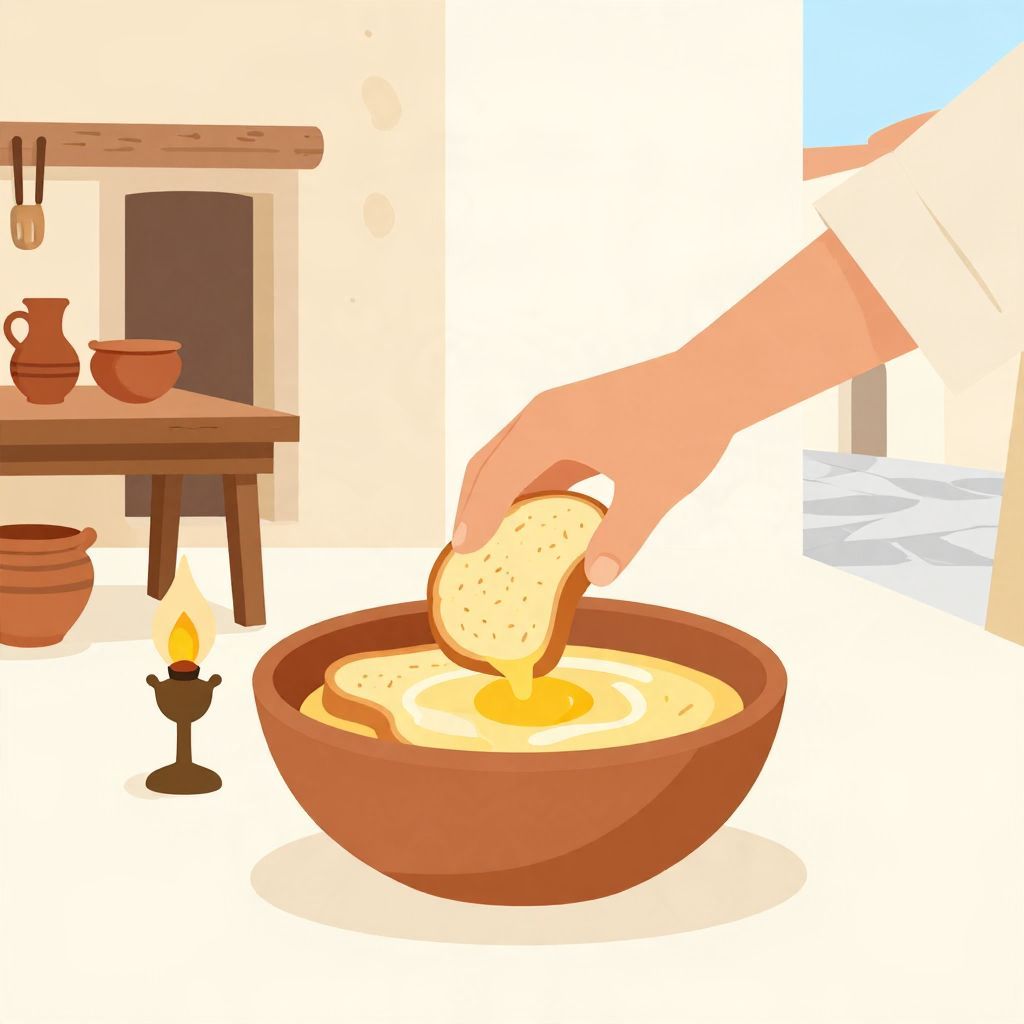
Where did French toast originate? The short answer is that it did not begin in France, despite its English name. The dish is much older than the modern French nation and appears in several ancient and medieval food traditions, where cooks used stale bread, milk, and eggs to make an economical meal.
Its history is best understood as a long culinary practice rather than a single invention. Over time, different cultures developed similar recipes, and the version now called French toast became especially associated with Europe and later North America.
Where Did French Toast Originate?
French toast most likely originated as a practical way to reuse stale bread, with roots in the Roman world and later medieval Europe. The dish is not uniquely French; recipes resembling it appear in ancient Roman cookery, and the name “French toast” emerged much later in English-speaking countries.
Ancient Roots: Bread, Eggs, and Economy
The basic idea behind French toast is simple: soften dry bread in a liquid mixture, then cook it. That method is ancient because bread was a staple food in many early societies, and wasting it was undesirable. Cooks in the Roman Empire are often credited with making an early version of the dish, sometimes associated with a recipe in the Roman collection Apicius.
The Roman Connection
In Roman cooking, bread soaked in milk and egg and then fried or baked fits the same broad pattern as modern French toast. Scholars generally treat this as evidence of a historical ancestor, not proof that Romans invented the exact dish we eat today. Still, the Roman example matters because it shows the technique was already known in antiquity.
Why This Kind of Dish Appeared Early
- Bread went stale quickly in preindustrial kitchens.
- Eggs and milk were common household ingredients.
- Soaking and frying improved texture and reduced waste.
- The method turned inexpensive leftovers into a filling meal.
This practical logic helps explain why similar recipes appeared independently in different places. A dish like French toast was not dependent on a single culinary culture; it was a sensible solution to a common problem.
The Medieval European Tradition
By the Middle Ages, versions of soaked and fried bread were widespread in Europe. Medieval cooks often used bread in soups, puddings, and fried dishes, and recipes for sweetened or spiced bread preparations became increasingly common among elite and household cookbooks. The dish’s history in this period is less about one origin point and more about gradual refinement.
How Medieval Cooks Used Bread
Medieval food culture valued thrift. Bread was central to daily life, and stale loaves were too useful to discard. Cooks transformed them into dishes that could be savory or sweet, depending on the household and the occasion. Some recipes added sugar, honey, cinnamon, or other spices, especially in wealthier kitchens where such ingredients were available.
From Practical Food to Refined Dish
As trade expanded in medieval Europe, spices and sugar became more accessible to elites, and simple bread dishes could become more elaborate. That shift did not create French toast, but it did help shape the more polished versions that later appear in European cooking traditions. In this sense, French toast reflects both necessity and culinary adaptation.
Why Is It Called “French” Toast?
The name “French toast” is an English-language label, and its exact origin is uncertain. The most likely explanation is that English speakers used “French” as a culinary descriptor for a style of preparation they associated with continental or fashionable cooking, not because the dish was invented in France. The name may also have helped distinguish it from other bread dishes.
A Name, Not a Proven Birthplace
Food names often mislead. “French” in English has sometimes been used to suggest refinement, technique, or foreign style rather than literal national origin. That makes the name “French toast” a poor guide to the dish’s true beginnings. Historical evidence points to a much broader, older tradition.
Other Names Around the World
Different languages and regions have their own names for similar dishes, which supports the idea that the recipe spread widely and evolved locally. In some places, the dish is known by names that translate roughly to “poor knights,” “lost bread,” or other expressions that emphasize thrift and reuse.
French Toast in Europe and Beyond
By the early modern period, bread soaked in egg and milk had become familiar across Europe. Recipes appeared in cookbooks and household traditions in various forms, sometimes sweet and sometimes savory. The dish traveled with migration, trade, and colonial expansion, eventually becoming common in North America as well.
British and American Development
In English-speaking regions, the dish became a household favorite because it was easy to make and adaptable. It could be served for breakfast, dessert, or a light meal. In the United States, French toast later became especially associated with breakfast culture, often topped with syrup, powdered sugar, fruit, or butter.
Regional Variations
- Some versions use white bread, while others use brioche, challah, or day-old loaves.
- Sweet versions may include cinnamon, vanilla, sugar, or fruit.
- Savory versions can be seasoned with herbs, cheese, or salt.
- Different cuisines fry, bake, or pan-cook the soaked bread.
These variations show that French toast is less a fixed recipe than a culinary idea. Its flexibility helped it survive across centuries and cultures.
What Historical Evidence Can We Trust?
When asking where French toast originated, it is important to separate strong evidence from popular storytelling. We can say with confidence that the dish’s technique is ancient and that Roman and medieval European cooking include clear ancestors. What we cannot say with certainty is that one person, city, or nation “invented” French toast in the modern sense.
Established Facts
- Soaked-and-fried bread is an old cooking method.
- Roman sources show an early version of the dish.
- Medieval Europe preserved and expanded similar recipes.
- The English name “French toast” came much later than the dish itself.
Common Myths and Overstatements
It is tempting to claim that French toast was invented in France or by a single historical figure, but that is not supported by the broader evidence. Likewise, the idea that the name proves French origin is misleading. The dish’s story is better understood as a shared culinary evolution across many societies.
Why the Dish Lasted So Long
French toast endured because it solves a timeless problem: how to make stale bread appealing again. It also fits changing tastes. In one era it could be a humble leftover dish; in another, it could be a rich breakfast or brunch item. That adaptability helped it move from necessity to comfort food.
Social and Economic Significance
Historically, dishes like French toast reveal how ordinary households managed scarcity. They remind us that much of food history is about creativity, thrift, and reuse rather than luxury alone. The dish also shows how recipes can cross class boundaries, appearing in both modest kitchens and more refined culinary settings.
So, Where Did French Toast Originate?
French toast originated not in one exact place but in a long tradition of using stale bread in ancient and medieval cooking. Its deepest roots likely lie in the Roman world, while its later development took shape across Europe. The name “French toast” is much newer than the dish itself and does not identify a single birthplace.
In historical terms, French toast is a shared food tradition with many ancestors, shaped by practicality, migration, and changing taste. If you enjoy tracing the origins of everyday dishes, you may also like reading about where French fries originated and where sushi originated.