
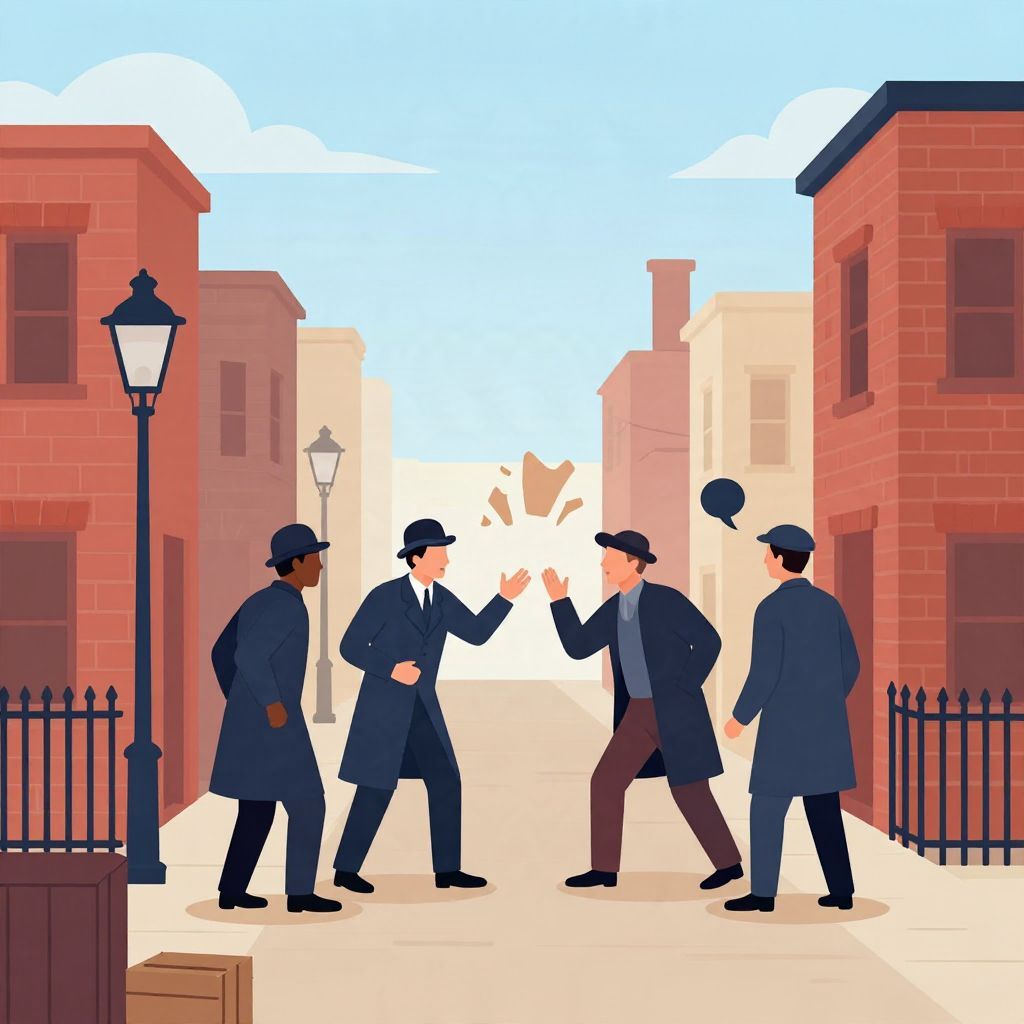
The term “motherfucker” is a modern English obscenity, not an ancient phrase with a single neat birthplace. Its exact origin is hard to pin down, but historical evidence shows it emerged in American English in the late 19th or early 20th century, first as a shocking insult and later as a word used in many different social settings.
Because it is vulgar and heavily taboo, the word’s early history is fragmentary. Linguists and historians can trace its appearance in print and speech, but not a single inventor, town, or moment when it was coined with certainty.
Where does the term motherfucker come from?
“Motherfucker” is generally understood to be an American English insult that developed in the late 1800s or early 1900s, probably from earlier sexual and family-based insults. It likely began as a way to accuse someone of extreme depravity, then broadened into a general-purpose curse, insult, and later even a term of admiration in some speech communities.
The likely historical background of the word
The word combines two powerful ideas: sex and motherhood. In English, insults involving mothers have long been especially offensive because they attack both family honor and social respectability. Adding a sexual verb to “mother” made the insult maximally shocking, which helped it stand out in speech and spread through informal language.
Why this combination was so offensive
In many societies, insults about a person’s mother are among the harshest because they imply shame, disrespect, and family violation. The sexual element made the phrase even more transgressive. In historical terms, that matters: taboo language often spreads precisely because it breaks social rules and therefore feels forceful, memorable, and emotionally loaded.
Not a literal description
Despite its structure, the term was not usually meant literally. Like many insults, it functioned rhetorically. A speaker did not need to claim that someone had actually committed the act; the phrase worked as a verbal weapon, signaling anger, contempt, or social dominance.
When did “motherfucker” first appear?
The earliest written examples that scholars commonly discuss appear in American English by the late 19th century, though the spoken phrase may be older. Because obscene language was often avoided in print, the documentary record is incomplete. That means historians can identify an approximate period, but not a precise invention date.
Why the record is so thin
Vulgar speech was rarely printed in newspapers, books, or polite correspondence. Editors often censored such language, replaced letters with dashes, or omitted it entirely. As a result, the first surviving written examples usually reflect when printers were willing to record the word, not necessarily when people first began saying it.
American English and urban speech
The word is strongly associated with American English, especially urban, working-class, and later African American speech traditions, though it was never limited to one group. By the early 20th century, it appears in a range of informal contexts, showing that it had already moved beyond a rare or private insult.
Did the word come from older expressions?
Most scholars treat “motherfucker” as part of a broader family of English insults built around sexual violation, family honor, and animalized contempt. It does not appear to descend from one clearly documented older phrase in a simple line of evolution, but rather from a linguistic environment where extreme insults were already common.
Related insult patterns in English
- Insults targeting mothers or female relatives.
- Sexualized curses used to express rage or humiliation.
- Compound slurs that intensified meaning by combining taboo ideas.
In that sense, the term belongs to a long history of English profanity, where words become stronger by violating social norms around sex, kinship, and respectability.
Possible influences, but no single proven source
Some etymological speculation has tried to connect the word to older criminal slang, military speech, or regional dialects. These ideas may be plausible in broad cultural terms, but there is no universally accepted proof of one original source. Scholars are cautious here because profanity often circulates orally long before it is recorded.
How the meaning changed over time
One reason “motherfucker” remains historically interesting is that its meaning did not stay fixed. It began as a severe insult, but in the 20th century it could also express admiration, toughness, or intensity, especially in some male-dominated speech communities and later in popular culture.
From insult to badge of intensity
By the mid-20th century, the word could function in several ways:
- As a direct insult toward a person.
- As a general exclamation of anger or frustration.
- As a term for someone seen as formidable, daring, or ruthless.
This semantic flexibility is common in slang. Words that begin as insults can be repurposed as expressions of identity, humor, bravado, or solidarity, depending on who is speaking and to whom.
Popular culture and wider circulation
The word became more visible in the 20th century through jazz culture, stand-up comedy, blues and later rock lyrics, film, and street speech. As mass media spread taboo language, “motherfucker” became familiar far beyond the communities where it may have been most common. That visibility did not make it polite; it made it culturally recognizable.
What historians and linguists can say with confidence
There are a few points on which evidence is fairly strong. The term is modern, American in its documented history, and rooted in taboo sexual and familial insult. It was established in spoken English before it became widely visible in print, and its meaning expanded over time.
What remains uncertain
Several details remain disputed or unprovable:
- The exact first speaker or community to use it.
- The precise date it entered everyday speech.
- Whether it was coined independently in multiple places.
- The extent to which any one slang tradition “created” it.
That uncertainty is normal in the history of slang. Informal language often leaves behind only scattered traces, especially when it is obscene and socially censored.
Why the word endured
“Motherfucker” survived because it is unusually flexible and forceful. It can be harsh, humorous, admiring, rhythmic, or emphatic. Its sound pattern also gives it a strong punch in speech, which helps explain why it remained useful across generations despite its offensiveness.
Power, identity, and taboo
Profanity often persists because it does social work. It can mark group membership, express anger quickly, or challenge authority. In the case of “motherfucker,” the word’s shocking force made it useful in confrontational settings, while later cultural reuse gave it new shades of meaning.
So where does the term motherfucker come from?
Historically, the best answer is that “motherfucker” emerged in American English in the late 19th or early 20th century as an extremely offensive sexual insult built from older patterns of taboo language. It was not invented in a single documented moment, and its precise origin remains uncertain, but its development fits a broader history of English profanity shaped by sex, kinship, and social conflict.
Understanding the word’s history shows how language changes under pressure from taboo, humor, and power. If you want to explore related cultural history, you may also be interested in what political ideology is and cultural preservation in architecture.