
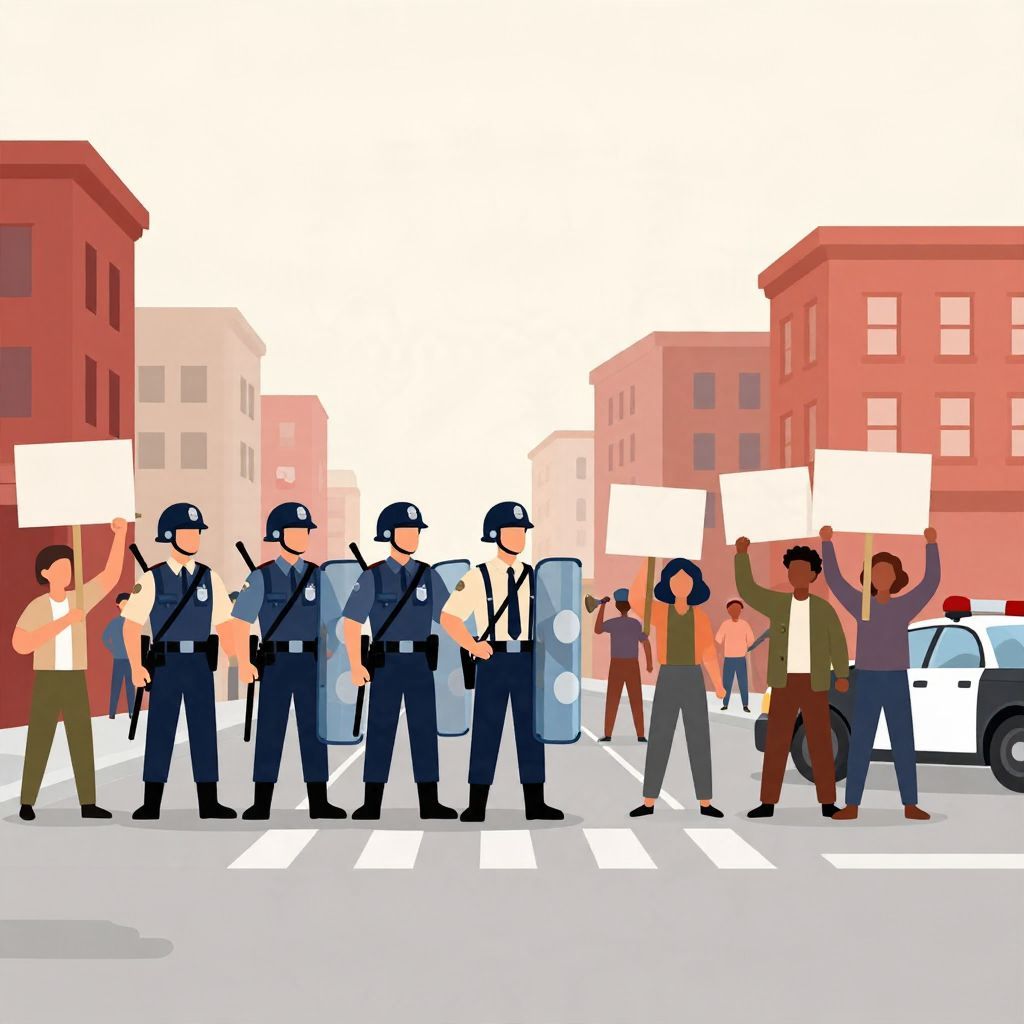
Why are cops called pigs? The insult is usually traced to the late 1960s and early 1970s, when distrust of police surged during civil rights protests, antiwar demonstrations, and urban unrest in the United States. “Pig” became a shorthand for police viewed as brutal, corrupt, or authoritarian.
The term did not begin as a formal label. It spread as slang, especially in activist and countercultural circles, and then entered wider popular culture. Its meaning has changed over time, but its history is tied to conflict over policing, power, and public trust.
Why Are Cops Called Pigs?
“Pig” became a slang insult for police in the United States during the 1960s, especially among protesters and antiestablishment молодежь? No—among protesters and counterculture groups who saw police as oppressive. The word stuck because it was short, shocking, and expressive, and because it captured anger at aggressive policing, arrests, and surveillance during a period of social upheaval.
The historical roots of the insult
The word “pig” was not invented for police. In English, it had long been used as a general insult for someone considered greedy, dirty, rude, or cruel. By the 20th century, it could be aimed at many authority figures. What changed in the 1960s was not the word itself, but the political climate that made it a common anti-police slur.
Policing and public anger in the 1960s
In the United States, the 1960s were marked by major clashes over civil rights, the Vietnam War, student protest, and urban inequality. Police were often the public face of state power at demonstrations and in heavily policed neighborhoods. When officers used force, made mass arrests, or were seen as protecting an unjust order, “pig” became a way to express contempt and resistance.
This was also a period when many Americans were questioning institutions more broadly. Universities, city governments, the military, and the police all came under scrutiny. In that atmosphere, a blunt insult could spread quickly through protest movements and youth culture.
From street slang to national vocabulary
The term gained visibility through protest signs, underground newspapers, music, and later film and television. Once a slang word enters popular culture, it can travel beyond the original political setting. By the early 1970s, “pig” was widely understood in the U.S. as a derogatory term for police, even by people who did not use it themselves.
It is important to note that slang often develops in layers. Some people used “pig” simply as a generic insult. Others used it specifically to criticize police brutality, racism, or authoritarian behavior. The same word could carry both personal anger and political meaning.
Did the word come from an acronym?
One popular claim says that “PIG” stands for “public interest group,” “police in general,” or some similar phrase. These explanations are folk etymologies, not established history. There is no reliable evidence that the insult began as an acronym. The stronger historical explanation is that it grew naturally from older English slang in a political moment when anti-police feeling intensified.
Why acronym stories spread
People often prefer tidy origin stories because they are easy to remember. Acronyms can sound plausible, especially for modern slang. But many famous slang terms are not abbreviations at all. In the case of “pig,” the historical record points to ordinary insult usage, later sharpened by protest politics, rather than a hidden code word.
Why “pig” was such a powerful insult
The insult worked because pigs had long carried negative symbolic meanings in English-speaking culture. They were associated with dirt, gluttony, greed, and lack of refinement. Calling a police officer a “pig” suggested not only dislike, but moral disgust: the officer was seen as abusive, corrupt, or dehumanized by the speaker.
Dehumanization and protest language
Political language often becomes harsher during periods of conflict. Protesters may use insulting labels to reject the legitimacy of institutions they oppose. In that sense, “pig” functioned less as a neutral description and more as a weapon of speech. It expressed alienation from the police and from the state they represented.
At the same time, the term also reflected a broader cultural shift. The 1960s counterculture favored irreverent, anti-authoritarian language. Slang that mocked officials, rules, and social conventions became part of the era’s style.
How the term spread in modern culture
Once “pig” was established as a police insult, it spread through music, comedy, journalism, and film. Rock lyrics and protest culture helped normalize the term among younger audiences. News coverage of demonstrations also reinforced it by repeating the language used in clashes between police and protesters.
By the 1970s and 1980s, the word had become familiar enough that it could appear in fiction and entertainment, often to signal rebellion or hostility toward authority. Its use did not mean everyone agreed with the insult; rather, it showed how deeply the language of the protest era had entered public consciousness.
Connection to distrust of policing
The endurance of the term reflects a continuing historical tension: police are expected to maintain order, but they can also be seen as agents of coercion. Whenever communities experience discriminatory enforcement, excessive force, or corruption, old anti-police language can reappear. That is one reason the insult has remained recognizable long after the 1960s.
Was “pig” used before the 1960s?
Yes, but not in the same widespread way. “Pig” had long been an insult in English, and it could be aimed at people in authority before the modern protest era. However, the specific association with police became much more prominent in the United States during the late 1960s. That is the period most historians and language scholars identify as the key turning point.
In other words, the insult did not suddenly appear from nowhere. It was older slang that gained a new political life.
What the term reveals about history
The history of “pig” as a police insult is really a history of public conflict over law enforcement. It shows how language changes when trust breaks down. Words that begin as general insults can become politically charged when people feel targeted, unheard, or mistreated by authorities.
It also reminds us that slang is historical evidence. A single word can reveal attitudes toward race, class, protest, and power. In this case, “pig” became a shorthand for the anger many people felt toward policing during a turbulent era in modern American history.
Summary: the historical explanation
So, why are cops called pigs? Because the word evolved from older English insult language and became strongly associated with police during the protest movements of the 1960s and early 1970s, when many Americans viewed policing as harsh, corrupt, or oppressive. The term spread through counterculture and remains a recognizable, if offensive, historical slur.
If you want to explore related slang history, you may also be interested in why police are called 5-0 and why police are called cops.