
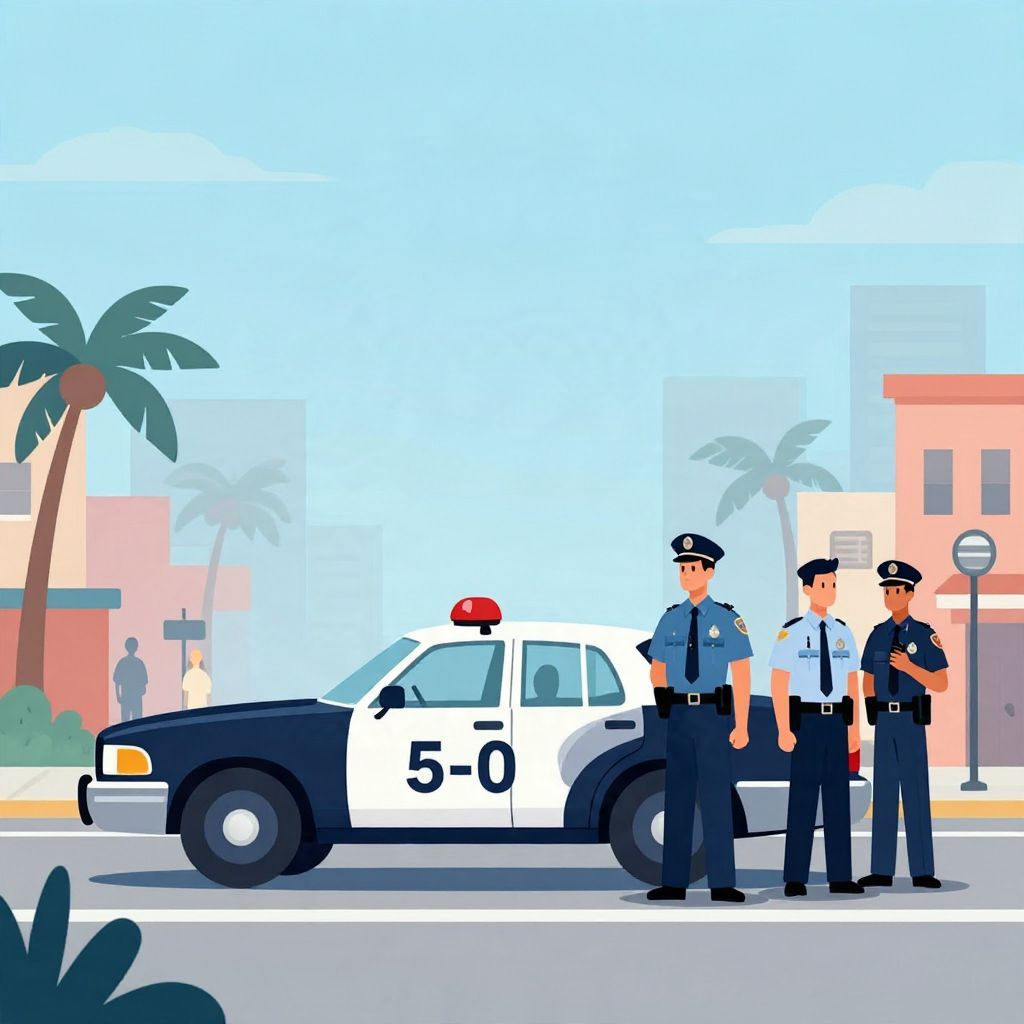
Why are police called 5-0? The short answer is that the nickname comes from American popular culture, especially the long-running television crime drama Hawaii Five-O. Over time, “Five-O” became slang for police, first in the United States and then more broadly in English-speaking pop culture.
The term is not an old police code or an official law-enforcement designation. Its history is tied to media, slang, and the way television can reshape everyday language.
Why Are Police Called 5-0?
Police are called “5-0” because of Hawaii Five-O, a television series that premiered in 1968 and became widely known for its title phrase. The show’s popularity helped turn “Five-O” into a slang term for police officers, especially among younger speakers and in crime-related media.
The TV Show That Made “Five-O” Famous
The main source of the nickname is the CBS television series Hawaii Five-O, which ran from 1968 to 1980 and was later revived in a new version beginning in 2010. The title referred to Hawaii as the 50th U.S. state, which had joined the Union in 1959. The show’s title phrase was memorable, catchy, and easy to repeat, which made it ideal for slang.
Why “Five-O” sounded like police language
In the show, “Five-O” was not a generic term for police. It specifically referred to a fictional state police unit in Hawaii. But because the series centered on law enforcement, viewers began associating the phrase with police generally. That association spread through popular culture, especially in the United States, where the show had a large audience.
From title to slang
Slang often develops when a memorable phrase becomes detached from its original context. In this case, “Five-O” moved from being a TV title to a shorthand warning that police were nearby. By the late 20th century, the term had become recognizable in street slang, music, film, and television.
What Does “5-0” Mean Historianically?
Historically, “5-0” is not an official police term. It is a cultural nickname that grew out of American television. The most accepted explanation is that it comes from Hawaii Five-O, with “Five-O” evoking the police presence in the show. The “0” spelling reflects the stylized title, where “O” stood for “zero” in a way that made the phrase distinctive and brand-like.
Why the spelling varies
You may see “5-0,” “Five-O,” or even “Five Oh.” These are all informal spellings of the same slang term. The number form became popular because it was quick to write and visually striking, especially in text messages, rap lyrics, and casual speech.
Was “5-0” Ever a Real Police Code?
No widely used official police code explains the slang “5-0.” This is a common misconception. In many places, police departments use radio codes, but “5-0” is not a standard universal law-enforcement code for police themselves. The slang meaning comes from pop culture, not from official police communication systems.
Why people assume it is a code
Because the phrase sounds technical, many people assume it must have originated as a radio signal or code number. In reality, slang often borrows the style of official language without actually coming from it. “5-0” fits that pattern: it sounds coded, but its roots are cultural rather than bureaucratic.
The Historical Background of the Nickname
To understand why the term spread, it helps to look at the broader history of television and slang in the late 20th century. After the 1950s and 1960s, American television became a major force in shaping everyday speech. Popular shows could influence fashion, attitudes, and vocabulary across the country.
Hawaii’s statehood and the significance of “50”
Hawaii became the 50th U.S. state in 1959. That fact gave the title Hawaii Five-O a built-in meaning: “Five-O” pointed to Hawaii’s place as the fiftieth state. The show used that identity to brand its fictional police unit, and the title itself became a cultural marker.
The show’s cultural reach
Hawaii Five-O was more than a local crime drama. It was a nationally broadcast series with a memorable theme song, dramatic setting, and a strong association with law enforcement. Its title entered the public imagination so effectively that the phrase outlived the show’s original context.
How Slang Like “5-0” Spreads
Slang terms usually spread through repeated use in communities, then through music, film, and television. “5-0” followed this pattern. Once people heard it in entertainment media, they began using it in conversation as a playful or coded way to refer to police.
Street slang and media influence
By the 1980s and 1990s, “5-0” appeared in rap lyrics, urban slang, and crime films. This helped the term move beyond the original TV audience. In many cases, slang becomes stronger when it sounds informal, secretive, or slightly rebellious, and “5-0” had all three qualities.
Why it endured
The term lasted because it was short, memorable, and flexible. It could be used seriously, jokingly, or as a warning. It also avoided more formal language, which made it useful in casual speech and entertainment.
Other Explanations You May Hear
There are a few alternative explanations online, but most are weaker than the Hawaii Five-O connection. Some people try to link “5-0” to police radio procedures, numerical codes, or local departments. These theories are usually unsupported or based on later folk explanations rather than historical evidence.
Why the TV origin is strongest
The strongest evidence is chronological: the television show appeared in 1968, became widely known, and the slang use followed. That sequence makes sense historically. By contrast, claims about older police codes often lack documentation and do not explain why the phrase became widespread only after the show’s success.
Folk etymology and confusion
When a phrase becomes popular, people often invent backstories for it. This is called folk etymology. “5-0” is a good example: because it sounds like a code, people search for a technical origin. But the historical trail points most clearly to entertainment culture.
How the Term Is Used Today
Today, “5-0” remains a recognizable slang term for police, though it is less universal than some other nicknames. It appears in music, social media, movies, and everyday speech. Some speakers use it casually; others may use it with caution, depending on context and local dialect.
Regional and generational differences
Not everyone uses the term, and its familiarity can vary by age and region. People who grew up with crime dramas, hip-hop, or police-themed television are more likely to recognize it. In some places, other slang terms for police are more common.
A word shaped by pop culture
The history of “5-0” shows how television can influence language far beyond the screen. A title created for a crime series became a lasting nickname for police, even though the phrase had no official legal meaning.
The Historical Takeaway
Police are called “5-0” because the phrase spread from the television series Hawaii Five-O, whose title referred to Hawaii as the 50th state. The nickname is a product of late 20th-century American pop culture, not an official police code. Like many slang terms, it survived because it was short, vivid, and easy to repeat.
If you’re interested in how popular culture shapes language, you may also enjoy exploring related history topics such as the history of slang in America and Hawaii’s path to statehood.