
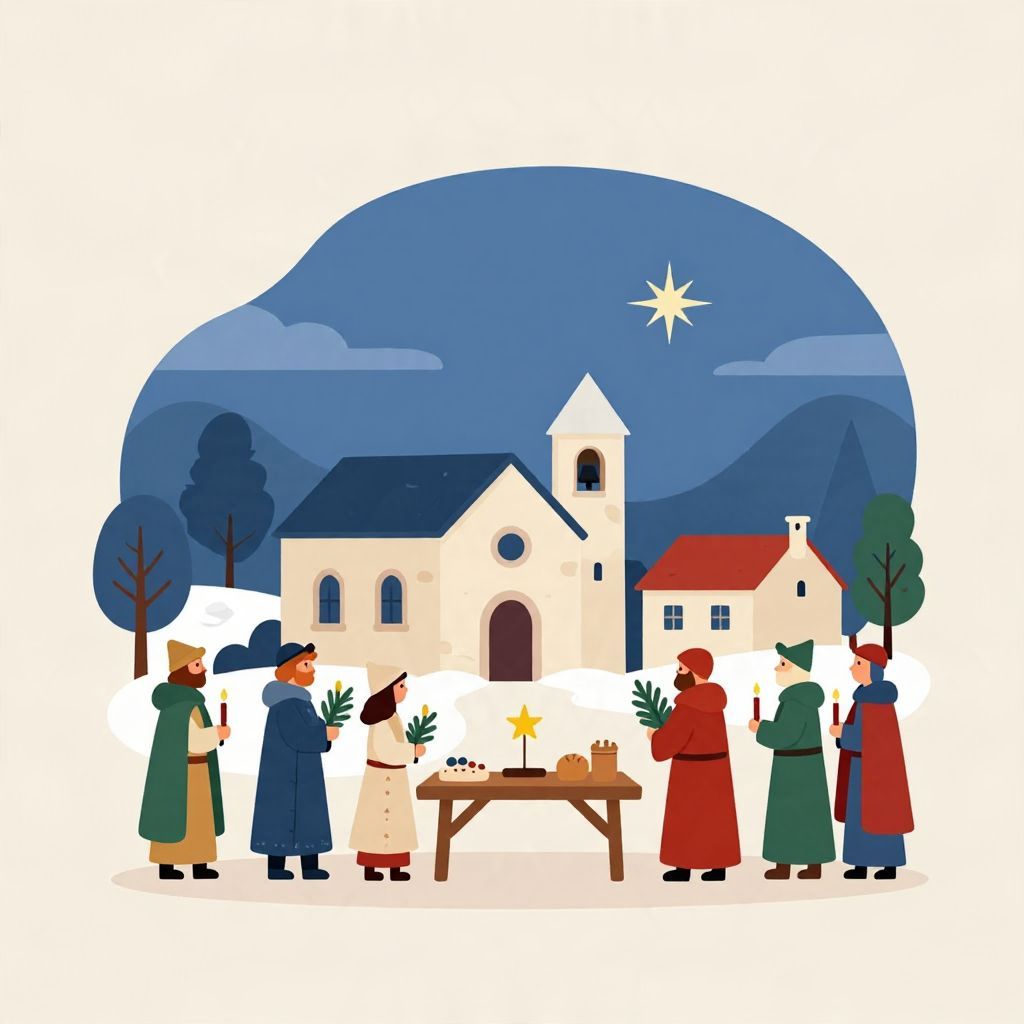
When is Little Christmas? In most places that use the term, Little Christmas is celebrated on January 6, the Christian feast of Epiphany. It marks the traditional end of the Christmas season in many churches and cultures, though local customs can shift the observance to the nearest Sunday or extend it into early January.
The name “Little Christmas” reflects a long history of religious calendars, folk tradition, and regional custom. Its meaning is clearest in places such as Ireland, parts of Europe, and among some Christian communities where January 6 remains a day for special meals, gift-giving, or family gatherings.
When is Little Christmas?
Little Christmas is usually on January 6, the feast of Epiphany in the Western Christian calendar. It commemorates the visit of the Magi to the infant Jesus and, in some traditions, the revelation of Christ to the nations. In practice, the date may be observed on the nearest Sunday in some churches.
What Little Christmas means in historical context
Little Christmas is not a separate holiday invented in modern times. It is a popular name for Epiphany, a Christian feast with roots in the early centuries of the church. The holiday developed alongside the broader Christmas cycle, when the days after December 25 were treated as part of a sacred season rather than as ordinary time.
In many traditions, Christmas was not considered fully complete until Epiphany. That is why January 6 became a meaningful closing point: it marked the arrival of the Magi, the baptism of Jesus in some traditions, or the revelation of Christ’s identity. Different Christian communities emphasized different meanings, but the date remained central.
Why January 6 became Little Christmas
The choice of January 6 comes from the early Christian liturgical calendar. By late antiquity, Eastern and Western Christians had developed feast days to commemorate major events in the life of Jesus. Epiphany emerged as one of the oldest of these observances, and January 6 became its fixed date in many churches.
Epiphany and the Magi
In Western Christianity, Epiphany is most closely associated with the three wise men, or Magi, who visit Jesus after his birth. The Gospel of Matthew does not say there were three kings; the number three comes from the gifts—gold, frankincense, and myrrh. Over time, Christian tradition turned this story into a feast of revelation and recognition.
Other meanings in Christian tradition
In Eastern Christianity, Epiphany is often linked more strongly to the Baptism of Christ than to the Magi. This shows that “Little Christmas” is not a single fixed ritual everywhere. Instead, it reflects a family of traditions connected to the manifestation of Christ to the world.
A brief timeline of Little Christmas
The history of Little Christmas stretches across centuries. While local customs vary, the broad development can be traced in a few major stages:
- 2nd–4th centuries: Early Christians begin marking feast days connected to Jesus’ birth and revelation.
- By the 4th century: January 6 is established in many communities as Epiphany.
- Middle Ages: Epiphany becomes widely celebrated in Europe with church services, processions, and seasonal foods.
- Early modern period: Regional customs grow, including gift-giving, house blessings, and special family meals.
- 19th–20th centuries: In some places, especially Ireland, “Little Christmas” becomes a popular folk name for January 6.
- Today: The day remains a religious feast in many churches and a cultural tradition in some households.
How Little Christmas was observed historically
Historically, Little Christmas was less about presents under a tree and more about church, food, and communal ritual. In medieval Europe, Epiphany could include mass, blessings, feasting, and processions. In some places, it also marked the last day of the Christmas season, after which decorations were taken down.
Food and family customs
As with many feast days, food played an important role. Communities prepared special breads, cakes, or festive meals. In parts of Europe, a king cake or similar pastry became associated with Epiphany. These customs were not universal, but they show how a religious feast could become a social holiday.
Gift-giving and seasonal endings
In some cultures, especially where the Christmas season was extended to January 6, children might receive gifts on Little Christmas rather than on December 25. In other places, the day served as the formal end of holiday celebrations. That is one reason the date remains important even where the term “Little Christmas” is not commonly used.
Little Christmas in Ireland and other regional traditions
The phrase Little Christmas is especially well known in Irish tradition, where January 6 is often called Nollaig na mBan, meaning “Women’s Christmas.” This custom reflects a social pattern in which women, after having carried much of the work of the Christmas season, were given a day of rest, visiting, or celebration.
This Irish usage is historically significant because it shows how a religious feast could acquire a distinct social meaning. The day was not only about theology; it also became a moment for household roles, hospitality, and community life. Similar local variations appear in other Catholic and Orthodox regions, though the exact customs differ.
Why local names matter
Names like Little Christmas, Women’s Christmas, and Epiphany reveal how people adapted church feasts to local life. A holiday can have one official liturgical meaning and several popular meanings at the same time. That is especially true for festivals that lasted long enough to become part of everyday culture.
Is Little Christmas the same as Epiphany?
Yes, in most historical and religious contexts, Little Christmas is another name for Epiphany. However, the phrase is informal and regional, while Epiphany is the formal church feast. If someone asks when Little Christmas is, the safest answer is January 6, unless a local church moves the observance to a nearby Sunday.
It is also worth noting that the term can be used differently depending on country and denomination. In some places, people may use it simply to mean the final day of the Christmas season, even if they are not referring to the liturgical feast in a strict sense.
Why the date still matters today
Little Christmas remains important because it preserves a calendar older than modern holiday schedules. In a world where Christmas is often compressed into a few weeks of shopping and travel, January 6 reminds us that the season once had a longer religious arc. It also shows how Christian festivals spread through Europe and adapted to local customs over time.
The day continues to matter for several reasons:
- It preserves an ancient Christian feast day.
- It marks the end of the Christmas season in many traditions.
- It carries regional customs, especially in Ireland and parts of Europe.
- It connects religious history with family and community life.
Common questions about Little Christmas
Does Little Christmas always fall on January 6?
Usually, yes. January 6 is the traditional date of Epiphany. Some churches transfer the celebration to the nearest Sunday, but the historical feast day remains January 6.
Why is it called “little” Christmas?
The name likely reflects its place as a second, smaller, or concluding Christmas celebration rather than a competing one. It is “little” in the sense of being a later observance tied to the end of the season, not because it is unimportant.
Is Little Christmas a Catholic holiday only?
No. It is observed in Catholic, Orthodox, and some Protestant traditions, though the emphasis and customs vary. The term itself is more common in some Catholic cultural settings, especially in Ireland.
Historical significance of Little Christmas
Little Christmas is historically significant because it shows how Christian feasts developed from scripture, liturgy, and local custom. The date of January 6 connects early church history to medieval worship, folk tradition, and modern cultural memory. It is a good example of how a holiday can survive by changing shape over time.
So, when is Little Christmas? It is January 6 in most traditions, especially as the feast of Epiphany. If you want to understand the holiday fully, it helps to see it not just as a date on the calendar, but as part of a long history of worship, seasonal rhythm, and community celebration. For related holiday history, you may also be interested in how Hanukkah is celebrated or how Christmas is observed in Chinese communities.