
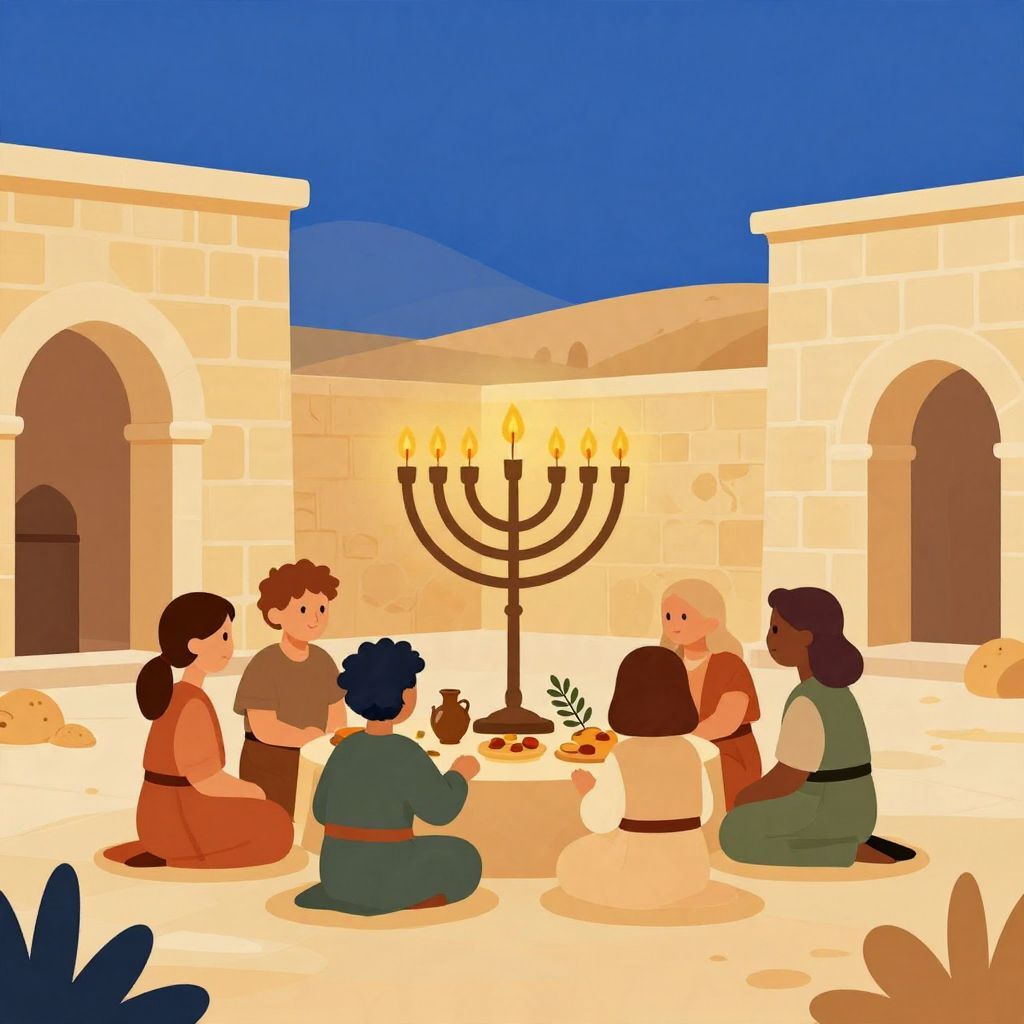
Hanukkah is one of the best-known Jewish holidays, and people often ask how to celebrate Hanukkah in a way that is both meaningful and historically grounded. The answer depends on whether you mean the ancient origins of the festival or the modern customs families use today.
Historically, Hanukkah commemorates the rededication of the Jerusalem Temple in the 2nd century BCE after the Maccabean revolt. Its later traditions—lighting candles, singing, eating special foods, and gathering with family—developed over centuries. Today, celebrating Hanukkah usually means combining remembrance of Jewish survival with home-based ritual, food, and community.
How To Celebrate Hanukkah
To celebrate Hanukkah, light the menorah each night of the eight-day festival, recite blessings, and add a candle or oil lamp each evening. Many families also eat fried foods, exchange gifts, sing songs, play dreidel, and reflect on Jewish history, religious freedom, and the miracle tradition associated with the holiday.
What Hanukkah Commemorates
Hanukkah marks the Jewish victory over Hellenistic rule in Judea and the rededication of the Second Temple in Jerusalem around 164 BCE. The holiday is rooted in the events of the Maccabean revolt, when Jewish rebels led by the Hasmonean family challenged the Seleucid Empire and reclaimed the Temple after it had been desecrated.
The historical background
In the 2nd century BCE, Judea was caught between local religious traditions and the cultural pressures of the Hellenistic world after the conquests of Alexander the Great. Under Seleucid rule, tensions grew over political control, religious practice, and the administration of the Temple. The revolt that followed was not simply a military uprising; it was also a struggle over identity, worship, and autonomy.
The miracle tradition
The familiar story that a small amount of oil burned for eight days comes from later rabbinic tradition, especially the Talmud, rather than from the earliest historical accounts. The Books of Maccabees emphasize the military and political rededication of the Temple more than the oil miracle. Both traditions matter, but historians usually distinguish between the earlier historical core and the later religious interpretation.
A Simple Hanukkah Timeline
Hanukkah developed from a historical event into a lasting religious festival. Its meaning changed over time as Jewish communities preserved memory through ritual, storytelling, and home observance.
- 167–160 BCE — The Maccabean revolt breaks out against Seleucid rule in Judea.
- 164 BCE — Jerusalem is recaptured and the Temple is rededicated; the first Hanukkah is associated with this event.
- 2nd century BCE onward — The festival is observed annually, though customs vary across communities.
- Rabbinic period — Candle-lighting, blessings, and the oil miracle become central in Jewish tradition.
- Medieval and early modern eras — Hanukkah becomes more home-centered, especially as Jewish life develops outside the Temple context.
- Modern era — Public menorah lightings, songs, gifts, and family gatherings become common in many communities.
Traditional Ways to Celebrate Hanukkah Today
Modern Hanukkah observance usually centers on lighting candles in a menorah, often called a hanukkiah. The menorah has nine branches: eight for the nights of Hanukkah and one helper candle, the shamash, used to light the others. Families place it in a visible location and add one candle each night.
1. Light the menorah
Begin on the first night with one candle, then add one more each night until all eight are lit on the final night. The candles are usually placed from right to left, but lit from left to right, with the newest candle lit first. This practice turns the holiday into a visible, cumulative act of remembrance.
2. Recite blessings and sing songs
Many households recite blessings before lighting the candles, especially in traditional observance. Songs such as Ma’oz Tzur are also common. These customs connect the household celebration to a long chain of Jewish liturgical practice and help make the holiday both communal and personal.
3. Eat foods cooked in oil
Fried foods are popular because oil is central to Hanukkah symbolism. In Ashkenazi Jewish communities, latkes are especially common, while Sephardic and other Jewish communities may prepare sufganiyot, bimuelos, or other regional foods. The exact dishes vary, but the shared idea is to honor the holiday through oil-based cooking.
4. Play dreidel
The dreidel game is a later folk custom, not an ancient Temple-era practice. It became associated with Hanukkah through Jewish storytelling and communal life, especially in Europe. The spinning top, marked with Hebrew letters, is now one of the holiday’s most recognizable symbols, especially for children.
5. Give gifts or gelt
Gift-giving is a modern custom that became more prominent over time, partly in dialogue with surrounding holiday cultures. Chocolate coins, or gelt, are widely associated with Hanukkah, and in some families children receive small gifts on each night. This practice is not required by Jewish law, but it has become a familiar part of contemporary celebration.
Why Hanukkah Became a Home Holiday
Hanukkah is unusual because it became important even after the Temple no longer stood. After the destruction of the Second Temple in 70 CE, Jewish religious life shifted away from sacrifice and toward prayer, study, and household observance. Hanukkah fit this new reality well because it could be celebrated at home through light, food, and memory.
From Temple ritual to family ritual
The original historical event centered on the Temple, but later Jewish practice transformed the festival into something that could survive in exile and diaspora. Lighting candles in the home made Hanukkah portable. That portability helped the holiday endure across centuries and across very different Jewish communities.
The meaning of light
Light became the holiday’s most powerful symbol. It can suggest hope, perseverance, divine presence, or the survival of Jewish identity under pressure. The candle ritual is simple, but historically it carries a great deal of meaning: each night adds more light, turning the holiday into a visible sign of endurance.
How Different Jewish Communities Celebrate
There is no single universal Hanukkah menu or one fixed cultural style. Jewish communities around the world have adapted the festival to local languages, foods, and customs while keeping the core ritual of lighting candles. That diversity is part of Hanukkah’s history.
Ashkenazi traditions
Ashkenazi Jews in Europe and their descendants often celebrate with potato latkes, applesauce, dairy foods, songs, and family gatherings. In many modern settings, Hanukkah also includes school events and community menorah lightings. These customs reflect both older European Jewish practice and newer public expressions of Jewish identity.
Sephardic and Mizrahi traditions
Sephardic and Mizrahi communities may emphasize different foods, melodies, and local customs. Fried pastries, savory dishes, and regional sweets are common in some places. The holiday’s core meaning remains the same, but its expression reflects the history of Jewish life across the Mediterranean, Middle East, North Africa, and beyond.
Public celebrations today
In the modern period, especially in the 19th and 20th centuries, Hanukkah also became more publicly visible. Large menorahs in civic spaces and public gatherings helped celebrate Jewish continuity in societies where Jews were increasingly participating in public life. These displays are modern developments, not ancient requirements, but they have become culturally significant.
What Hanukkah Means Historically
Hanukkah matters because it preserves the memory of a contested moment in Jewish history: resistance to religious suppression, the restoration of sacred space, and the survival of a minority tradition under imperial rule. It also shows how a holiday can evolve from a political-religious event into a domestic and symbolic observance that lasts for millennia.
Religious freedom and identity
For many Jews, Hanukkah represents the right to maintain religious practice under pressure. Historically, that message has resonated far beyond the ancient conflict itself. The holiday’s endurance shows how communities use ritual to remember both suffering and resilience, even when the original political circumstances have long passed.
Not the “Jewish Christmas”
It is historically inaccurate to reduce Hanukkah to a Jewish version of Christmas. The holiday predates Christianity by centuries. Some modern customs, especially gift-giving, developed in response to surrounding cultures, but Hanukkah’s origins, theology, and symbolism are distinct and much older.
A Practical Guide to Celebrating Meaningfully
If you want to celebrate Hanukkah in a historically informed way, focus on the holiday’s core elements rather than trying to copy every modern custom. The most important practices are candle-lighting, blessings, food, and remembrance. Everything else can be adapted to family, community, and personal tradition.
- Light one candle on the first night and add one each night.
- Place the menorah where it can be seen safely.
- Use the shamash to light the other candles.
- Share foods cooked in oil, such as latkes or sufganiyot.
- Sing traditional songs or tell the story of the Maccabees.
- Include children with games, stories, and small gifts if desired.
- Reflect on the holiday’s historical themes: survival, rededication, and identity.
Historical Significance Beyond the Holiday
Hanukkah is more than a seasonal festival. It is a record of how Jewish communities preserved memory after political upheaval and temple-centered worship changed forever. Its history shows the movement from ancient revolt to rabbinic interpretation, from public sanctuary to household ritual, and from local event to global observance.
In that sense, the best way to celebrate Hanukkah is to combine ritual with historical awareness: light the candles, enjoy the food, and remember why the holiday exists. For broader Jewish historical context, you may also want to read about the Western Wall and how sacred places shape memory across Jewish history.