
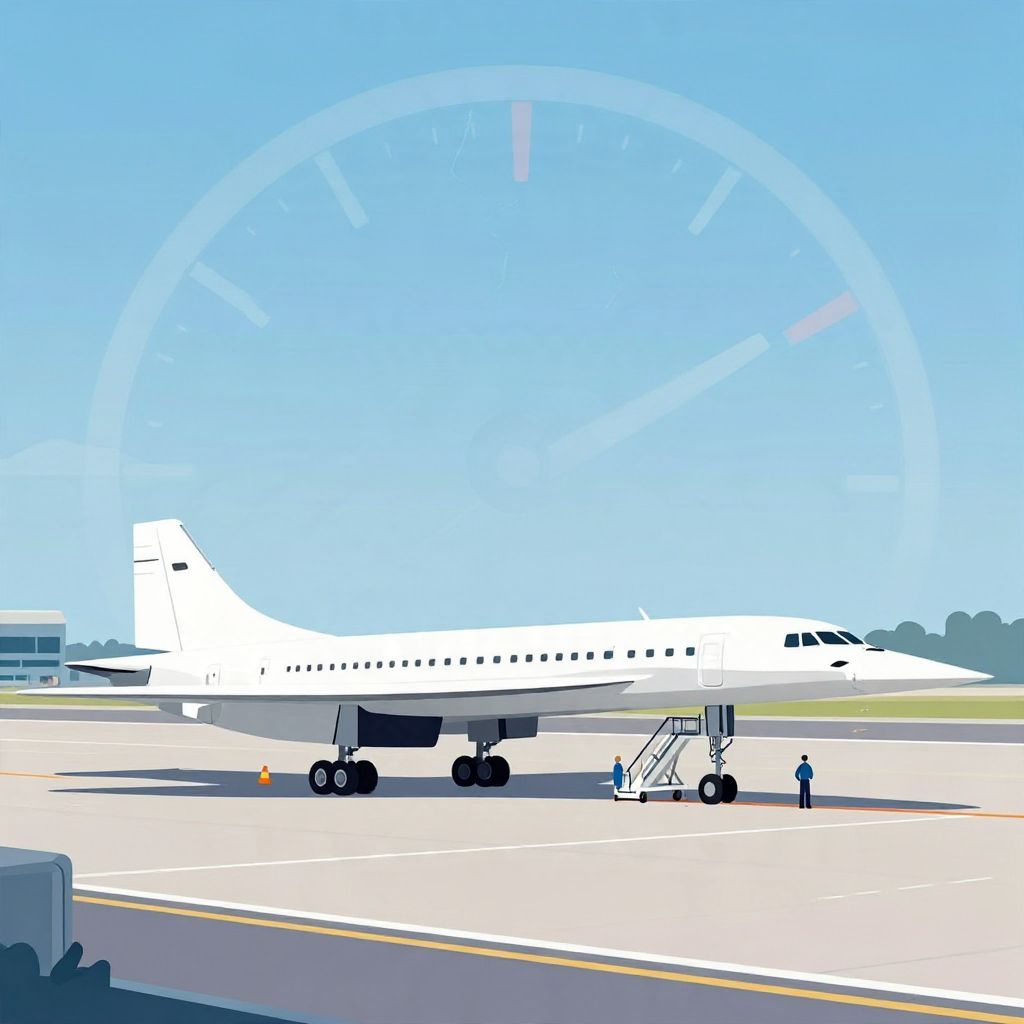
Why did the Concorde stop flying? The short answer is that a mix of economics, safety concerns, and changing aviation priorities made the supersonic airliner unsustainable. The fatal crash of Air France Flight 4590 in 2000 accelerated a decline that had already begun, and after the September 11 attacks, falling demand made the aircraft even harder to justify.
Concorde did not disappear because it was a failure in engineering; it stopped flying because it became too expensive, too limited, and too difficult to keep operating in a commercial market that had moved on.
Why Did the Concorde Stop Flying?
Concorde stopped flying because airlines could not make it economically viable, its route network was narrow, and the 2000 crash damaged confidence in the aircraft. British Airways and Air France continued service for a few more years, but by 2003 the costs of maintenance, fuel, and certification outweighed the benefits of keeping the supersonic jet in service.
The Concorde’s Promise and Its Limits
Concorde was one of the great technological achievements of the jet age. Developed jointly by Britain and France, it entered commercial service in 1976 and could cross the Atlantic in about half the time of a conventional airliner. Yet its brilliance also came with severe limits: it was expensive to build, expensive to fly, and restricted to a small number of routes because of noise and sonic boom regulations.
A marvel of engineering, not mass aviation
Concorde was designed for speed, prestige, and long-distance premium travel, not for mass transport. It carried relatively few passengers compared with wide-body jetliners, and its operating costs were high. That meant airlines had to charge very expensive fares, which limited the customer base to business travelers, celebrities, and wealthy passengers.
Noise, range, and route restrictions
Even before its final years, Concorde faced practical barriers. Its sonic boom prevented routine supersonic flight over land in many countries, which sharply reduced where it could fly at top speed. Its airport noise was also a problem. These restrictions made it far less flexible than subsonic aircraft, which could serve many more destinations more efficiently.
The Financial Problem Behind Concorde’s End
The deepest reason Concorde stopped flying was economic. The aircraft was never profitable in the way conventional airliners were expected to be. It required high fuel consumption, specialized maintenance, and a small fleet of only 14 production aircraft, which made spare parts and support more difficult over time. As aviation markets changed, the business case for Concorde weakened further.
High operating costs
Supersonic flight consumes much more fuel than subsonic cruising, and Concorde’s engines were especially thirsty at high speed. In the 1970s and 1980s, this was already a serious issue. When fuel prices rose, the aircraft became even less attractive to operate. Airlines could earn more by using larger, cheaper-to-run jets on busy routes.
A niche market that never grew
Concorde’s appeal depended on a small group of passengers willing to pay a premium for speed. That market existed, but it never expanded enough to support a larger supersonic fleet. In the long run, the aircraft remained a prestige product rather than a broadly sustainable commercial service.
The 2000 Crash Changed Everything
The turning point came on 25 July 2000, when Air France Flight 4590 crashed shortly after takeoff from Paris Charles de Gaulle Airport, killing everyone on board and several people on the ground. Investigators found that debris on the runway punctured a tire, which led to a chain of damage and fire. The crash was not caused by a fundamental flaw in supersonic flight itself, but it exposed serious operational vulnerabilities.
What the accident revealed
The disaster showed how a relatively small maintenance or runway issue could have catastrophic consequences for a highly specialized aircraft. Concorde had a strong safety record before the crash, but aviation safety depends not only on past performance; it also depends on public confidence, regulatory approval, and the cost of making an aircraft safer after an accident.
Grounding and repairs
After the crash, Concorde was grounded while safety modifications were made. Reinforced tires, protective fuel tank liners, and other changes were introduced to reduce the chance of a similar accident. These improvements made the aircraft safer, but they also added cost and complexity to a system that was already expensive to sustain.
Why the Concorde Did Not Return to Long-Term Service
Concorde did resume flying in 2001, but only briefly. The combination of the crash, the cost of upgrades, and a weakening aviation market made its future bleak. Airlines and manufacturers had to decide whether it made sense to keep investing in a small fleet of aging aircraft when demand was uncertain and operating expenses were rising.
September 11 and the collapse in premium travel
The September 11 attacks in 2001 changed global air travel. Demand fell sharply, especially in premium business travel, which was Concorde’s core market. Even if the aircraft had been technically viable, the market conditions were no longer favorable. The world’s airlines were shifting toward efficiency, flexibility, and lower costs.
Aging aircraft and certification challenges
By the early 2000s, Concorde was also an aging fleet. Keeping old aircraft airworthy is always difficult, but Concorde’s small numbers made the challenge greater. Parts had to be maintained or manufactured specially, and the aircraft’s systems required highly specialized expertise. As the fleet aged, the cost of keeping it certified and operational rose further.
Why British Airways and Air France Retired Concorde
British Airways and Air France both concluded that Concorde was no longer worth operating. Air France retired its Concorde fleet first, ending service in May 2003. British Airways followed later that year, with its final commercial Concorde flight on 24 October 2003. These decisions reflected business realities more than a single dramatic cause.
Different but related decisions
Both airlines faced the same broad pressures, but their decisions were shaped by their own fleets, finances, and route structures. British Airways had made Concorde a symbol of premium transatlantic travel, yet even for BA the aircraft had become a costly prestige service rather than a practical revenue engine. Air France reached the same conclusion from its own side of the market.
No replacement in the same form
There was no immediate successor that could take Concorde’s place. The aircraft had been an extraordinary exception in commercial aviation, and no airline or manufacturer had a ready-made supersonic replacement that could meet modern economic and environmental expectations.
Was Concorde a Failure?
Historically, Concorde is better understood as a limited success than a failure. It achieved what it was designed to do: fly passengers at supersonic speed in regular commercial service. But it did not transform aviation as its supporters once hoped. Its costs, restrictions, and market size prevented it from becoming a mainstream model for air travel.
What Concorde proved
Concorde proved that supersonic passenger flight was possible, safe enough for commercial use over decades, and attractive to a certain kind of traveler. It also demonstrated the limits of technology when economics, regulation, and public acceptance do not align. In that sense, Concorde was a technological triumph but a commercial exception.
Why it remains historically important
Concorde’s retirement marked the end of an era in which speed alone could justify a costly aviation project. After its withdrawal, commercial aviation focused more heavily on efficiency, capacity, and global reach. The dream of routine supersonic passenger travel did not disappear, but it became a much harder problem to solve.
The Historical Meaning of Concorde’s Retirement
Concorde stopped flying because it belonged to a specific moment in history: the optimistic, prestige-driven aviation culture of the Cold War and early jet age. By the early 21st century, airlines were under pressure to reduce costs, improve efficiency, and adapt to new security and environmental expectations. Concorde no longer fit that world.
In the end, the aircraft was retired not because it was obsolete in a simple technical sense, but because its unique advantages were no longer enough to overcome its financial and operational burdens. If you want to place Concorde’s story in a broader aviation timeline, you may also find related context in what happened in 1999 and what happened in 2013.