
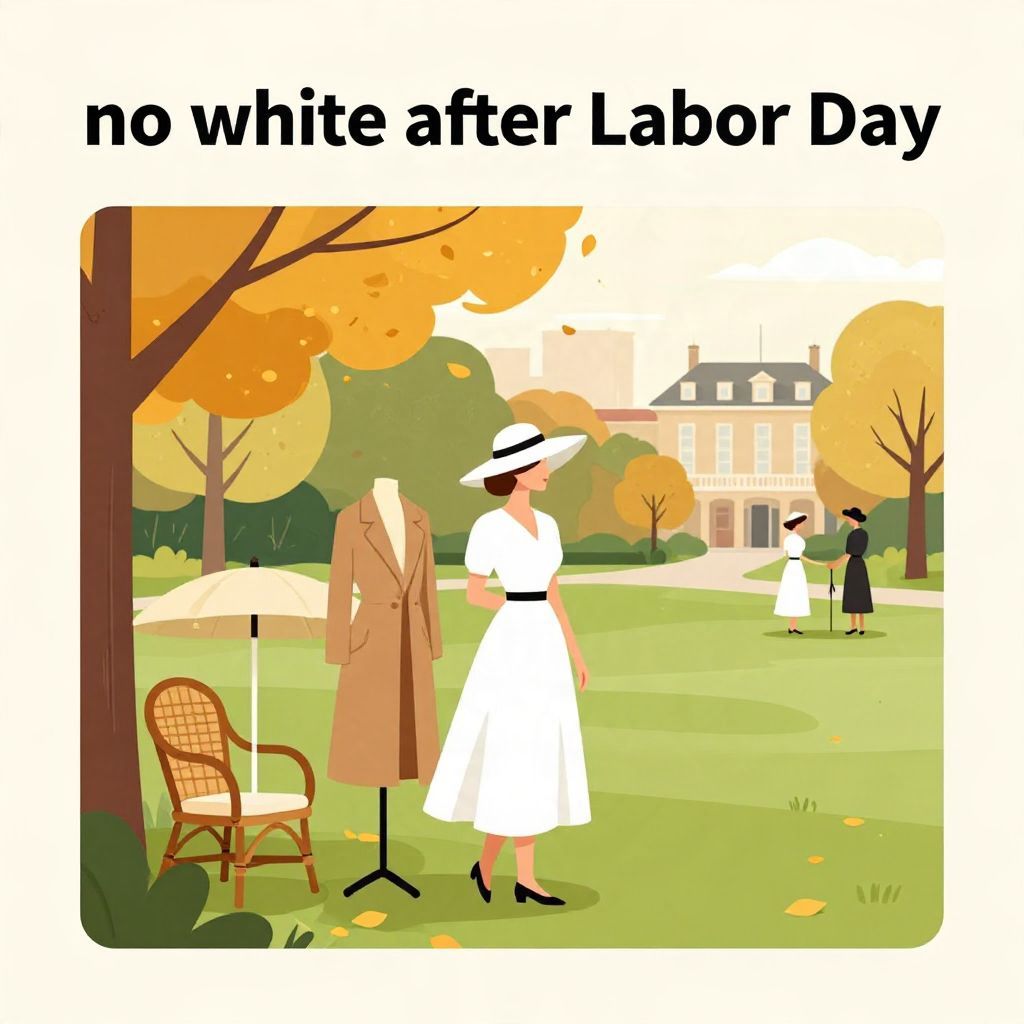
Why can’t you wear white after Labor Day? The short historical answer is: you technically can, but the “rule” grew out of upper-class fashion customs in the late 19th and early 20th centuries, especially in the United States. It was never a law, and it reflected social codes about class, leisure, and seasonal dressing more than any timeless tradition.
Over time, the idea became a popular style rule, then a symbol of old-fashioned etiquette. Its persistence says as much about American social history as it does about clothing.
Why can’t you wear white after Labor Day?
You can wear white after Labor Day because there was never a universal ban. The rule came from elite fashion customs that treated white clothing as a summer look associated with heat, vacations, and resort life. After Labor Day, when summer ended and city life resumed, darker clothes were seen as more practical and more “proper.”
Where did the rule come from?
The “no white after Labor Day” idea emerged in the late 1800s and early 1900s, especially among wealthy Americans. It was less a formal etiquette law than a social convention. In that era, fashion often signaled class status, and seasonal wardrobes helped distinguish people who could travel, vacation, and change clothes often from those who could not.
Summer, leisure, and the upper class
In the Gilded Age and Progressive Era, affluent Americans increasingly spent summers away from city heat, often at seaside resorts, country homes, or mountain retreats. Light-colored clothing, especially white, fit that world. It suggested ease, cleanliness, and leisure. White fabrics also looked fresh in summer and were more comfortable in warm weather, though they were harder to keep clean.
Labor Day as a social marker
Labor Day became a federal holiday in the United States in 1894, and it quickly came to mark the informal end of the summer social season. That made it a convenient dividing line in fashion. After the holiday, urban life, business routines, and cooler weather returned, and many style guides treated white as out of season.
The real historical meaning of the “rule”
The rule was never simply about temperature. It also reflected social signaling. In elite circles, knowing when to wear certain fabrics, colors, and accessories showed that you belonged to the right social world. Fashion rules like this helped define who was “in” and who was not, especially in a period when American society was sharply divided by wealth and status.
Fashion etiquette and class boundaries
Clothing etiquette in the late 19th and early 20th centuries was often tied to class performance. Rules about hats, gloves, fabrics, and colors were ways to display refinement. White after Labor Day became part of that larger etiquette system. Following it suggested that a person understood the codes of respectable society.
Practicality mattered too
There was also a practical side. Before modern laundering, stain-resistant fabrics, and climate-controlled buildings, white clothing was harder to maintain in muddy streets, soot-filled cities, and rainy autumn weather. Darker colors were often more durable and forgiving. So while the rule had social meaning, it also matched everyday realities of clothing care.
Was it ever a strict rule?
No. Historical evidence supports it as a strong social convention, not a universal law. People in different regions, occupations, and social groups followed it unevenly. Fashion rules were always flexible, and by the mid-20th century the old seasonal divide was already weakening. The idea survived mostly as etiquette advice and popular wisdom.
Why the rule spread so widely
Fashion magazines, etiquette manuals, department stores, and social columnists helped popularize seasonal dress rules. These sources shaped middle-class behavior by presenting elite customs as standards to imitate. As a result, what began as a code among the wealthy became a broader cultural rule, even for people who had no real reason to follow it.
How fashion changed in the 20th century
The decline of the rule was tied to major changes in clothing and society. Ready-to-wear fashion, synthetic fabrics, air conditioning, and more relaxed social norms made strict seasonal dressing less important. White clothing also became more varied: white shoes, white suits, and white dresses appeared in many settings beyond summer.
Women’s fashion and the changing meaning of white
For women especially, white remained important in bridal wear, evening wear, and warm-weather fashion. As dress codes relaxed, white became less tied to a single season and more to style, occasion, and personal choice. Fashion increasingly emphasized individuality over rigid etiquette.
Men’s fashion and the old rule
Men’s clothing also shifted. White linen suits and summer jackets remained associated with warm-weather elegance, but the idea that white had to disappear after Labor Day lost force. In modern business and casual wear, seasonal color rules are far less important than fit, fabric, and context.
Why does the saying still survive?
The phrase survives because it is memorable, easy to repeat, and rooted in a recognizable social tradition. It also appeals to people who like clear rules in a world where fashion can feel uncertain. Even when people do not follow it, they often know it as a piece of cultural shorthand for “old-fashioned etiquette.”
Pop culture kept it alive
Movies, television, magazines, and etiquette columns have continued to mention the rule long after it stopped being strictly observed. That repetition turned it into a cultural cliché. Today, it is often invoked humorously, as a symbol of outdated manners rather than a serious dress code.
What historians can say with confidence
Historians generally agree on a few points. First, the rule is American in origin and became prominent in the late 19th and early 20th centuries. Second, it was tied to elite social life and seasonal fashion. Third, it was never legally enforced and has long since lost most of its practical force. The exact moment it first appeared is harder to pin down, because fashion customs spread gradually rather than through one official source.
What is uncertain
It is difficult to identify a single inventor of the rule. Like many etiquette norms, it developed through repeated social practice, not one decree. Some stories about its origin are exaggerated or simplified. The safest historical explanation is that it emerged from changing urban fashion, class distinctions, and the rise of Labor Day as a seasonal marker.
So should you wear white after Labor Day?
Historically, yes—you may. The old rule was a social convention, not a law, and modern fashion no longer treats it as binding. If people still follow it, they are usually honoring a tradition rather than obeying a historical necessity. In other words, the “ban” on white after Labor Day tells us more about past social etiquette than about clothing itself.
The history of this rule shows how fashion can encode class, season, and social change. What began as an upper-class marker of summer leisure became a widely repeated etiquette saying, and then a cultural relic. If you are interested in how social customs evolve, you may also enjoy reading about the history of etiquette and the origins of Labor Day.