
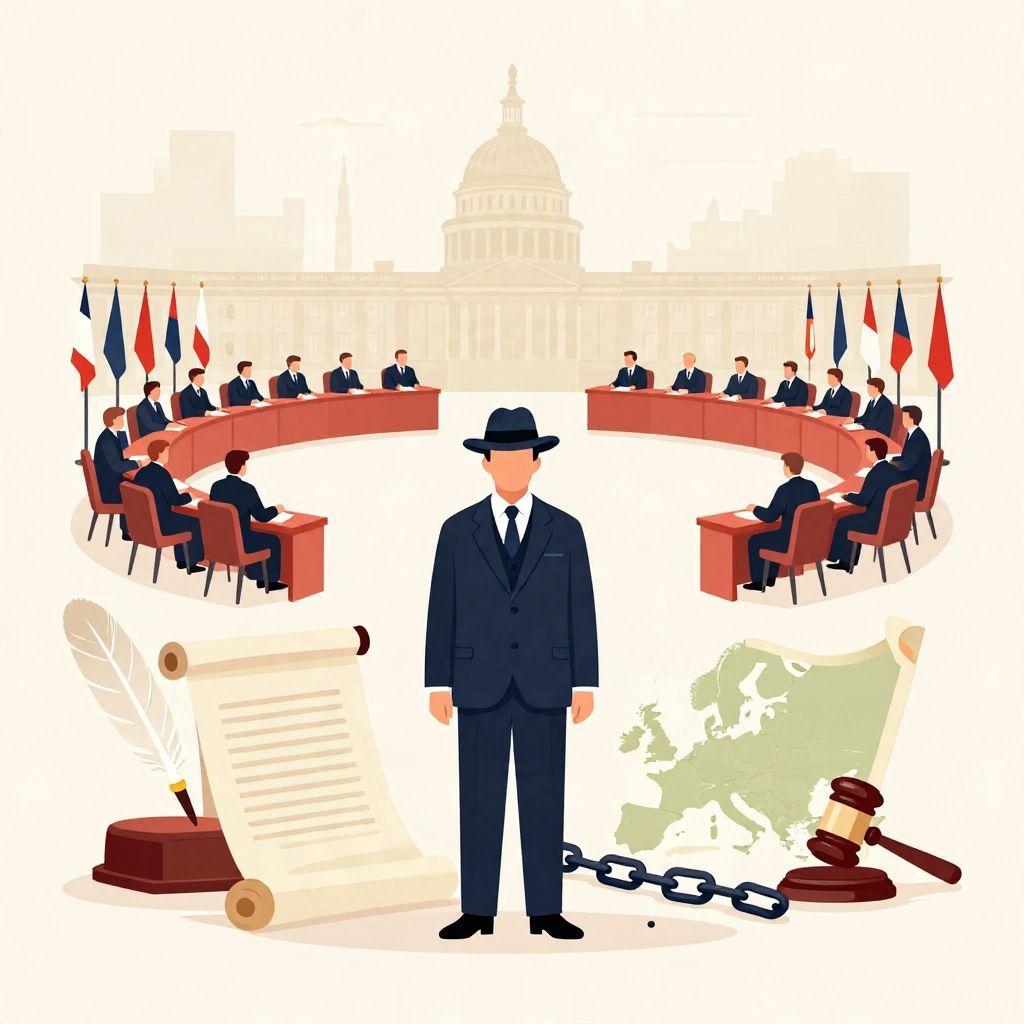
The question of why the United States did not join the League of Nations goes to the heart of the post-World War I settlement. President Woodrow Wilson helped create the League in 1919, yet the U.S. Senate refused to ratify the Treaty of Versailles, leaving America outside the new international organization.
The decision was not caused by a single issue. It grew out of constitutional concerns, partisan politics, public fatigue after World War I, and deep disagreement over whether the United States should commit itself to collective security in Europe.
Why did the US not join the League of Nations?
The United States did not join the League of Nations because the Senate rejected the Treaty of Versailles, especially the League covenant’s Article 10. Many senators feared it would limit Congress’s power to declare war and pull the U.S. into foreign conflicts without proper constitutional control.
The League of Nations and Wilson’s vision
The League of Nations emerged from the peace negotiations that followed World War I. President Woodrow Wilson saw it as the central guarantee for a more peaceful world. His Fourteen Points speech in 1918 called for open diplomacy, self-determination, and a general association of nations to prevent future wars.
At the Paris Peace Conference in 1919, Wilson pushed hard for the League covenant to be included in the peace treaty with Germany. He believed the League would make the postwar order stable by allowing nations to settle disputes through discussion rather than war. In Wilson’s view, the League was not an optional add-on; it was the foundation of lasting peace.
Why Wilson mattered
Wilson was not just a supporter of the League; he was its most important American champion. But his political style made compromise difficult. He treated the League as a moral necessity and often resisted changes that might have helped win broader support in the Senate. That rigidity became a major factor in the failure of ratification.
Senate opposition and the Article 10 controversy
The strongest reason the U.S. did not join the League was Senate resistance, especially from Republicans who controlled the chamber after the 1918 elections. Their main objection focused on Article 10, which asked member states to respect and preserve the territorial integrity and political independence of other League members.
Critics argued that Article 10 could obligate the United States to defend other countries even if Congress had not approved military action. Under the U.S. Constitution, Congress—not the president or an international body—has the power to declare war. Senators feared the League might weaken that constitutional principle.
What opponents feared
- That the League could drag the U.S. into foreign wars.
- That American sovereignty would be constrained by international commitments.
- That the League would force the U.S. to intervene in disputes far from American interests.
- That the treaty would bind future Congresses without adequate control.
Some senators were not opposed to all international cooperation. Instead, they wanted reservations—formal conditions limiting the treaty’s obligations. The most important reservationists, led by Senator Henry Cabot Lodge, tried to protect Congress’s authority while keeping the United States loosely connected to the League. Wilson refused to accept the compromise in a form he considered acceptable.
Partisan politics made compromise harder
The League fight became entangled in a bitter struggle between Wilson and Senate Republicans. The issue was not only about foreign policy; it was also about power. Lodge and other Republicans resented Wilson’s unwillingness to consult them during the peace negotiations and saw the treaty battle as a chance to assert Senate authority.
Wilson, in turn, viewed many critics as isolationist or short-sighted. He believed the League was essential to prevent another catastrophic war. This mutual distrust made a workable compromise harder to achieve. Even senators who were open to the League often disliked the way Wilson handled the fight.
The role of political timing
Timing also mattered. The treaty reached the Senate in a climate of partisan tension, postwar uncertainty, and public exhaustion. The 1918 midterm elections had weakened Wilson’s position, and he suffered a debilitating stroke in 1919, which reduced his ability to negotiate effectively at a crucial moment. Without strong presidential flexibility, the treaty’s fate became even more uncertain.
Public opinion after World War I
By 1919 and 1920, many Americans were tired of international commitments. The First World War had caused enormous loss of life, economic disruption, and emotional strain. A large part of the public wanted a return to normal life rather than a new global responsibility.
This mood did not mean Americans rejected peace. Many supported disarmament, diplomacy, and avoiding another war. But support for peace did not always translate into support for the League as Wilson designed it. For some Americans, the League seemed like a European system that could entangle the United States in old-world rivalries.
Isolationism and “America First” thinking
Although the term “isolationism” can oversimplify the period, there was a strong preference for limiting permanent foreign obligations. Many voters and lawmakers believed the United States could influence world affairs through trade, moral example, or ad hoc diplomacy without joining a standing international alliance. That outlook helped defeat the treaty.
The constitutional issue: who decides on war?
One of the most serious objections was legal rather than emotional. Senators argued that the League covenant might conflict with the Constitution by shifting war-related decisions away from Congress. Article 10 looked especially troubling because it implied a collective obligation to defend borders and political independence.
Supporters of the League said the covenant did not automatically force the United States into war. They argued that League recommendations would still require domestic constitutional procedures. But opponents did not trust that interpretation, and they worried that future pressure from allies could make formal neutrality impossible in a crisis.
Why constitutional concerns were persuasive
These concerns resonated because Americans were deeply attached to constitutional checks and balances. The memory of executive overreach during wartime, along with suspicion of permanent entangling alliances, made many senators unwilling to accept language they thought could be interpreted broadly. In the end, the legal ambiguity itself became a political obstacle.
Wilson’s refusal to compromise
Wilson’s own choices were crucial. The Senate did not simply reject the League out of hand; there were multiple chances to ratify the treaty with reservations. But Wilson believed that weakening the covenant would undermine the whole peace settlement. He insisted on acceptance of the treaty largely as written.
That stance proved costly. Instead of building a coalition, Wilson turned the debate into a test of principle. His health problems after September 1919 further limited his ability to bargain. By the time the Senate voted, the political window for compromise had narrowed dramatically.
The final votes
The Senate considered the Treaty of Versailles several times in 1919 and 1920. It never secured the necessary two-thirds majority. In the end, the United States signed a separate peace with Germany in 1921 rather than joining the League through the Versailles treaty.
Was the United States simply “isolationist”?
Not entirely. The U.S. remained economically and diplomatically influential after World War I. American leaders still cared about European stability, international finance, and global trade. The issue was not a total retreat from world affairs, but disagreement over the form that involvement should take.
Many Americans wanted selective engagement rather than permanent collective commitments. They preferred freedom of action over binding obligations. That distinction helps explain why the United States later participated in international diplomacy and security arrangements, even though it stayed out of the League itself.
Consequences of staying out of the League
The absence of the United States weakened the League of Nations from the start. America was one of the world’s largest economic and military powers, and its non-membership reduced the League’s authority and leverage. The organization still achieved some successes in humanitarian work, refugee assistance, and technical cooperation, but it lacked the power needed to deter major aggressors.
Historians often note that U.S. absence did not alone cause the League’s failure, but it made the institution less effective. Britain and France remained the main great-power supporters, and their interests were often divided. Without American participation, the League had less credibility and fewer resources to enforce collective security.
Long-term historical significance
The League debate shaped later American foreign policy. In the decades that followed, U.S. leaders remained wary of binding international commitments, yet World War II eventually pushed the country toward a more active global role. The United Nations, created in 1945, reflected lessons learned from the League’s failure and included stronger American participation from the beginning.
In summary
The United States did not join the League of Nations because the Senate refused to ratify the Treaty of Versailles, driven by fears over Article 10, constitutional concerns about war powers, partisan conflict, and public reluctance to accept new international burdens after World War I. Wilson’s unwillingness to compromise made the defeat more likely. The result was a major setback for Wilsonian internationalism and a defining moment in U.S. foreign policy history. For related context, see how imperialism helped lead to World War I and why Germany was blamed for World War I.