
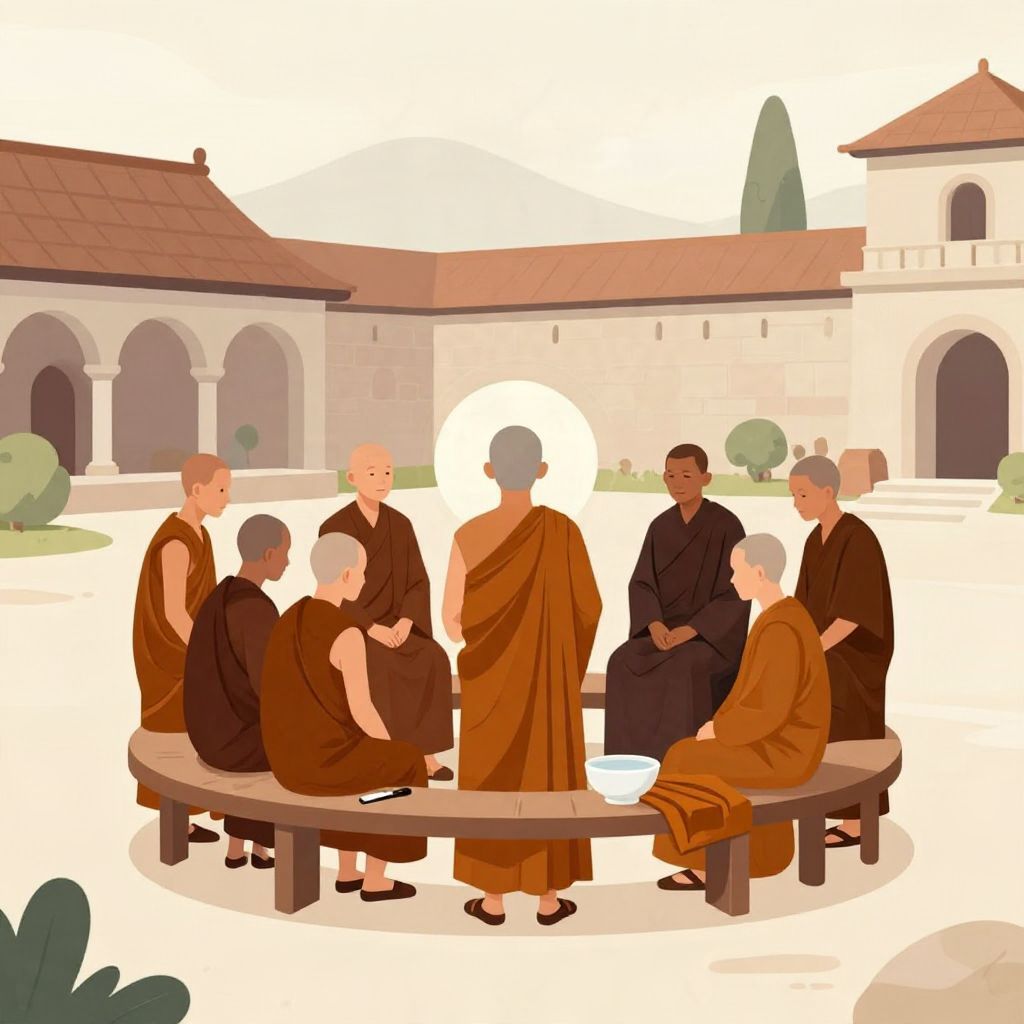
Why do monks shave their heads? The short historical answer is that shaving the head became a visible sign of renunciation, discipline, and belonging to a religious community. In many traditions, especially Buddhism, it marked a break from ordinary social life and from concern with appearance, status, and vanity.
Over time, the practice took on additional meanings: humility, equality, purity, and obedience to monastic rules. But the reasons were not identical everywhere. The custom developed differently across regions and religions, and in some cases it was adopted for practical as well as symbolic reasons.
Why do monks shave their heads?
Monks shave their heads mainly to show that they have left behind ordinary life and personal status. In Buddhist history, the shaved head signaled renunciation of vanity, attachment, and social rank. It also helped create a uniform appearance within the monastic community, reinforcing equality, discipline, and spiritual focus.
The historical origins of head shaving in monastic life
The practice is most strongly associated with Buddhism, which emerged in ancient India around the 5th century BCE. Early Buddhist monks and nuns were expected to renounce household life, dress simply, and cultivate detachment from worldly concerns. A shaved head fit that ideal because it removed one of the clearest markers of personal style and social identity.
In the earliest Buddhist communities, monastic rules developed gradually. The tradition of shaving the head was not merely cosmetic; it was part of a larger pattern of self-discipline. Monks lived by codes that regulated clothing, food, possessions, and behavior. The head-shaving custom became one visible expression of that wider way of life.
Renunciation and the rejection of vanity
Hair has often carried cultural meaning as a sign of beauty, adulthood, status, or identity. In a monastic setting, removing it symbolized the deliberate rejection of those concerns. A monk was expected to turn attention away from the body’s appearance and toward spiritual cultivation. The shaved head made that commitment public.
This does not mean monks shaved their heads because hair itself was considered evil. Rather, hair was treated as part of ordinary bodily attachment. In Buddhist thought, reducing attachment to the body could support the path toward liberation. The shaved head was therefore a practical symbol of an inner discipline.
Equality within the monastery
Shaving the head also helped erase visible differences of wealth, rank, and fashion. In the ancient world, hair could signal class, occupation, or ethnic identity. By adopting the same appearance, monks emphasized that they belonged to a community defined by vows rather than by social background.
This mattered historically because monasteries often brought together people from different families and regions. A shared appearance reduced distinctions among them. In that sense, the shaved head was both symbolic and social: it made the monastic order look unified and helped reinforce the idea that spiritual status mattered more than worldly rank.
Was shaving the head a practical choice too?
Yes. Although symbolism was central, practical concerns likely helped sustain the custom. In ancient South Asia, monastics often lived simply, traveled, and depended on alms. A shaved head was easier to maintain than elaborate hairstyles, and it fit a life that aimed to minimize personal grooming and display.
There is also a broader historical pattern here: religious communities often adopt simple external practices that are easy to recognize and difficult to confuse with ordinary life. A shaved head served that purpose well. It was immediately visible, easy to maintain, and hard to mistake for a fashionable style.
Cleanliness and lice: a secondary factor
Some modern explanations mention hygiene, and there is a practical truth to that. A shaved head can reduce the burden of hair care and may make it easier to keep clean in certain conditions. But historians generally treat hygiene as a secondary benefit rather than the main origin of the practice.
The deeper historical reasons were religious and social. Monastic shaving was not simply a health measure. It was part of a disciplined way of life that expressed vows, identity, and detachment from the ordinary world.
How the custom spread across Buddhist traditions
As Buddhism spread beyond India into Central Asia, China, Korea, Japan, Southeast Asia, and Tibet, monastic customs adapted to local conditions. The shaved head remained common in many traditions, but not all Buddhist communities followed it in exactly the same way or with the same strictness.
In some regions, the practice became a strong visual marker of ordination. In others, especially where Buddhist clergy interacted closely with lay society or local customs, the rule could be interpreted differently. This variation is important: the history of monks shaving their heads is not a single unbroken rule applied identically everywhere.
Different traditions, different expectations
- Theravada Buddhism has often preserved a strong association between ordination and a shaved head.
- Mahayana traditions also commonly include head shaving for monks, though local practice can vary.
- In some East Asian settings, certain clergy or lay practitioners may keep hair under specific circumstances, depending on school and role.
These differences show how monastic customs evolve. A practice can remain recognizable while still changing across centuries and cultures. The basic meaning—renunciation and discipline—often stays the same even when the details shift.
What does shaving the head mean in Buddhism?
In Buddhist history, shaving the head usually means taking on the identity of a renunciant. It marks ordination or the intention to live under monastic vows. The act signals that the person is stepping away from ordinary household life and entering a path centered on training, meditation, ethical conduct, and communal rules.
The shaved head is also a reminder that spiritual life is not about outward display. By removing hair, monks publicly accept simplicity. The body is not denied, but it is no longer treated as a site for fashion or self-promotion. That message made the practice powerful and enduring.
A sign of commitment, not a universal religious law
It is important not to overstate the rule. Not every religious monk in history has shaved his head, and not every shaved head belongs to a monk. The custom is especially prominent in Buddhist monasticism, but head shaving has appeared in other religious contexts too, sometimes for different reasons.
So the historical answer is specific: monks shave their heads because their traditions use the practice as a sign of renunciation, humility, and membership in a disciplined religious order. It is a learned custom, not a biological necessity or a universal rule of monasticism.
Did other religions have similar customs?
Yes, though the meanings were not always the same. In some Hindu ascetic traditions, in certain Christian monastic settings, and in other religious communities, shaving or tonsuring the head has also symbolized humility, mourning, or withdrawal from ordinary life. But each tradition developed its own reasons and rules.
For example, Christian monks in some periods wore a tonsure, a ritual shaving or cutting of hair, as a sign of religious devotion. That practice differed from Buddhist head shaving in form and meaning, but it reflects a similar historical pattern: hair can be used as a visible sign of spiritual commitment.
Why hair matters so much in religious history
Hair is culturally powerful because it is visible, personal, and changeable. Societies often attach meaning to it: youth, gender, rank, mourning, holiness, rebellion, or discipline. Religious communities have long used hair practices to communicate identity quickly and publicly.
That is why shaving the head became so effective for monks. It created an immediate visual break with ordinary life. Anyone who saw the monk could recognize a commitment to simplicity and restraint.
The lasting significance of the shaved head
Today, the shaved head remains one of the most recognizable signs of Buddhist monastic life. Its endurance shows how a simple bodily practice can carry centuries of meaning. What began as a sign of renunciation in ancient religious communities became a durable symbol of monastic identity across much of Asia.
At the same time, the practice reminds us that religious customs are historical. They develop in particular places, respond to social needs, and change over time. The shaved head is not just a ritual detail; it is a clue to how monks understood discipline, equality, and the rejection of worldly status.
In short, monks shave their heads because the practice historically expressed renunciation, humility, and belonging to a disciplined religious community—especially in Buddhism. If you want more context on monastic history, you may also find it useful to read about where monks came from and when Buddha was born.