
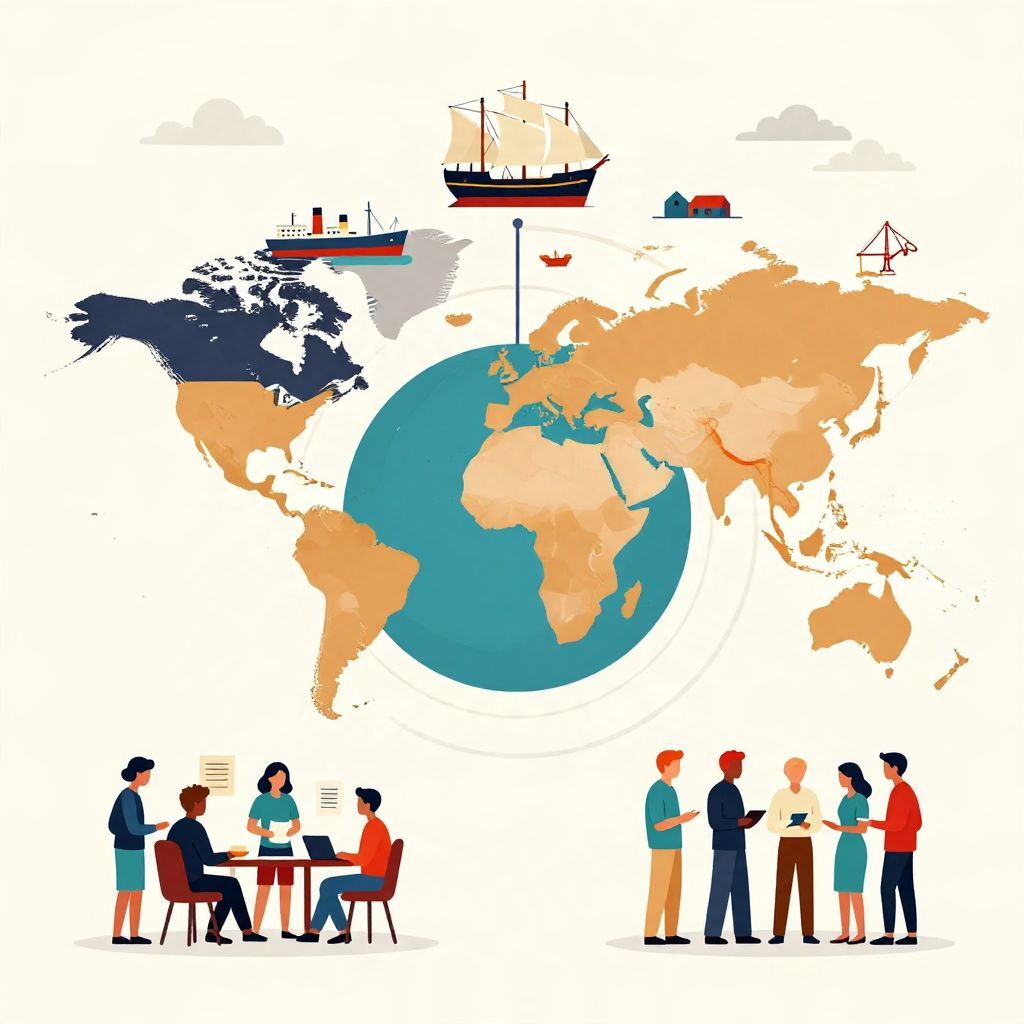
Why is English the universal language? The short answer is that English spread through a long chain of empire, trade, migration, and modern economic power. It was not chosen by one event or one ruler. Instead, centuries of British expansion and, later, the global influence of the United States made English the most widely used common language across borders.
That history matters because English did not become global simply because it is “easy” or inherently superior. Its rise reflects political power, education systems, commerce, science, media, and the internet. Understanding that path explains why English is so dominant today, even though far more people speak other languages at home.
Why is English the universal language?
English became the world’s main bridge language because the British Empire spread it across several continents, and the United States later amplified it through economic strength, diplomacy, science, entertainment, and technology. In modern life, English is often the default language for international business, aviation, academia, and online communication.
The historical roots of English
English began as a Germanic language brought to Britain after the Roman period. It was shaped by Old English, then transformed by Viking contact and the Norman Conquest of 1066. Over centuries, English absorbed vocabulary from Norse, French, Latin, and other languages, making it flexible and adaptable for different settings.
From local tongue to mixed language
Early English was not the global language we know today. It was one regional language among many in medieval Europe. But its openness to borrowing helped it expand its vocabulary and express ideas from law, government, religion, trade, and scholarship. That flexibility later made English useful in a wide range of global contexts.
The British Empire and the spread of English
The single most important historical reason for English’s worldwide reach was the British Empire. From the late 16th century through the 19th century, Britain established colonies, trading posts, and settler societies in North America, the Caribbean, Africa, South Asia, Southeast Asia, and Oceania. English traveled with administrators, merchants, soldiers, missionaries, and settlers.
Empire created language networks
In many places, English became the language of government, courts, schools, and commerce. Even where most people continued speaking local languages, English often became the language of upward mobility. Colonial rule did not make English universal in a neutral way; it tied the language to power, education, and access to institutions.
This was especially significant in India, parts of Africa, and other colonial territories where English became a practical second language among elites and professionals. After independence, many of these countries retained English in administration or higher education because it served as a common language among diverse linguistic communities.
How the United States made English even more dominant
By the late 19th and especially the 20th century, the center of global influence shifted partly from Britain to the United States. American industrial power, military reach, finance, and cultural exports greatly increased the international use of English. After World War II, the U.S. became a leading force in global institutions and world affairs.
World wars and the postwar order
The two World Wars weakened older European powers and elevated the United States as a superpower. English gained prestige in diplomacy, international organizations, and scientific exchange. Institutions such as the United Nations, while multilingual, operated in a world where English was increasingly central to global communication.
American culture and soft power
Film, television, popular music, advertising, and later digital media spread English far beyond former British colonies. Hollywood, American news networks, and global brands helped normalize English phrases and expressions. This cultural influence mattered because people often learn languages not only for work, but also through entertainment and aspiration.
Trade, science, and education strengthened English
English became the language of global exchange because it was useful. Merchants, diplomats, engineers, researchers, and students needed a shared medium to communicate across national borders. As international trade expanded, English increasingly served as a practical common language even in places with no direct British or American rule.
Science and higher education
In the 20th century, especially after 1945, a large share of influential scientific publishing appeared in English. Researchers around the world often had to publish in English to reach the widest audience. Universities, conferences, and professional networks also adopted English as a working language, reinforcing its status.
Business and aviation
Global business favors a common language that reduces misunderstanding. English became dominant in multinational companies, banking, shipping, tourism, and aviation. In air travel especially, standardized communication is essential, and English became the principal international language of the field.
The internet accelerated English’s global role
The digital age did not create English’s dominance, but it magnified it. Early computing, software development, and much of the internet emerged in English-speaking environments. As a result, English became deeply embedded in code, interfaces, search systems, and online content, giving it a major advantage in the global information economy.
A language of online access
For many users, English is the language of global platforms, technical documentation, and international news. Even when people communicate in their own languages, English often functions as the bridge for cross-border interaction. The internet has also made English learning easier and more widespread, which in turn reinforces its usefulness.
Why English, and not another language?
History could have produced a different global language. French once held great diplomatic prestige, Latin dominated educated Europe for centuries, and Spanish, Arabic, Mandarin, and other languages have enormous historical and contemporary importance. English prevailed not because of a single linguistic quality, but because of timing and power.
Several factors worked together
- Imperial expansion spread English across multiple continents.
- Economic power made English useful in trade and finance.
- Military and political influence increased its international prestige.
- Scientific and educational networks made it the language of professional advancement.
- Mass media and the internet gave it daily global visibility.
Languages become “universal” through human systems, not natural destiny. English won a historical competition shaped by empire, capitalism, migration, and modern communication technologies. Its dominance is therefore a product of world history, not proof of innate superiority.
English as a global lingua franca today
Today, English is best understood as a lingua franca, a shared language used by people with different native tongues. It is not the most spoken first language in the world, but it is the most influential second language. That distinction helps explain why English can seem universal even when most people do not grow up speaking it at home.
What “universal” really means
Calling English universal does not mean everyone speaks it fluently. It means English is unusually common in international settings. A student in Brazil, a scientist in Germany, a businessperson in Nigeria, and a tourist in Japan may all rely on English to communicate with one another. Its role is practical, not absolute.
Limits, criticism, and the future
English’s global status has also raised concerns. In some countries, it can widen social inequality by favoring those with access to quality education. It can also overshadow local languages and cultural traditions. Historians and sociolinguists therefore see English not as a neutral global good, but as a language shaped by unequal power.
Will English remain dominant?
English is likely to remain highly important for the foreseeable future, but no language’s global position is permanent. Demographic change, shifting economic power, and new technologies could alter the balance over time. Still, the historical advantages English accumulated over several centuries make it difficult to displace quickly.
English became the universal language through empire, global capitalism, science, media, and the internet, not by accident and not by linguistic design. Its rise is a reminder that languages spread when power, necessity, and communication needs align. For related background, see what language the Romans spoke and why Latin died.