
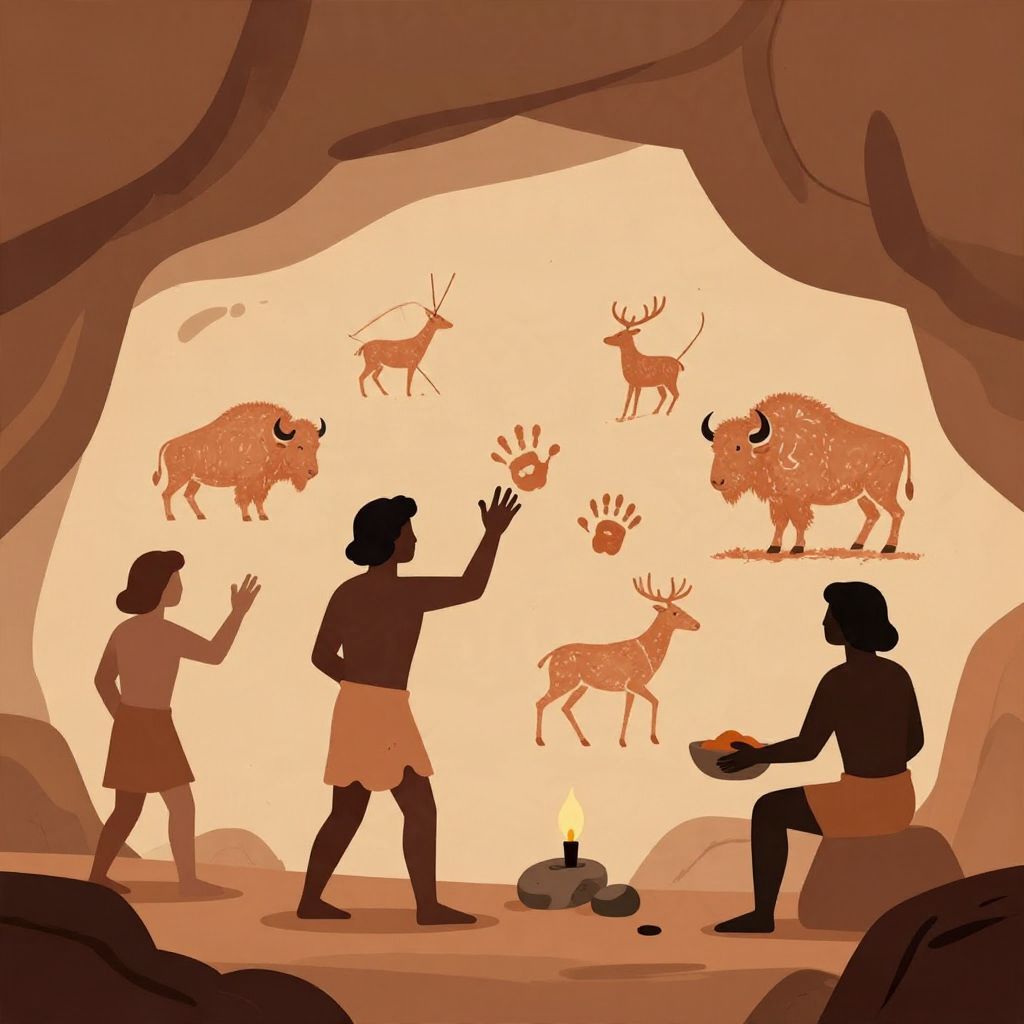
Why was drawing so important early on in history? Because long before widespread writing, printing, or photography, drawing was one of humanity’s most useful tools for recording, communicating, teaching, and believing. It could show animals, maps, rituals, plans, and stories in a form people could understand at a glance.
Across many early societies, drawing helped people preserve knowledge, organize space, and give meaning to the world. Its importance was practical and symbolic at the same time, which is why it appears so early in the archaeological record and remains central to human culture.
Why was drawing so important early on in history?
Drawing mattered early in history because it was a fast, flexible visual language. It helped people communicate across speech differences, remember important information, plan buildings and tools, teach skills, and express religious or social ideas. In societies without modern media, a mark on stone, clay, wood, or skin could carry real authority and lasting meaning.
Drawing as one of the earliest forms of communication
Before many communities developed full writing systems, images could do the work of explanation. A drawing of a hunt, a herd of animals, a route, or a ritual scene could convey meaning more directly than spoken language alone, especially when the audience included people who spoke different dialects or had not learned a formal script.
From cave walls to shared understanding
Some of the earliest surviving drawings come from Upper Paleolithic cave art, including sites in Europe such as Chauvet and Lascaux, and from rock art traditions in Africa, Australia, and elsewhere. These images are not “primitive” in any simple sense; they show observation, memory, and deliberate composition. Scholars debate their exact purposes, but many likely combined storytelling, teaching, and ritual.
Visual communication without literacy
In early agrarian and urban societies, most people still did not read or write. Drawing remained valuable because it could communicate with broad audiences. Symbols, diagrams, and images could mark ownership, identify gods or rulers, and explain how something worked. In that sense, drawing was not separate from knowledge; it was one of the main ways knowledge traveled.
How drawing helped early societies survive and organize life
Drawing was not only artistic. It was practical. Early communities used visual marks to manage land, labor, trade, and memory. A simple image could preserve information that might otherwise be lost, especially in oral cultures where knowledge depended on repetition and human recall.
Recording animals, seasons, and resources
Hunter-gatherer groups may have used drawings to track game, seasonal patterns, or sacred places. Later agricultural societies used visual signs to mark fields, store grain, and record goods. Even when writing systems emerged, drawing remained useful for illustrating counts, routes, and inventories.
Planning buildings and tools
As settlements grew into cities, drawing became essential for planning. Builders, artisans, and administrators needed to visualize walls, temples, tombs, roads, and irrigation systems. A drawn plan could reduce mistakes and help different workers follow the same design. This was especially important in large states such as ancient Egypt, Mesopotamia, China, and later the Roman world.
Maps and spatial knowledge
One of drawing’s most enduring early roles was mapping. A map is a drawing that turns space into information. Early maps did not always aim for modern geographic precision; many were practical, symbolic, or ceremonial. Still, they helped people navigate territory, define borders, and imagine the relationship between places.
Drawing and the rise of writing systems
Drawing was deeply connected to the development of writing. Many early scripts began as pictorial signs or were influenced by visual symbolism. Over time, signs became more abstract and standardized, but the link between image and language remained strong.
Pictures turning into signs
In several ancient cultures, writing evolved from visual marks that originally resembled objects. Egyptian hieroglyphs are a famous example: some signs looked like animals, tools, or body parts, even though the system eventually represented sounds and ideas as well as things. Similar processes occurred elsewhere, though not in exactly the same way.
Why images stayed important after writing began
Writing did not replace drawing. Instead, the two often worked together. Images helped clarify text, while text could explain images. In administrative records, religious manuscripts, and historical chronicles, drawings made ideas easier to remember and harder to misread. This combination made visual culture more powerful, not less.
Religious and symbolic importance of drawing
In early history, drawing was often tied to religion, ritual, and authority. Images could represent gods, ancestors, kings, spirits, or sacred events. Because many societies believed images had power, drawing was not just descriptive; it could be performative, protective, or devotional.
Images as sacred objects
In temples, tombs, shrines, and burial chambers, drawings and painted scenes could help guide the dead, honor deities, or preserve cosmic order. Ancient Egyptian tomb art, for example, was closely linked to beliefs about the afterlife. Similar visual traditions appear in many regions where images were thought to shape spiritual realities rather than merely depict them.
Authority and legitimacy
Rulers also used drawing and image-making to project power. Royal scenes, seals, reliefs, and emblems could show victory, divine favor, or control over land and people. In this way, drawing helped create political memory. It told viewers who ruled, why they ruled, and how power should be understood.
Drawing as education and memory
Early societies relied heavily on memory, apprenticeship, and oral instruction. Drawing supported all three. A visual example could teach a child how an animal looked, show a craft technique, or preserve a story in a memorable form. In many contexts, seeing was part of learning.
Teaching through images
Artisans learned by watching and copying. Farmers, healers, builders, and scribes could all benefit from diagrams or model images. Even when the subject was complex, a drawing could break it into understandable parts. This made drawing one of the earliest educational technologies.
Memory aids and cultural continuity
Because drawings can be repeated and recognized across generations, they helped communities maintain continuity. A repeated motif on pottery, cloth, stone, or architecture could signal identity and tradition. Over time, these images became part of what historians call cultural memory: the shared visual habits through which a society remembers itself.
Why drawing mattered in daily life, not just in art
Modern viewers sometimes separate “art” from “useful drawing,” but early history did not make that sharp distinction. The same image could be beautiful, informative, sacred, and political all at once. Drawing mattered because it was woven into ordinary life.
Commerce and administration
As trade networks expanded, visual marks helped identify goods, owners, and destinations. Seals, labels, and symbolic drawings made exchange more reliable. In complex economies, drawing could reduce confusion and support trust between people who did not know one another personally.
Identity and belonging
Body decoration, tattooing, painted objects, and emblematic designs also expressed identity. While not every such practice survives in the archaeological record, it is clear that visual marking was a major part of how people signaled group membership, status, and role. Drawing, in this broad sense, helped people belong.
What the evidence can and cannot tell us
Historians and archaeologists can identify where early drawings were made and sometimes infer their purpose, but they cannot always know exactly what the makers intended. A cave image might have been used for ritual, teaching, storytelling, or all three. It is best to avoid claiming a single universal explanation for all early drawing.
What is well supported
- Drawing appeared very early in human history, long before modern media.
- It served practical, social, religious, and political functions.
- It helped people communicate across literacy barriers.
- It contributed to the development of writing, mapping, and recordkeeping.
What remains debated
- The exact meaning of many prehistoric images.
- Whether some cave paintings were mainly ritual, educational, or narrative.
- How different societies ranked image-making relative to speech, memory, and text.
The lasting historical significance of drawing
Drawing was important early in history because it solved a basic human problem: how to make ideas visible and durable. It helped people store knowledge, organize communities, and connect the material world with spiritual belief. As writing, printing, and digital media developed, drawing did not disappear; it became one of the foundations of visual culture.
In historical terms, drawing is not a minor prelude to “real” communication. It is one of the oldest and most adaptable human technologies. If you want to explore how visual culture preserves identity over time, see also cultural preservation in architecture and how relocation diffusion spread ideas.