
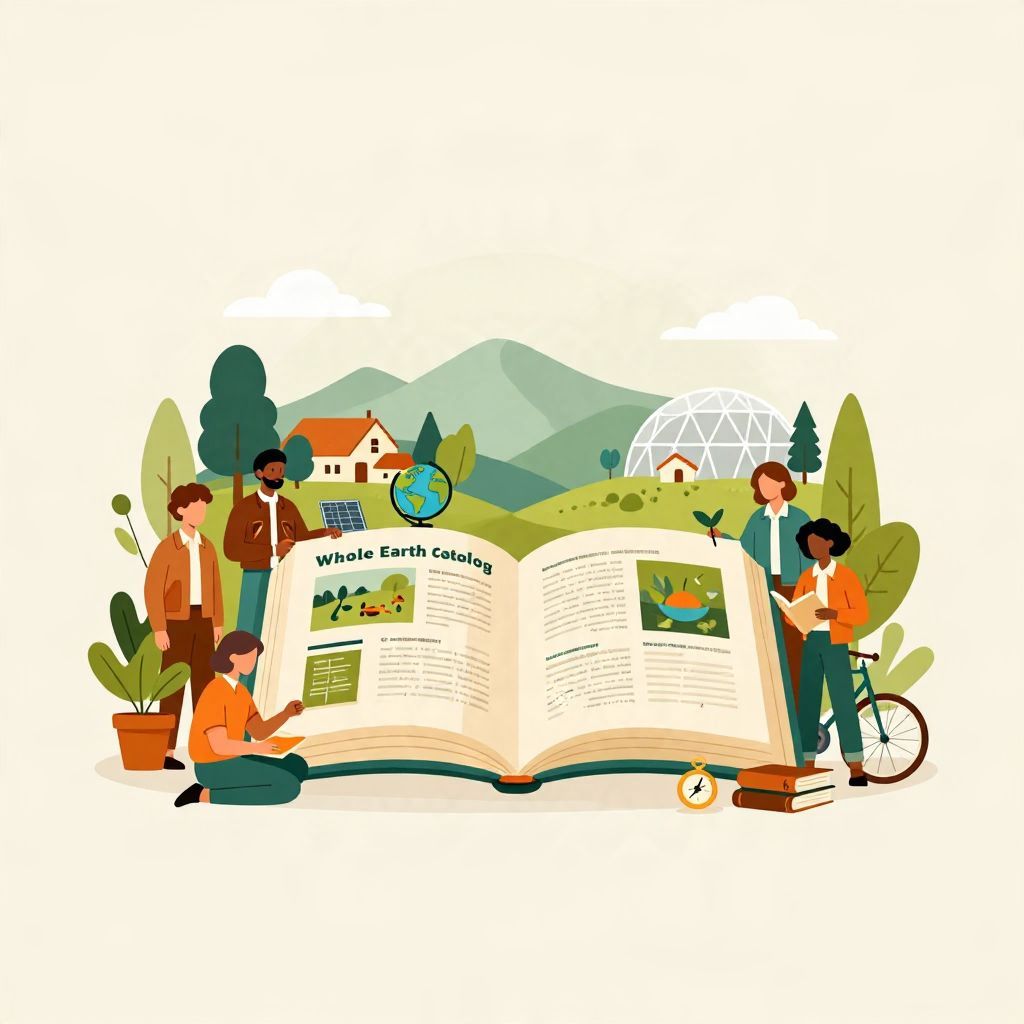
What On Earth Catalog is best understood as a phrase associated with the late-1960s and early-1970s counterculture, especially the era of the Whole Earth Catalog. If you are asking what it was, the answer is that it was not a single ancient text or formal institution, but a practical, wide-ranging guide to tools, ideas, and self-reliance that became a cultural landmark in the United States.
Its historical importance lies in how it reflected a generation’s interest in ecology, technology, communal living, and independent learning. The catalog helped popularize the idea that ordinary people could use information, tools, and networks to shape their own lives outside traditional institutions.
What was the What On Earth Catalog?
The phrase usually points to the Whole Earth Catalog, first published in 1968 by Stewart Brand. It was a large, unconventional catalog of books, tools, equipment, and ideas for people interested in homesteading, education, ecology, and alternative living. Rather than selling only products, it offered readers a way to think about self-sufficiency and systems.
Why the name matters
The title “Whole Earth” captured a broad, planetary outlook. It suggested that the Earth itself could be viewed as a shared system worth studying, protecting, and using wisely. The catalog’s fame came from its mix of practical advice and idealism, not from any single product line.
Origins of the Whole Earth Catalog
The catalog emerged from the social and intellectual ferment of the 1960s in the United States. Environmental concern, the back-to-the-land movement, New Left politics, and growing interest in cybernetics and systems thinking all shaped its tone. Stewart Brand, who had worked on the “Whole Earth” idea through earlier projects and public campaigns, wanted to create a resource that helped people find useful tools and information.
Stewart Brand and the counterculture context
Brand was not inventing a traditional mail-order catalog. He was building a hybrid between a reference book, a product guide, and a manifesto. The first issue appeared in 1968, with later editions expanding the range of topics. It appealed to students, communal experimenters, environmentalists, and readers who wanted alternatives to mainstream consumer culture.
What the catalog contained
- Books on ecology, science, design, and philosophy
- Tools for building, farming, and repair
- Information on communication and learning
- Practical advice for rural and communal life
- Reviews and recommendations written in an informal style
The catalog was selective, but it was not merely promotional. Its editors treated tools and books as gateways to independence. In that sense, the catalog was as much about knowledge as it was about objects.
How did it develop over time?
The Whole Earth Catalog changed as the culture around it changed. What began as a guide for people interested in off-grid or experimental living became a broader intellectual platform. It reflected the shift from the idealism of the late 1960s to the more technology-conscious, information-oriented culture of the 1970s and beyond.
A brief timeline
- 1968 — The first Whole Earth Catalog is published.
- Early 1970s — The catalog becomes widely known and influential in alternative culture.
- 1971 — A final regular edition appears, though the project continues in related forms.
- 1974 — The Whole Earth Epilog extends the project’s ideas.
- Late 1970s–1980s — Related publications and networks continue, including the CoEvolution Quarterly and later digital-era efforts.
Because the project evolved into several related publications, historians sometimes describe it as a family of publications rather than a single static magazine. That matters when discussing its “timeline,” since the influence of the catalog outlasted the original editions.
Why was the Whole Earth Catalog historically significant?
The Whole Earth Catalog mattered because it helped define a new kind of cultural authority. Instead of relying only on universities, corporations, or government agencies, it encouraged readers to learn from peers, experiments, and accessible information. It became a symbol of do-it-yourself culture and helped bridge counterculture and technology.
1. It promoted self-education
The catalog treated learning as something active and personal. Readers were urged to seek out books, tools, and methods that could help them build, grow, repair, and think independently. This approach anticipated later ideas about lifelong learning and open access to information.
2. It linked ecology and technology
One of the catalog’s most important contributions was showing that environmental awareness and technological curiosity did not have to be opposites. It encouraged readers to think about systems: energy, land use, design, communication, and human impact. That systems approach made it influential far beyond its original audience.
3. It helped shape digital-era thinking
Although the catalog was a print publication, it became famous for anticipating the logic of later digital networks. Its emphasis on access, connection, and user empowerment influenced early computer culture and, indirectly, the ethos of the internet age. This influence is often discussed in broad terms, so it is best understood as cultural inspiration rather than a direct technical blueprint.
4. It documented a historical moment
The catalog is also valuable as a historical source. It reveals what many educated, politically engaged Americans in the late 1960s and early 1970s cared about: ecology, autonomy, experimentation, and alternatives to mass society. In that sense, it is both a guide and a record of its time.
Was it really a catalog?
Yes, but only in a loose sense. The Whole Earth Catalog used the format of a catalog, yet it functioned more like an annotated cultural encyclopedia. It listed products and books, but it also included commentary, criticism, and a worldview. That unusual format is one reason it became so memorable.
How it differed from ordinary catalogs
- It mixed consumer information with ideas and essays
- It emphasized usefulness over brand loyalty
- It treated readers as participants, not passive buyers
- It covered subjects far beyond retail products
This hybrid form made it influential in publishing history. It showed that a reference publication could be both practical and ideological without becoming purely academic or purely commercial.
Common confusion: “What On Earth Catalog” versus “Whole Earth Catalog”
People sometimes search for “What On Earth Catalog,” but the historically established title is Whole Earth Catalog. The phrase “What on earth?” may arise from memory, mishearing, or later shorthand. There is no major historical publication by the exact title “What On Earth Catalog” that matches the famous countercultural project.
How historians handle the naming issue
When a question uses a slightly incorrect title, the best historical approach is to identify the likely intended subject and explain the correction clearly. In this case, the evidence strongly points to Stewart Brand’s Whole Earth Catalog and its related publications.
What ideas did it leave behind?
The catalog’s legacy is broader than its pages. It helped normalize a style of thinking that valued decentralization, practical knowledge, and access to tools. It also left a mark on environmentalism, design culture, alternative education, and Silicon Valley’s self-image, though later technology culture often stripped away the catalog’s ecological concerns.
Lasting themes associated with the catalog
- Do-it-yourself problem solving
- Interest in sustainability and low-impact living
- Trust in networks of peers and information sharing
- Blending of counterculture with technical innovation
Its influence should not be exaggerated into a simple origin story for the modern internet or startup culture. Still, it clearly helped popularize a mindset in which information, tools, and communities could be organized to expand individual agency.
Historical significance in perspective
The Whole Earth Catalog belongs to the history of publishing, environmental thought, and postwar American culture. It emerged from a moment when many people questioned centralized authority and searched for more humane ways to live. Its success shows how a publication can become a cultural artifact: not just something people read, but something that helps define an era.
In historical terms, the answer to “What On Earth Catalog?” is that it refers to the Whole Earth Catalog, a landmark countercultural publication first issued in 1968. Its importance lies in how it connected practical tools, ecological awareness, and self-directed learning, leaving a lasting imprint on modern ideas about information, technology, and independence. For related reading, see cultural preservation in architecture and cultural diffusion.