
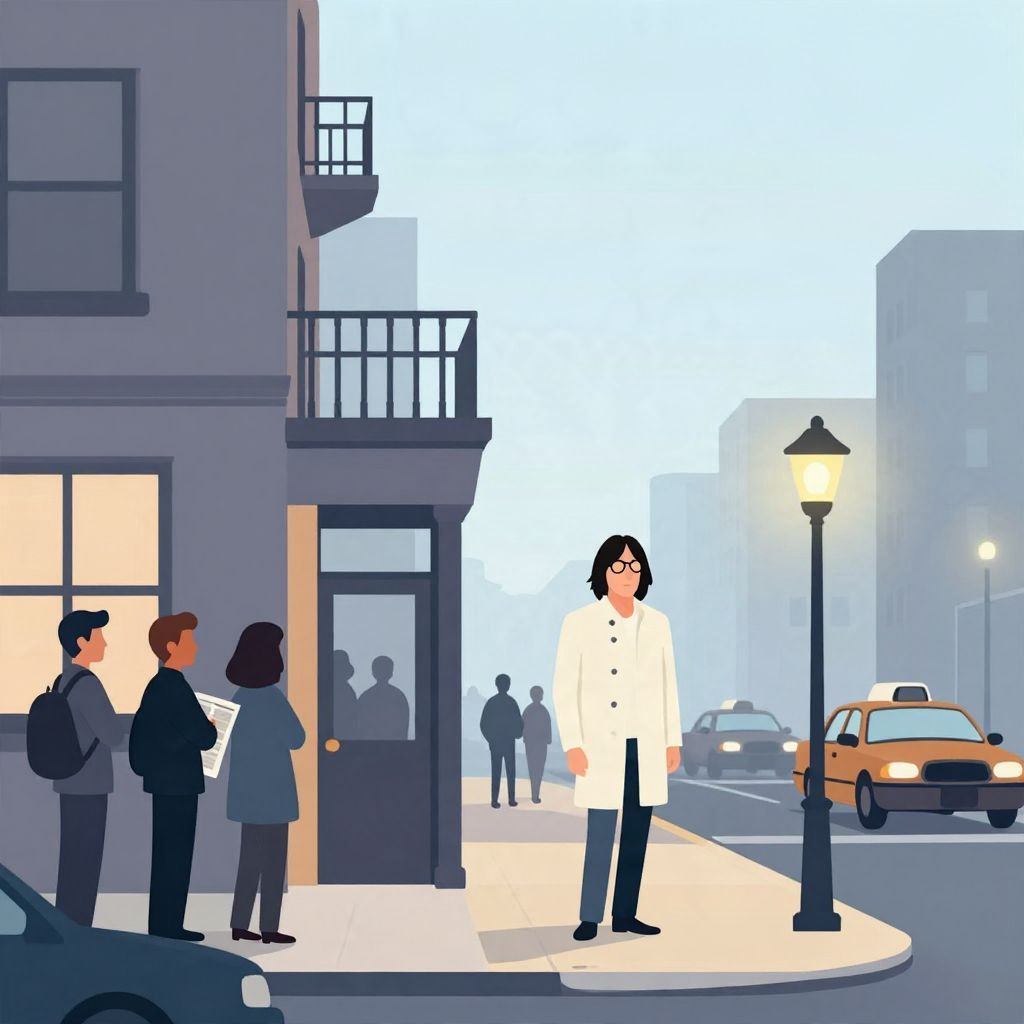
What happened to John Lennon is one of the most widely remembered events in modern music history. The former Beatle was shot and killed in New York City on 8 December 1980, ending a life that had moved from Liverpool skiffle clubs to global fame, political activism, and solo reinvention.
His death shocked the public not only because of who he was, but because it happened in a place associated with everyday life rather than political violence or war. The aftermath reshaped public mourning, intensified debates about celebrity security, and cemented Lennon’s place as a cultural symbol of the 20th century.
What happened to John Lennon?
John Lennon was fatally shot outside the Dakota apartment building in Manhattan on the night of 8 December 1980. He was taken to Roosevelt Hospital but was pronounced dead shortly after arrival. The shooter was Mark David Chapman, who was arrested at the scene and later convicted of murder. Lennon was 40 years old.
The final hours: a brief timeline
The events of 8 December 1980 are well established from police records, eyewitness accounts, and contemporary reporting. Lennon spent much of the day in New York before returning to his home at the Dakota with his wife, Yoko Ono. The shooting happened as he arrived back at the building.
- Morning and afternoon: Lennon and Ono went about their day in Manhattan.
- Evening: They returned to the Dakota after a recording session and other errands.
- Just before 11 p.m.: Lennon entered the building and was shot multiple times from behind in the archway or nearby entrance area.
- Immediately after: Police and building staff responded quickly, and Lennon was rushed to Roosevelt Hospital.
- Shortly after arrival: Doctors pronounced him dead from his wounds.
The exact minute-by-minute sequence is sometimes retold differently in popular accounts, but the broad outline is not disputed. Lennon was attacked at close range, and the injuries were too severe for emergency treatment to save him.
Who killed John Lennon?
Mark David Chapman, a 25-year-old man from Hawaii, fired the shots that killed Lennon. He remained at the scene, was arrested without resistance, and later pleaded guilty to murder. His motives have been discussed extensively, but no single explanation fully accounts for his actions.
Motives and interpretation
Chapman’s statements and behavior suggested a mix of obsession, resentment, and psychological instability. He had fixated on Lennon and on the idea of celebrity as something he both admired and despised. Historians and biographers generally treat his motives as personal and pathological rather than political in any organized sense.
It is important to separate documented evidence from speculation. Over the years, some popular accounts have tried to fit the killing into broader cultural or political narratives. While Lennon had been a prominent activist and controversial public figure, the assassination does not fit the pattern of a state-sponsored or ideological attack. It was a lone-gunman murder.
Why John Lennon’s death mattered so much
Lennon’s death resonated far beyond the music industry because he had become more than a former Beatle. By 1980 he was a symbol of 1960s counterculture, antiwar protest, artistic experimentation, and the possibility of reinvention after fame. His killing seemed to many people like the violent ending of an era.
For fans, the tragedy was intensified by the fact that Lennon had largely withdrawn from public life during the years immediately before his death. He had returned to recording with Double Fantasy, released only weeks earlier, which made his death feel like a sudden interruption of a comeback rather than the end of a long public decline.
Public grief and media response
The reaction was immediate and global. Crowds gathered outside the Dakota and in public places around the world. Radio stations played Lennon’s songs repeatedly, and newspapers framed the killing as a historic cultural loss. In the United States and Britain alike, the response mixed mourning with disbelief.
Yoko Ono asked for privacy and urged people not to glorify violence. Her response helped shape the public tone of remembrance. Rather than a state funeral or formal public ceremony, Lennon’s death became a decentralized act of mourning expressed through music, silence, vigils, and memorial gatherings.
John Lennon before 1980: the path that led there
To understand what happened to John Lennon, it helps to place the event in the larger arc of his life. Born in Liverpool in 1940, Lennon rose to fame as a founding member of The Beatles, whose music transformed popular culture in the 1960s. He later became known for solo work that blended confessional songwriting with political commentary.
From Beatles fame to solo activism
After the Beatles broke up in 1970, Lennon’s public identity shifted. He and Ono became associated with peace activism, protest art, and outspoken criticism of war and authority. Songs such as “Imagine” made him an international symbol of idealism, though he was also criticized for contradictions in his life and politics.
By the mid-1970s Lennon had stepped back from the spotlight to focus on family life, especially after the birth of his son Sean in 1975. This period of relative quiet changed the public’s relationship to him. When he re-emerged in 1980, it was as a mature artist returning after years of absence, not as the loud provocateur of the early 1970s.
The immediate aftermath
After the shooting, Lennon’s body was taken from Roosevelt Hospital, and the world quickly learned of his death. The news spread through television, radio, and print media with unusual speed, creating one of the defining breaking-news moments of the era.
Legal consequences
Chapman was charged, tried, and convicted of murder. He received a prison sentence of 20 years to life. Parole hearings have repeatedly drawn public attention, but he has remained incarcerated for much of the period since the killing. The legal process was straightforward compared with the emotional and cultural complexity of the case.
There was no broader conspiracy proven in court. That distinction matters because the murder’s fame has encouraged speculation. The historical record supports a simpler, darker explanation: a famous man was killed by an individual acting alone.
How Lennon’s death changed popular culture
Lennon’s murder had lasting effects on how the public thought about fame, vulnerability, and the boundaries between celebrity and private life. It underscored the dangers faced by highly visible public figures and helped intensify later debates about security, stalking, and access to celebrities.
It also altered the way Lennon himself is remembered. In life he was often controversial, contradictory, and difficult to pin down. In death he became a more fixed symbol: the idealistic artist whose voice was cut off too soon. That image has shaped books, documentaries, memorials, and anniversary commemorations ever since.
The legacy in music history
Musically, Lennon’s death froze a moment in the evolution of rock. The Beatles’ legacy had already been secure, but the killing gave a new emotional weight to his solo catalog and to the band’s late-era work. Songs like “Imagine,” “Instant Karma!,” and “Working Class Hero” took on added historical significance as texts of a life interrupted.
His death also influenced later generations of artists and fans who saw in Lennon both the promise and the fragility of cultural fame. The event became part of the larger history of 20th-century celebrity violence, standing alongside other high-profile killings that changed public memory.
Common questions and misconceptions
Was John Lennon killed because of his politics?
There is no solid evidence that Lennon was targeted by a political organization or that his activism caused the murder in a direct historical sense. His politics mattered to his public image, but the available evidence points to Chapman’s personal fixation and instability rather than an ideological assassination.
Did Lennon know his killer?
No. Lennon did not personally know Chapman. The assailant had approached him earlier and obtained an autograph, which has often been mentioned in retellings because it reveals the strange, unsettling proximity between fan culture and violence in this case.
Was Lennon’s death instantaneous?
He was gravely wounded at the scene, but he was not declared dead until after hospital treatment attempts. That distinction is medically important, even though the public often remembers the event as an immediate killing.
Historical significance of the event
What happened to John Lennon was not only a crime but a cultural turning point. It marked the violent end of a figure who had helped define the 1960s and 1970s, and it exposed the vulnerability of modern celebrity in an age of mass media. The shock of his death has endured because it joined personal tragedy to collective memory.
More than four decades later, Lennon’s murder remains a reference point in discussions of music history, public violence, and the making of cultural icons. It is remembered not simply as the death of a famous musician, but as the moment when a generation’s hopes, contradictions, and anxieties seemed to converge in one terrible act.
In historical terms, John Lennon was shot and killed on 8 December 1980, and the consequences were immediate and lasting: public mourning, legal punishment for the shooter, and a permanent shift in how the world remembers one of the 20th century’s most influential musicians. For related reading, see when John Lennon was shot and where John Lennon was shot.