
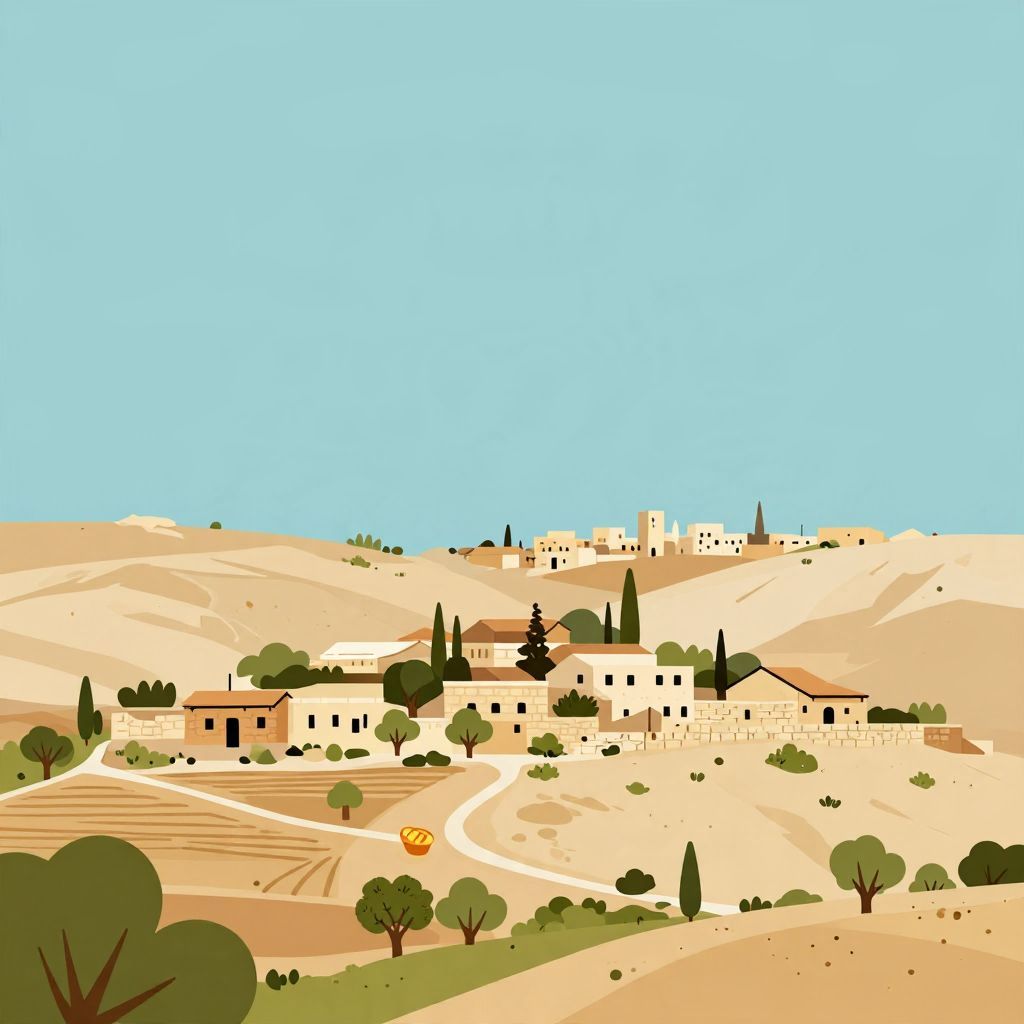
What does Bethlehem mean? The name is usually explained as “house of bread,” from the Hebrew Beit Lechem. That simple phrase has carried a long history across ancient Israel, Jewish tradition, Christianity, and modern geography.
Yet Bethlehem is more than a translation. Its meaning changed over time as the town became tied to stories of kings, prophets, and nativity traditions. To understand it properly, we need to look at language, archaeology, and the layered history behind the name.
What Does Bethlehem Mean?
Bethlehem most commonly means “house of bread” in Hebrew, from beit meaning “house” and lechem meaning “bread.” Some scholars note that ancient Semitic place names can be difficult to pin down with absolute certainty, but this is the standard and widely accepted explanation.
The language behind the name
The name appears in a Semitic linguistic setting, where place names often described a location’s function, landscape, or association. “House of bread” may have reflected agricultural abundance, though that is an inference rather than a proven fact. In related contexts, “bread” could also symbolize food more broadly, not just a single loaf or bakery.
Why the meaning matters historically
Names in the ancient Near East were rarely random. A place called Bethlehem would have sounded meaningful to ancient audiences, especially in a region where grain cultivation and survival were central to daily life. The name’s later religious importance only deepened its symbolic power.
Bethlehem in the Ancient World
Bethlehem was an ancient settlement in the hill country of Judah, south of Jerusalem. It appears in the Hebrew Bible as a small but significant town, associated with the family of David and with pastoral and agricultural life in the region.
Early references in the Hebrew Bible
Bethlehem is mentioned in biblical traditions connected to the patriarchal and monarchic periods, though the texts themselves were written and edited over many centuries. Its most famous biblical association is with David, the future king of Israel, who is said to have come from Bethlehem.
Archaeological and historical caution
Archaeology can help illuminate ancient Bethlehem, but it cannot confirm every biblical episode. The town was certainly ancient, yet many narrative details about its earliest history come from texts shaped by later religious and political concerns. Historians therefore distinguish between the existence of the place and the exact form of the stories told about it.
Why Was Bethlehem Important in Biblical History?
Bethlehem became important because it was linked to Davidic kingship and, later, to messianic expectation. In Jewish tradition, David’s hometown carried national and theological significance, making Bethlehem more than a provincial village.
The city of David’s origins
According to biblical tradition, David was born in Bethlehem and anointed there before rising to rule Israel. Whether every detail of that account is historical is debated, but the association between Bethlehem and David became deeply established in Jewish memory.
Prophetic associations
Later biblical interpretation connected Bethlehem with hopes for a future ruler from David’s line. One key text is the book of Micah, which links Bethlehem with a coming leader from Judah. This helped make the town a symbol of humble origins and royal promise.
Bethlehem and the Christian Tradition
In Christianity, Bethlehem became one of the most important places in the Holy Land because it is identified as the birthplace of Jesus. That association transformed the town from a biblical locality into a major pilgrimage destination.
The Nativity tradition
The Gospels of Matthew and Luke place Jesus’ birth in Bethlehem, though they present the circumstances differently. Historians generally agree that these accounts are theological narratives written for early Christian communities, not modern-style biographies. Still, they show how central Bethlehem had become to Christian belief.
Why Bethlehem was chosen in the stories
Linking Jesus to Bethlehem connected him to Davidic expectations. For early Christians, this was not a minor detail but a way of presenting Jesus as the fulfillment of Jewish hopes. In other words, Bethlehem’s meaning became both literal and symbolic: the town of bread, and the town of promised kingship.
A Short Timeline of Bethlehem’s Historical Significance
Bethlehem’s history stretches across millennia. The exact chronology of early events is often approximate, but the broad sequence is clear.
- Second millennium BCE or earlier: Settlement in the hill country of Judah develops; the town later known as Bethlehem emerges in the historical landscape.
- Iron Age period: Bethlehem appears in biblical traditions associated with Judah and the family of David.
- First millennium BCE: The town gains lasting importance through its association with Davidic kingship and prophetic expectation.
- 1st century CE: Christian tradition places the birth of Jesus in Bethlehem.
- 4th century CE: The Church of the Nativity is built under Roman imperial sponsorship, marking Bethlehem as a major Christian pilgrimage site.
- Byzantine, Islamic, Crusader, and Ottoman periods: Bethlehem remains a religiously significant town under changing rulers.
- Modern era: Bethlehem is part of the West Bank and continues to be important for Palestinian life, Christian heritage, and international pilgrimage.
The Church of the Nativity and Pilgrimage
One of the most important developments in Bethlehem’s history was the construction of the Church of the Nativity in the 4th century CE. Built during the reign of Constantine and later rebuilt and expanded, it anchored the town’s Christian identity for centuries.
From local town to sacred destination
Once imperial Christianity took shape, Bethlehem became a place where architecture, ritual, and memory reinforced one another. Pilgrims traveled there not just to see a site, but to encounter a sacred landscape tied to the story of Christ’s birth.
Continuity through political change
Bethlehem passed through Byzantine, early Islamic, Crusader, Mamluk, and Ottoman rule. Its religious importance endured even as political authority changed. That continuity shows how a place can remain historically significant long after its original settlement context has shifted.
What Bethlehem Means in Symbolic Terms
Beyond language and history, Bethlehem acquired symbolic meanings that shaped Jewish and Christian imagination. “House of bread” suggested nourishment, life, and divine provision. For Christians, the town also came to symbolize humility: greatness emerging from a small and ordinary place.
Symbolism in Jewish tradition
In Jewish memory, Bethlehem is tied to David, the ideal king, and to hopes for restoration. Its significance lies not only in geography but in the way it anchors national and spiritual identity.
Symbolism in Christian tradition
In Christian thought, Bethlehem represents the idea that salvation begins in a modest setting. The town’s name, associated with bread, also resonated with Christian themes of sustenance and spiritual nourishment.
Modern Bethlehem
Today Bethlehem is a Palestinian city in the West Bank, near Jerusalem. It remains a place of intense historical memory, religious pilgrimage, and political complexity. Its ancient name still shapes how people understand the city in both local and global contexts.
A living city, not just a biblical site
It is important not to reduce Bethlehem to a symbol alone. It is also a real urban community with residents, institutions, churches, mosques, schools, and economic life. The city’s past is inseparable from its present.
So, What Does Bethlehem Mean?
Bethlehem means “house of bread” in the most common historical and linguistic explanation. But its deeper meaning comes from the layers of history attached to the name: an ancient Judahite town, the hometown of David in biblical tradition, and the birthplace of Jesus in Christian belief. Its significance comes from both language and memory.
For readers interested in related biblical history, see what Exodus means and what the Western Wall is, both of which help place Bethlehem within the wider history of the ancient Near East and later religious tradition.