
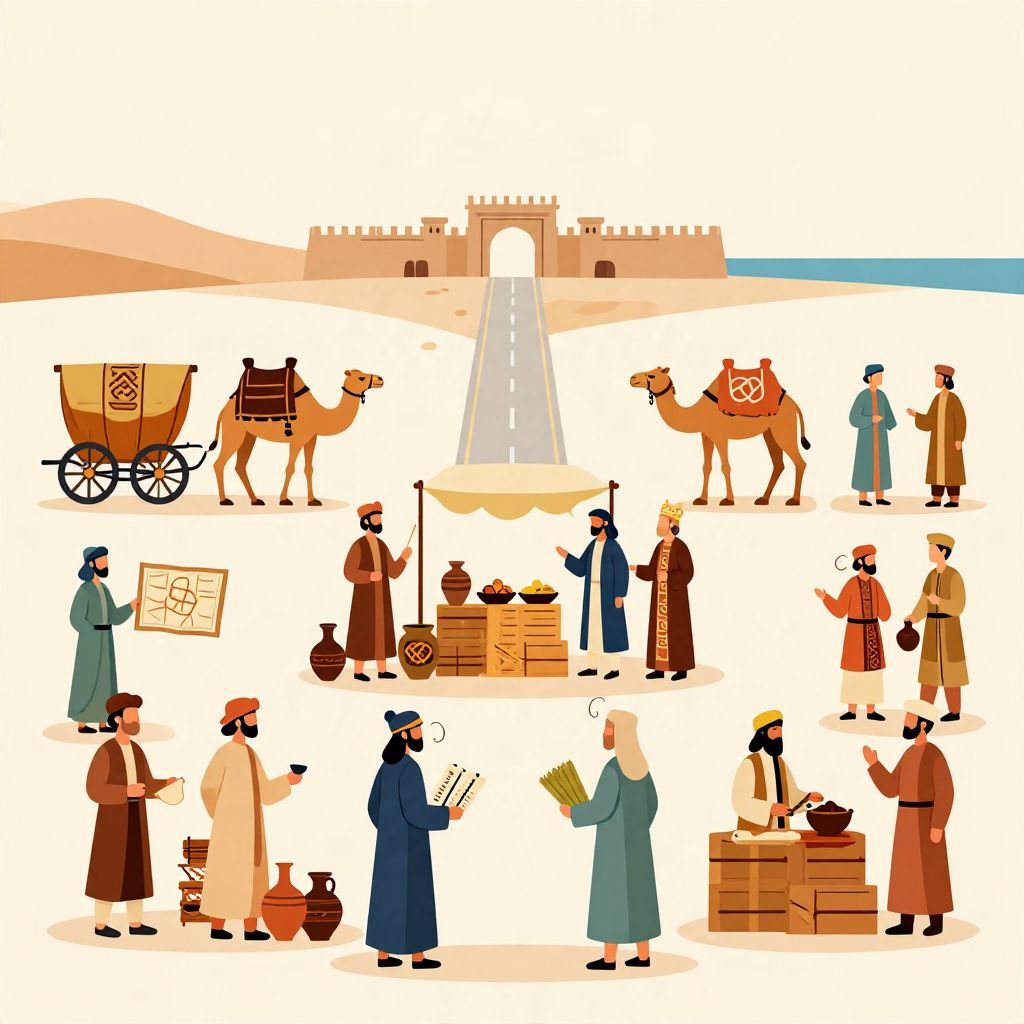
What is cultural convergence? In history, it is the process by which different societies become more alike through contact, exchange, migration, trade, conquest, and communication. The term helps explain why languages, foods, clothing, beliefs, technologies, and customs sometimes spread across borders and begin to resemble one another.
Cultural convergence is not a single event but a long historical pattern. It has appeared in ancient empires, along trade routes, during colonization, and in the modern age of mass media and the internet. At the same time, convergence has always coexisted with resistance, adaptation, and the preservation of local identity.
What Is Cultural Convergence?
Cultural convergence is the gradual movement of different cultures toward shared practices, values, or forms of expression. It happens when people borrow from one another so often that distinct traditions begin to overlap. Historians usually study it as a result of contact rather than as a deliberate plan.
A simple historical definition
In historical terms, cultural convergence means that separate communities become more similar because of sustained interaction. This can involve religion, language, dress, architecture, art, food, or political ideas. It does not erase all differences, but it can reduce them and create mixed or hybrid cultures.
How it differs from related terms
- Cultural diffusion is the spread of specific cultural traits from one group to another.
- Cultural convergence is the broader outcome in which cultures become more alike over time.
- Cultural assimilation usually refers to one group adopting the dominant culture more fully, often under pressure.
- Syncretism describes the blending of beliefs or practices, especially in religion.
These terms overlap, but they are not identical. Diffusion is a process; convergence is a pattern or result.
Where Did the Idea Come From?
The phrase “cultural convergence” is modern, but the historical phenomenon is ancient. People have always encountered other peoples through migration, warfare, trade, diplomacy, and empire. Long before scholars used the term, historians could see convergence in the shared material culture of connected regions.
Ancient roots of cultural blending
In the ancient Mediterranean, the Near East, South Asia, and East Asia, empires linked diverse populations under one political order. The Achaemenid Empire, the Roman Empire, and the Han Empire all created conditions in which language, law, religion, and artistic styles traveled widely. Convergence often followed imperial administration and long-distance commerce.
For example, the Hellenistic world after Alexander the Great’s conquests in the late 4th century BCE saw Greek language and culture spread across Egypt, the Levant, and parts of Asia. Yet this was not simple replacement. Local traditions persisted and mixed with Greek forms, producing new urban, artistic, and intellectual cultures.
How Cultural Convergence Happened in History
Cultural convergence usually developed through repeated contact, not a single encounter. Historians identify several major pathways that encouraged it across different eras and regions.
Trade and commercial networks
Trade routes connected distant societies and carried more than goods. Merchants brought languages, religious ideas, technologies, foods, and fashions. The Silk Roads, the Indian Ocean trade network, and trans-Saharan routes all helped create zones of convergence where people from different backgrounds interacted regularly.
Ports were especially important. In coastal cities, traders, sailors, and migrants lived side by side, creating multilingual and multicultural environments. Over time, local customs often absorbed foreign influences while still remaining distinct.
Migration and settlement
When people moved permanently, they brought their traditions with them. Some migrants adapted to new surroundings, while others formed communities that preserved older customs. In many cases, the result was convergence: shared foodways, mixed languages, intermarriage, and new social norms.
The movement of peoples in late antiquity, the medieval period, and the early modern era contributed greatly to cultural change. Forced migration, including slavery, also produced convergence under violent and unequal conditions. Historians must be careful here: cultural mixing did not always happen freely or peacefully.
Conquest and empire
Empires often accelerated convergence by imposing administrative systems, legal structures, and elite languages. At the same time, conquered peoples influenced the conquerors. Roman religion, art, and daily life absorbed many local practices across the empire. Similar patterns appeared in Islamic caliphates, Mongol rule, and European colonial empires.
Empire could unify regions through roads, taxation, and bureaucracy, but it also created tension. Cultural convergence under empire was often uneven, affecting urban elites more quickly than rural populations.
Religion and conversion
Religious expansion has been one of the strongest forces behind cultural convergence. As Buddhism spread across Asia, Christianity across Europe and beyond, and Islam across the Middle East, North Africa, and parts of Asia and Europe, each faith carried texts, rituals, law, and artistic traditions that shaped local societies.
But religious spread rarely produced total uniformity. Local customs often survived inside new religious frameworks. This is why historians study conversion alongside adaptation and syncretism.
Major Historical Examples of Cultural Convergence
To understand the concept clearly, it helps to look at specific historical settings where convergence can be seen in action.
The Hellenistic Mediterranean
After Alexander’s campaigns, Greek became a major language of administration and education in many eastern Mediterranean and Near Eastern cities. Greek-style architecture, sculpture, and urban planning spread widely. Yet Egyptian, Persian, Jewish, and other traditions remained powerful. The result was a blended cultural world rather than a purely Greek one.
The Silk Roads
The Silk Roads linked China, Central Asia, India, the Middle East, and the Mediterranean from ancient times through the medieval era. Along these routes, merchants and travelers exchanged silk, spices, paper, religious ideas, artistic motifs, and scientific knowledge. Buddhist art in Central Asia and Chinese adoption of foreign goods are examples of convergence shaped by long-distance exchange.
The Islamic world in the medieval period
From the 7th century onward, the expansion of Islam created a broad zone of shared religious and intellectual life stretching from Spain to South Asia. Arabic became a major language of scholarship and governance in many areas, while local traditions continued to shape law, architecture, and literature. The result was a diverse but connected civilization.
The Atlantic world
From the 15th century onward, European expansion across the Atlantic linked Europe, Africa, and the Americas in a new and often brutal system of exchange. Crops, animals, diseases, technologies, and people moved across oceans. Cultural convergence emerged in food, music, religion, and language, especially in colonial port cities and plantation societies.
This convergence, however, was deeply unequal. Indigenous peoples and enslaved Africans experienced conquest, displacement, and violence. Any historical account of convergence in the Atlantic world must include coercion as well as exchange.
Modern globalization
In the 19th and 20th centuries, steamships, railways, telegraphs, radio, cinema, and later television and the internet made cultural convergence faster and broader. Mass-produced goods and global media encouraged shared styles of dress, entertainment, and consumption. Cities around the world increasingly displayed similar commercial and architectural forms.
At the same time, modern nationalism often pushed back against convergence by emphasizing local language, heritage, and tradition. So even in a global age, convergence and differentiation have developed together.
Why Cultural Convergence Matters to Historians
Cultural convergence helps historians explain change over time without assuming that cultures are fixed or isolated. It shows that societies have always been connected, even when they seemed distant. It also reveals that cultural identity is often the product of borrowing, adaptation, and negotiation.
It challenges the idea of pure cultures
Historical evidence rarely supports the idea of any culture as completely separate or untouched. Languages borrow words, religions absorb local customs, and societies reshape outside influences to fit their own needs. Convergence reminds us that cultural boundaries are porous.
It shows power as well as exchange
Not all convergence is equal. Sometimes people adopt foreign customs voluntarily because they find them useful or attractive. Other times they do so under pressure from rulers, colonizers, markets, or social elites. Historians therefore ask who benefits from convergence and who loses autonomy.
It helps explain hybrid identities
Many communities are best understood not as one culture replacing another, but as a mixture of several traditions. Creole languages, blended cuisines, mixed artistic styles, and syncretic religions are all products of long historical convergence. These forms are not marginal; they are central to world history.
What Cultural Convergence Is Not
Because the term is sometimes used loosely, it is important to separate it from a few common misunderstandings.
- It is not the same as complete cultural uniformity.
- It does not mean every group becomes identical.
- It is not always peaceful or voluntary.
- It does not erase local identity, though it may transform it.
In history, convergence usually means overlap and similarity, not total sameness. Even in highly connected societies, people often preserve local dialects, rituals, and social habits.
The Lasting Historical Significance of Cultural Convergence
Cultural convergence has shaped empires, religions, cities, trade systems, and modern nations. It explains why historical societies often look interconnected rather than isolated. From the ancient world to the present, people have repeatedly created new cultural forms through contact with others.
The key historical lesson is that culture is dynamic. It changes through movement, encounter, conflict, and exchange. Cultural convergence is one of the clearest ways to understand that process.
For readers who want to explore the subject further, it is useful to compare cultural convergence with cultural diffusion and to see how shared practices shape cultural landscapes. Together, these ideas show how history leaves its mark on everyday life.