
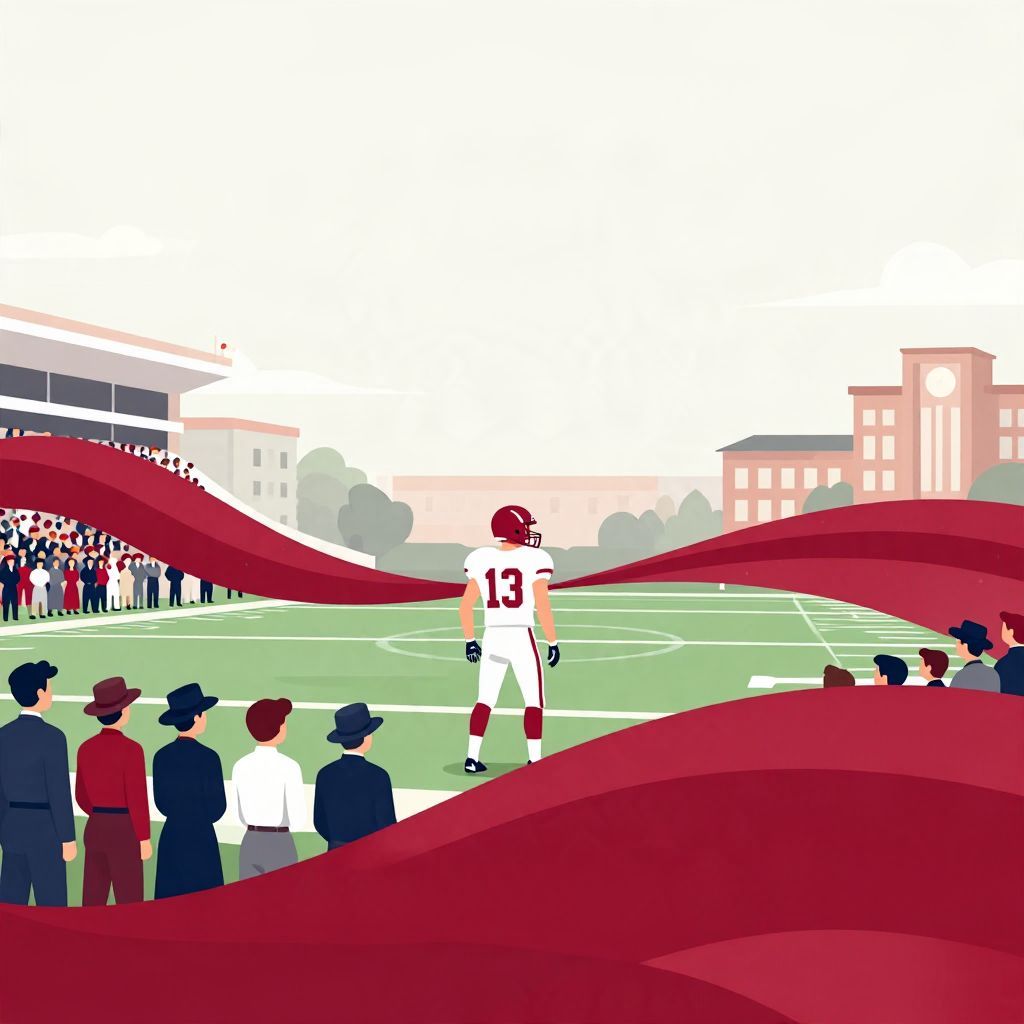
Why is Alabama called the Crimson Tide? The short answer is that the nickname grew out of early 20th-century sportswriting, not from a formal decision by the university. It began as a vivid description of Alabama’s football team, then became a permanent identity as the program’s success made the phrase famous.
The story combines a muddy game, a striking color, and the rise of college football in the South. Over time, “Crimson Tide” shifted from a newspaper image into one of the most recognizable team nicknames in American sports.
Why Is Alabama Called The Crimson Tide?
Alabama is called the Crimson Tide because a reporter used the phrase to describe the University of Alabama football team’s red uniforms and powerful style of play, especially after an early game in the 1900s. The nickname caught on, and as the team became nationally prominent, “Crimson Tide” replaced older labels and became the school’s lasting brand.
Where the nickname came from
The nickname is most closely associated with sportswriter Hugh Roberts of the Birmingham Age-Herald, who is commonly credited with using “Crimson Tide” in the early 1900s to describe Alabama football. The phrase referred both to the team’s crimson jerseys and to the image of a red wave surging across the field.
Like many famous sports nicknames, it did not appear fully formed as an official title. It emerged in newspaper language, where writers often searched for dramatic phrases that could capture a team’s appearance and momentum. Once fans and editors repeated it, the name took on a life of its own.
A phrase shaped by football culture
College football in the South was growing rapidly in the early 20th century, and newspapers played a major role in creating team identities. Alabama’s football program, founded in the late 19th century, was already developing a reputation, but the “Crimson Tide” label gave it a more vivid and memorable image.
The phrase worked because it was flexible. It suggested speed, force, and color all at once. “Crimson” pointed to the team’s uniforms; “tide” suggested an unstoppable natural movement. That combination made it ideal for a sport in which momentum and dominance matter so much.
The historical context behind the nickname
To understand why the nickname stuck, it helps to place it in the broader history of Alabama athletics and Southern football. In the early 1900s, college teams were becoming symbols of regional pride, and newspapers were helping to turn games into public spectacles. Alabama’s rising profile made it easier for a dramatic nickname to spread.
Football, newspapers, and regional identity
At the time, college football was not just a game. It was a marker of prestige for universities and, often, for entire states. In the South especially, strong football programs became a way to claim national respect. Alabama’s success on the field gave the nickname meaning beyond a simple color reference.
Newspaper language also mattered. Before radio and television, print reporters shaped how fans understood teams. A memorable phrase could become part of a school’s public identity, and “Crimson Tide” was exactly the kind of phrase that could survive repeated use.
The red uniforms and the “tide” image
Alabama had already been associated with crimson as a school color, so the first half of the nickname was easy to understand. The second half was more imaginative. A tide is a force that moves in and overwhelms, which made it a natural metaphor for a football team that was physically imposing or hard to stop.
That metaphor also helped the nickname endure. Many team names are based on animals, people, or places, but “Crimson Tide” is more poetic. It sounds less like a mascot and more like a force of nature, which suited a team that wanted to project power and inevitability.
How the nickname became official
Even though the phrase began in journalism, it gradually became the school’s accepted nickname. As Alabama football gained prestige, fans, students, and the university itself embraced the name. By the mid-20th century, “Crimson Tide” was no longer just a clever description; it was the team’s identity.
This kind of transition is common in sports history. Nicknames often begin informally, then become official through repetition. In Alabama’s case, the name proved durable because it matched the team’s colors, style, and reputation so well.
From “Crimson White” to “Crimson Tide”
Before the nickname became fixed, Alabama teams were sometimes referred to in other ways, including “Crimson White,” a nod to the school colors. But “Crimson Tide” had more force and personality. It sounded more distinctive, and it carried a sense of motion and power that better fit competitive football.
Once the phrase became popular, it was reinforced by game coverage, fan culture, and university branding. Over time, it became difficult to separate the team from the nickname. Today, the words are almost inseparable from Alabama football.
Did one game create the nickname?
There is a popular story that a specific muddy game against Auburn in 1907 helped inspire the nickname, because the field was stained red and Alabama played in crimson uniforms. That story is part of the tradition surrounding the name, but historians usually treat it cautiously. The nickname’s origin is better understood as a gradual process rather than a single dramatic moment.
What is well supported is that sportswriters in the early 1900s were already using “Crimson Tide” to describe Alabama football, and that the phrase became established through repeated use. The exact first use is harder to pin down with absolute certainty, which is common in the history of nicknames and slang.
Why origin stories can be fuzzy
Nicknames often develop in stages. A writer coins a phrase, another writer repeats it, fans adopt it, and later generations attach a memorable anecdote to explain it. That means the best-known story is not always the only one, or even the earliest one. In Alabama’s case, the essential historical point is that the nickname emerged from sports journalism and took hold because it fit the team so well.
Why the nickname lasted
Some team nicknames fade quickly, but Alabama’s did not. The reason is simple: the phrase matched the program’s identity during a period of growing success. As Alabama became one of the most prominent teams in college football, the nickname gained prestige along with the team.
Success reinforced the symbol
When a team wins often, its name becomes more visible. Alabama’s football achievements in the 20th century helped make “Crimson Tide” nationally familiar. The nickname was repeated in headlines, radio broadcasts, game programs, and eventually television coverage. Each appearance strengthened the association.
The name also carried emotional weight for fans. It was not just a label; it became a symbol of tradition, loyalty, and excellence. For supporters, saying “the Crimson Tide” meant more than identifying a team. It meant invoking a history of championships, rivalries, and school pride.
It worked as a brand before branding was modern
Long before modern sports marketing, “Crimson Tide” functioned like a powerful brand name. It was short, memorable, visually vivid, and easy to chant or print. Because it was not a generic animal mascot, it stood out. That uniqueness helped Alabama build one of the most recognizable identities in American sports.
What the nickname does not mean
It is worth noting what “Crimson Tide” does not mean. It is not a reference to a geographic tide in Alabama, nor to a political event, nor to a historical flood. It is primarily a sports nickname built from color imagery and metaphor.
People sometimes assume school nicknames always come from official ceremonies or ancient traditions. In reality, many of them begin in newspapers, student slang, or casual commentary. Alabama’s nickname is a classic example of how language in sports can become durable history.
The lasting historical significance of the name
The history of the Crimson Tide shows how a nickname can become part of a university’s public identity. What began as a descriptive phrase in early 20th-century sports journalism evolved into a symbol recognized across the United States. That transformation reflects the growing power of college football, the influence of the press, and the importance of regional pride in Southern sports culture.
It also shows how history is often made in small, ordinary ways. A reporter’s phrase, repeated often enough, can become tradition. In Alabama’s case, that tradition became one of the most famous names in college athletics.
So, Alabama is called the Crimson Tide because the nickname originated in early football reporting, tied to the team’s crimson colors and the image of a powerful, overwhelming wave. The exact first usage is debated, but the historical process is clear: journalism created the phrase, football success spread it, and tradition preserved it. If you want more background on the state’s broader past, see when Alabama became a state; for another example of how historical identity can evolve, you may also be interested in what the 18th Amendment means in simple terms.