
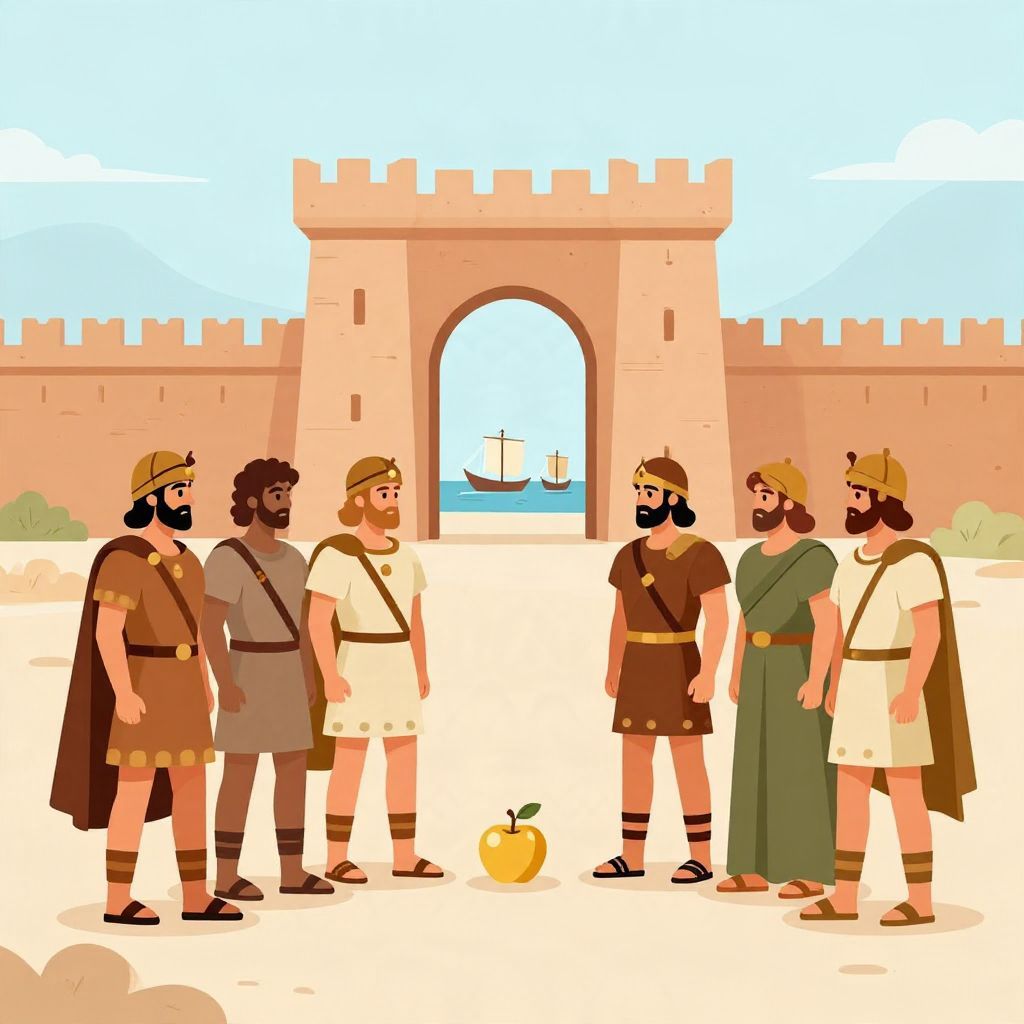
The Trojan War is one of the best-known stories from the ancient world, but the question “Why did the Trojan War start?” has more than one answer. In Greek tradition, the war began with a divine contest, a beauty judgment, and the abduction of Helen. Historians, however, treat those elements as mythic explanation rather than literal fact.
What likely lay behind the legend were real tensions in the late Bronze Age Aegean: competition over trade routes, prestige, alliances, and control of the northwestern Anatolian coast. The famous war story blends memory, myth, and poetry into a single dramatic origin tale.
Why Did The Trojan War Start?
The Trojan War started, in the traditional Greek story, because Paris of Troy took Helen from Sparta, provoking the Greek kings to sail against Troy. Historically, the deeper causes were probably political and economic rivalries in the Late Bronze Age, later turned into epic myth by poets like Homer.
The Mythical Cause: The Judgment of Paris
In the best-known version of the story, the goddess Eris caused trouble by tossing a golden apple “for the fairest” among the goddesses Hera, Athena, and Aphrodite. Paris, a prince of Troy, was chosen to judge the contest. He awarded the apple to Aphrodite, who promised him the love of the most beautiful woman in the world: Helen.
Why this mattered in the legend
Helen was already married to Menelaus, king of Sparta. Paris’s taking of Helen, whether by seduction or abduction depending on the version, gave the Greek rulers a reason to unite against Troy. In mythic terms, the war was a punishment for Paris’s choice and for the disruption of marriage, hospitality, and honor.
This story is not treated by historians as a literal explanation of events. It is a mythic framework that explains why a coalition of Greek leaders would have gone to war and why the conflict was remembered as both personal and cosmic.
The Historical Background: Bronze Age Rivalry in the Aegean
Behind the legend, the most plausible historical setting is the late Bronze Age, roughly the 13th or early 12th century BCE. During this period, palace societies in mainland Greece and western Anatolia were interconnected through diplomacy, trade, and warfare. Troy, or Wilusa in some Hittite texts, likely occupied a strategic position near the Dardanelles, a key route between the Aegean and the Black Sea.
Why Troy’s location mattered
A city near the entrance to the Dardanelles could benefit from controlling movement through the region. That made it valuable to merchants, rulers, and military powers. Even if the epic war is not a straightforward historical record, the setting reflects a real world in which access, tribute, and prestige could spark conflict.
Possible causes historians consider
- Trade competition: Control of maritime routes and coastal markets could have been a major source of tension.
- Political alliances: Smaller kingdoms often depended on networks of support, and a local dispute could draw in wider coalitions.
- Status and prestige: Bronze Age rulers fought not only for land but also for honor, legitimacy, and influence.
- Regional instability: The Late Bronze Age was a period of upheaval across the eastern Mediterranean, with shifting powers and occasional collapse.
Who Was Helen, and Why Was She So Important?
Helen is central to the story because she personified the cause of war in Greek tradition. Ancient poets described her as extraordinarily beautiful, and that beauty became a symbol of desire, rivalry, and loss. In the epic tradition, Helen’s departure from Sparta is the immediate trigger for the expedition against Troy.
Helen in myth and meaning
For the Greeks, Helen was more than a person in a romance plot. She represented the danger of disrupted households and the power of attraction to overturn political order. Her story also allowed the war to be explained as both a human conflict and a divine punishment.
From a historical standpoint, Helen may preserve a memory of a dynastic dispute, a diplomatic breach, or even a real woman whose story was later transformed into legend. There is no secure evidence that a single historical Helen caused a war in the way the epic says she did.
What Homer Says About the War
The main literary source for the Trojan War is Homer’s Iliad, composed centuries after the events it describes, probably in the 8th century BCE. Homer does not tell the full story of how the war began; instead, he begins in the middle of the conflict, focusing on the quarrel between Achilles and Agamemnon.
Why the poems matter anyway
Although Homer is not a historian in the modern sense, his epics preserve older traditions about heroes, kingship, and warfare. They also show how the Greeks of the Archaic period understood the war: as a great collective expedition caused by insult, obligation, and honor.
Other ancient works, including the lost epic cycle and later summaries, filled in the beginning and end of the story. These sources are valuable for understanding the tradition, but they are not independent proof of the war’s exact causes.
Did the Trojan War Really Happen?
Most historians believe there was likely some real conflict or series of conflicts involving Troy or a nearby settlement, but not necessarily the ten-year war described in epic poetry. Archaeology at Hisarlik in modern Turkey has shown that the site was inhabited for a long time and suffered destruction in the Late Bronze Age. That does not prove the Homeric story, but it does support the idea that Troy was a real and important place.
What archaeology can and cannot show
Archaeology can reveal destruction layers, settlement patterns, weapons, and trade connections. It cannot, by itself, confirm the identities of Paris, Helen, Achilles, or Agamemnon. The most cautious historical conclusion is that the Trojan War legend may preserve a memory of conflict around a real city, later reshaped by oral tradition and poetry.
The Role of the Gods in the Story
In Greek myth, the gods were not decorative additions; they were part of the explanation for why events happened. Aphrodite’s promise to Paris, Hera’s resentment, and Athena’s anger all helped frame the war as the result of divine rivalry as well as human choice.
Myth as a way of explaining history
Ancient audiences often understood major events through the actions of gods and heroes. This did not mean they lacked interest in politics or causation. Rather, myth gave moral and symbolic meaning to events that may have had practical origins in power struggles, alliances, and economic interests.
How the War Story Grew Over Time
The Trojan War story likely developed over generations of oral storytelling before being written down. As it circulated, the tale absorbed local traditions, heroic genealogies, and moral lessons. By the time it reached Homeric form, it had become a grand explanation for the end of a heroic age.
Why the story endured
- It combined love, betrayal, and revenge in a memorable plot.
- It gave Greek communities a shared heroic past.
- It explained the ruins and memories of an older Bronze Age world.
- It explored timeless themes: honor, fate, pride, and loss.
So What Was the Real Cause?
The most accurate answer is that the Trojan War started, in myth, because Paris took Helen and offended Menelaus and the Greek kings. In historical terms, the story probably grew out of real tensions in the Late Bronze Age Aegean, where strategic geography, trade, and political rivalry could produce conflict. The famous “cause” is therefore both legendary and symbolic.
That dual explanation is important. The myth gives the war its dramatic shape, while history suggests a more ordinary but still serious background of competition among elites and city-states. The Trojan War became famous not because it was simple, but because later Greeks turned a possible regional conflict into a foundational epic of their civilization.
Why the Trojan War Still Matters
The Trojan War remains influential because it sits at the boundary between myth and history. It helps us see how ancient people explained the past, how oral tradition preserved memories of a vanished age, and how later writers transformed local conflict into universal literature. The question of why it started is therefore not just about one war, but about how history itself becomes legend.
For more background, you may also want to read about where Troy was located and explore the wider world of the ancient Greeks in what ancient Greeks looked like.