
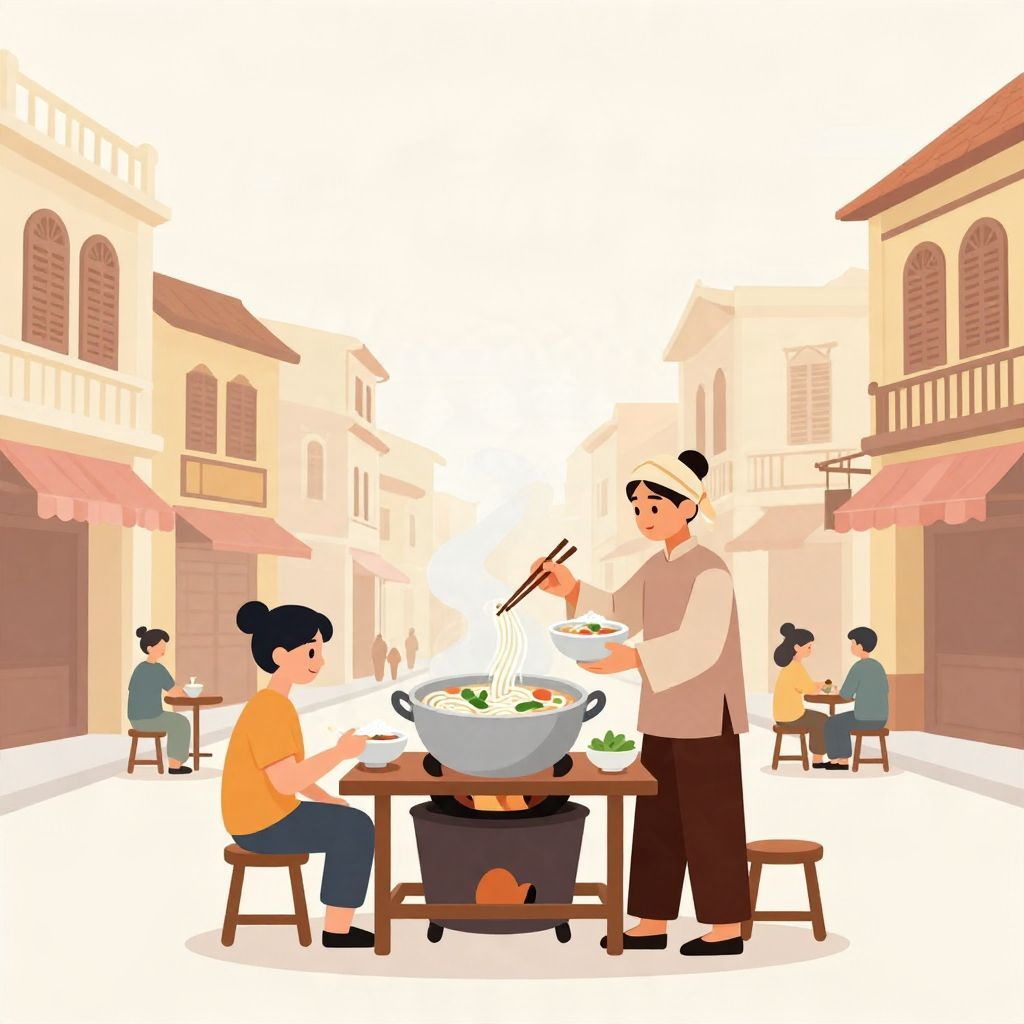
When people ask where pho is from, they are usually asking about more than a bowl of noodle soup. Pho is one of Vietnam’s best-known dishes, and its history reflects migration, colonial-era change, urban food culture, and regional identity. Its exact origins are debated, but its development is closely tied to northern Vietnam in the late 19th and early 20th centuries.
Today, pho is often treated as a national dish of Vietnam, yet its story is more complex than a single invention. It emerged from a mix of local cooking traditions and outside influences, then spread across the country and around the world through war, migration, and diaspora communities.
Where Is Pho From?
Pho is generally understood to have originated in northern Vietnam, especially the area around Hanoi and the Red River Delta, in the late 1800s or early 1900s. Most historians and food scholars agree that it developed in Vietnam rather than being imported whole from elsewhere, though its broth, noodles, and name likely reflect several culinary influences.
The Historical Background of Pho
Pho did not appear in a vacuum. It developed during a period when Vietnam was under French colonial rule, cities were changing rapidly, and new ingredients and eating habits were circulating through markets and street stalls. The dish likely took shape in the early 20th century, when urban vendors began serving affordable noodle soup to workers and city residents.
Northern Vietnam and Hanoi’s Food Culture
Hanoi is central to pho’s history because early versions of the dish are strongly associated with the city and nearby towns. Northern Vietnamese cuisine traditionally emphasized clear broths, rice noodles, herbs, and restrained seasoning. Pho fit that pattern while also becoming distinct through its long-simmered beef broth and flat rice noodles. Street food culture in Hanoi helped make the dish popular and portable.
French Colonial Influence
One of the most discussed influences on pho is the French colonial presence in Vietnam. Beef became more widely consumed under colonial rule, partly because French tastes encouraged cattle slaughter and beef dishes in urban areas. Some scholars have linked the word “pho” to the French pot-au-feu, though this connection is debated and not proven beyond doubt. What is clearer is that colonial-era conditions helped create the environment in which pho could emerge.
Chinese and Local Vietnamese Influences
Pho also belongs to a broader East and Southeast Asian noodle tradition. Rice noodles, broth-based soups, and garnishes were already familiar in the region. Vietnamese cooks adapted these elements to local tastes, creating a dish that was not simply borrowed from China or France, but formed through cultural exchange. This is why pho is best understood as a Vietnamese innovation shaped by multiple influences.
How Pho Likely Developed
The most accepted historical view is that pho evolved gradually rather than being invented by one person at one moment. It likely began as a beef noodle soup sold by street vendors in northern Vietnam in the early 20th century. Over time, cooks refined the broth with spices such as star anise, cinnamon, cardamom, and cloves, giving pho its recognizable aroma and flavor.
From Street Food to National Dish
In its early years, pho was a practical urban meal: inexpensive, filling, and easy to serve quickly. As it spread through Hanoi and other northern cities, it became part of everyday life. By the mid-20th century, pho had grown from a local street dish into a symbol of Vietnamese culinary identity, especially in the north.
War, Migration, and the Spread of Pho
Vietnam’s modern wars and political upheavals helped carry pho far beyond its original region. After the partition of Vietnam in 1954, many northerners moved south, bringing their food traditions with them. In southern Vietnam, pho adapted to local preferences, often becoming sweeter and more heavily garnished. Later, after 1975, Vietnamese refugees and migrants introduced pho to the United States, France, Australia, Canada, and elsewhere.
Regional Differences in Pho
Pho is not one fixed recipe. Its regional variations reveal how a dish can preserve its identity while changing across time and place. The two best-known styles are northern and southern pho, each shaped by local tastes and historical circumstances.
Northern Pho
- Usually lighter and more restrained in seasoning
- Broth is often clearer and less sweet
- Garnishes are simpler, with fewer herbs and sauces
- Associated most closely with Hanoi and northern Vietnam
Southern Pho
- Often sweeter and richer in flavor
- Served with more herbs, bean sprouts, lime, and chili
- Reflects the food culture of southern Vietnam, especially around Saigon
- Shows how pho adapted as it moved southward and later overseas
What Makes Pho Historically Important?
Pho matters because it is more than a recipe. It is a record of Vietnam’s modern history in edible form. The dish reflects colonial change, urbanization, regional diversity, and migration. It also shows how national identity can be expressed through food. For many Vietnamese people, pho is both everyday comfort food and a cultural symbol.
Pho as a Symbol of Vietnamese Identity
Over time, pho came to represent Vietnam internationally in much the same way that sushi represents Japan or pasta represents Italy, though such comparisons can oversimplify history. Pho’s rise to global fame was not inevitable. It became a symbol because Vietnamese communities preserved and adapted it, and because outsiders came to associate the dish with Vietnam itself.
Global Pho and Diaspora Communities
Outside Vietnam, pho has continued to evolve. Restaurants in immigrant neighborhoods often adjusted ingredients to local markets while keeping the essential structure of broth, noodles, and beef or chicken. This global spread has made pho both familiar and diverse. In many cities today, pho is a link between memory, migration, and identity.
Common Myths and Uncertainties About Pho’s Origin
Because pho is so famous, several origin stories circulate about it. Some are plausible, while others are more legend than evidence. Historians generally agree on the broad outline—northern Vietnam, early 20th century, urban street food—but not on every detail.
Did Pho Come Directly from France?
No simple answer fits. French influence likely mattered, especially in the increased availability and prestige of beef, but pho was not merely a Vietnamese version of a French soup. It was created locally by Vietnamese cooks who adapted ingredients and techniques to their own food traditions.
Was Pho Invented by One Person?
There is no reliable evidence that a single inventor created pho. Like many traditional dishes, it appears to have developed gradually through collective practice. Vendors, home cooks, and restaurant owners all likely contributed to its early form.
Is Pho an Ancient Dish?
Not in the sense of being centuries old. Pho is a relatively modern dish compared with many classical Vietnamese foods. Its history is tied to the modern era, especially the late colonial period and the social changes of the early 20th century.
A Brief Chronology of Pho’s Rise
- Late 1800s: Vietnam is under French colonial rule, and urban food culture is changing.
- Early 1900s: Pho likely emerges in northern Vietnam, especially around Hanoi.
- Mid-20th century: Pho spreads more widely within Vietnam and develops regional variations.
- After 1954: Migration from north to south helps carry pho into new settings.
- After 1975: Vietnamese diaspora communities introduce pho to restaurants around the world.
- Today: Pho is both a Vietnamese staple and a global comfort food.
Conclusion: Pho’s True Place in History
Pho is from Vietnam, especially northern Vietnam and the Hanoi region, where it likely took shape in the early 20th century. Its origins are not the story of one inventor or one pure tradition, but of a dish formed through local creativity, colonial-era change, and regional adaptation. That layered history is part of what makes pho enduringly meaningful.
If you’re interested in how food histories travel and change, you may also enjoy reading about where ceviche is from and where broccoli comes from.