
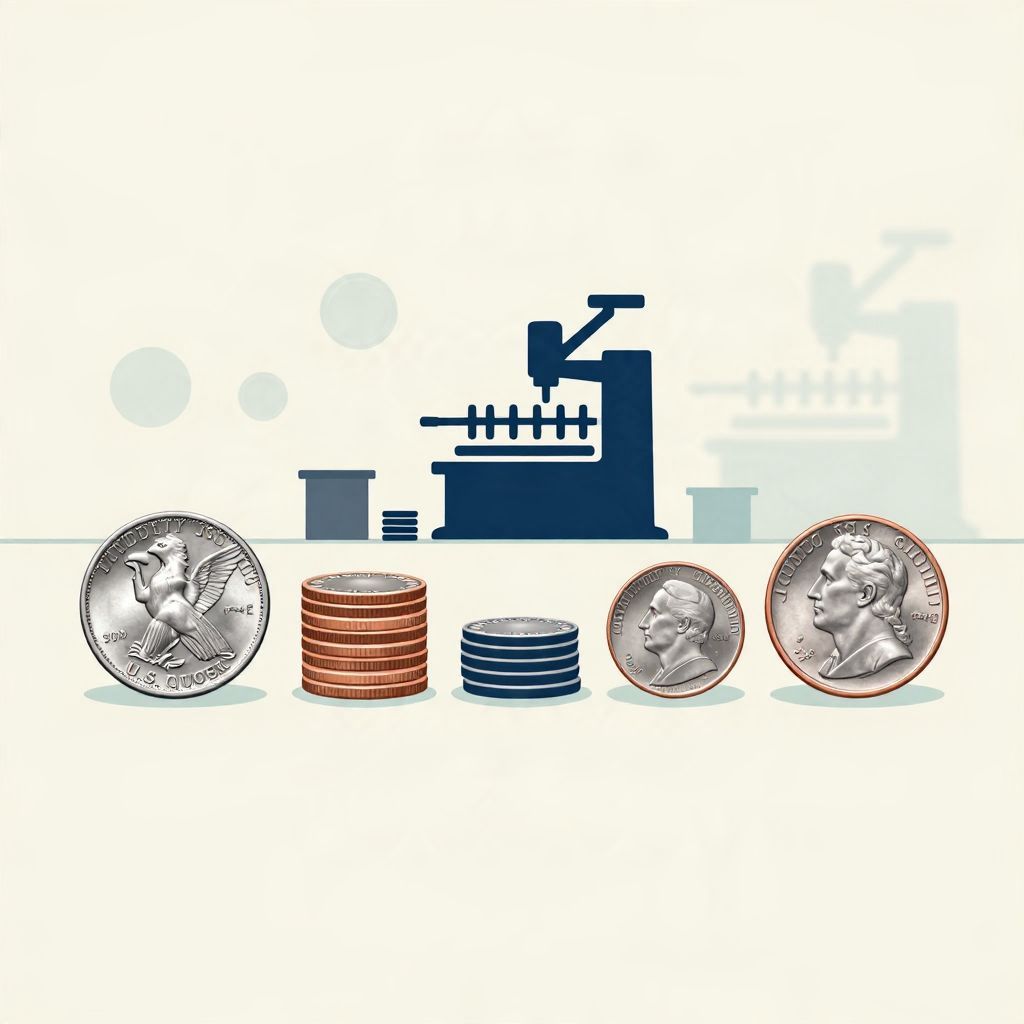
When did quarters stop being silver? In the United States, the short answer is that regular circulating quarters stopped being made of silver in 1965. That change came with the Coinage Act of 1965, which replaced the traditional 90% silver quarter with a copper-nickel “clad” coin for everyday use.
The story is a little more nuanced, though, because some special and collector quarters have contained silver since then. To understand the date, it helps to look at the silver coinage system, the economic pressures of the 1960s, and the transition that changed U.S. pocket change forever.
When Did Quarters Stop Being Silver?
Regular U.S. quarters stopped being silver in 1965. Before that, quarters were made of 90% silver and 10% copper. After 1965, the U.S. Mint struck quarters in a copper core sandwiched between layers of copper-nickel, with no silver in the standard circulation coin.
Why Quarters Were Silver in the First Place
For most of U.S. history, dimes, quarters, half dollars, and dollars were made from silver because precious-metal coinage was considered stable, trusted, and familiar. The quarter dollar had long been part of the country’s silver-based monetary system, and its metal value helped reinforce public confidence in the coin.
The traditional silver quarter
From the late 18th century through the mid-20th century, the standard quarter was a silver coin. In the modern era before 1965, the quarter contained 90% silver and 10% copper, a composition often called “junk silver” today when such coins are sold for their bullion content rather than their face value.
The Exact Change: The Coinage Act of 1965
The key turning point was the Coinage Act of 1965. Passed during a period of rising silver prices and coin shortages, it removed silver from circulating dimes and quarters. The law authorized base-metal clad coins instead, allowing the Mint to produce more coins without relying on scarce silver supplies.
Why the government made the switch
By the early 1960s, the silver content in coins had become increasingly expensive. As silver prices rose, the metal in a quarter could be worth more than 25 cents in bullion terms if melted down. That created pressure on the coin supply, encouraged hoarding, and made it harder for the government to keep enough coins in circulation.
The result was a practical policy decision: if the Mint continued making silver quarters, the coins themselves could become too valuable as metal. Replacing silver with cheaper materials helped stabilize the currency system and reduced the risk of coin shortages.
A Timeline of the End of Silver Quarters
The transition did not happen overnight in a single moment. Here is the basic chronology:
- Before 1965: U.S. quarters were made of 90% silver and 10% copper.
- 1964: The last widely circulating silver quarters were struck for regular use.
- 1965: The Mint began producing copper-nickel clad quarters for circulation under the Coinage Act of 1965.
- 1965–1966: Transitional issues and public adjustment created some confusion, but the new clad quarter became the standard.
- After 1965: Quarters in everyday circulation were no longer silver, though silver versions continued in special collector products.
Were All Quarters After 1965 Non-Silver?
For everyday pocket change, yes. But there are important exceptions. The U.S. Mint later produced silver quarters for collectors, commemorative sets, and special products. These are not the same as regular circulation quarters, and they should not be confused with the standard coins people used in stores and vending machines.
Collector and proof silver quarters
Beginning after the transition, the Mint occasionally issued quarters with silver content in proof sets or special collector editions. In modern times, some commemorative programs and special “silver proof” sets have included quarters made with silver for collectors, not for everyday spending.
That is why the phrase “when did quarters stop being silver” can mean two different things:
- Circulating quarters: stopped being silver in 1965.
- All quarters ever made: not entirely, because collector silver quarters were produced later.
What Changed in the Coin Itself?
The post-1965 quarter did not simply become “less silver.” It became a different kind of coin altogether. The new quarter used a copper core with outer layers of copper-nickel alloy, a design known as clad coinage. This made the coin cheaper to produce and less dependent on precious metals.
How the clad quarter differs from the silver quarter
- Silver quarter: 90% silver, 10% copper
- Clad quarter: copper core with copper-nickel outer layers
- Appearance: similar in size and general color, but the edge of a clad quarter often reveals a copper stripe
- Value: silver quarters have bullion value; clad quarters are worth face value in circulation
Why This Change Mattered in American History
The end of silver quarters was part of a broader transformation in U.S. money. For generations, Americans had handled coins that contained precious metal. After 1965, the nation moved more fully toward fiat-style everyday coinage, where the face value of money no longer depended on the melt value of the metal inside it.
This shift reflected modern economic realities. Governments needed coins that could be produced efficiently in large quantities, especially as commerce expanded and coin use remained heavy. The change also marked the end of an era when ordinary change carried intrinsic metal value close to its denomination.
How to Tell if a Quarter Is Silver
If you are trying to identify a silver quarter, the most important date is 1964. Quarters dated 1964 and earlier are generally silver, while 1965 and later circulation quarters are not. A few later special issues may contain silver, but those are collector pieces rather than standard pocket change.
Quick identification tips
- Check the date: 1964 and earlier usually means silver.
- Look at the edge: silver quarters usually have a solid silver-colored edge, while clad quarters often show a copper stripe.
- Consider the context: proof sets, mint sets, and commemorative issues may be exceptions.
Common Misunderstandings
One common misconception is that the U.S. stopped making silver quarters in 1964 because 1964-dated coins are the last silver ones people usually see in circulation. That is basically correct, but the legal and production shift happened in 1965, when the new clad coinage entered circulation.
Another misunderstanding is that all quarters after 1965 are worthless metal-wise. That is true for ordinary circulation quarters, but not for special collector issues. Some silver quarters were intentionally made later for numismatic purposes.
The Historical Bottom Line
Quarters stopped being silver for regular circulation in 1965, following the Coinage Act of 1965 and the silver shortage pressures of the early 1960s. The last standard silver quarters were dated 1964, while later silver quarters were limited to special collector and commemorative issues. If you want to explore related coinage changes, see what year they stopped making silver quarters and the related history of which nickels are silver.