
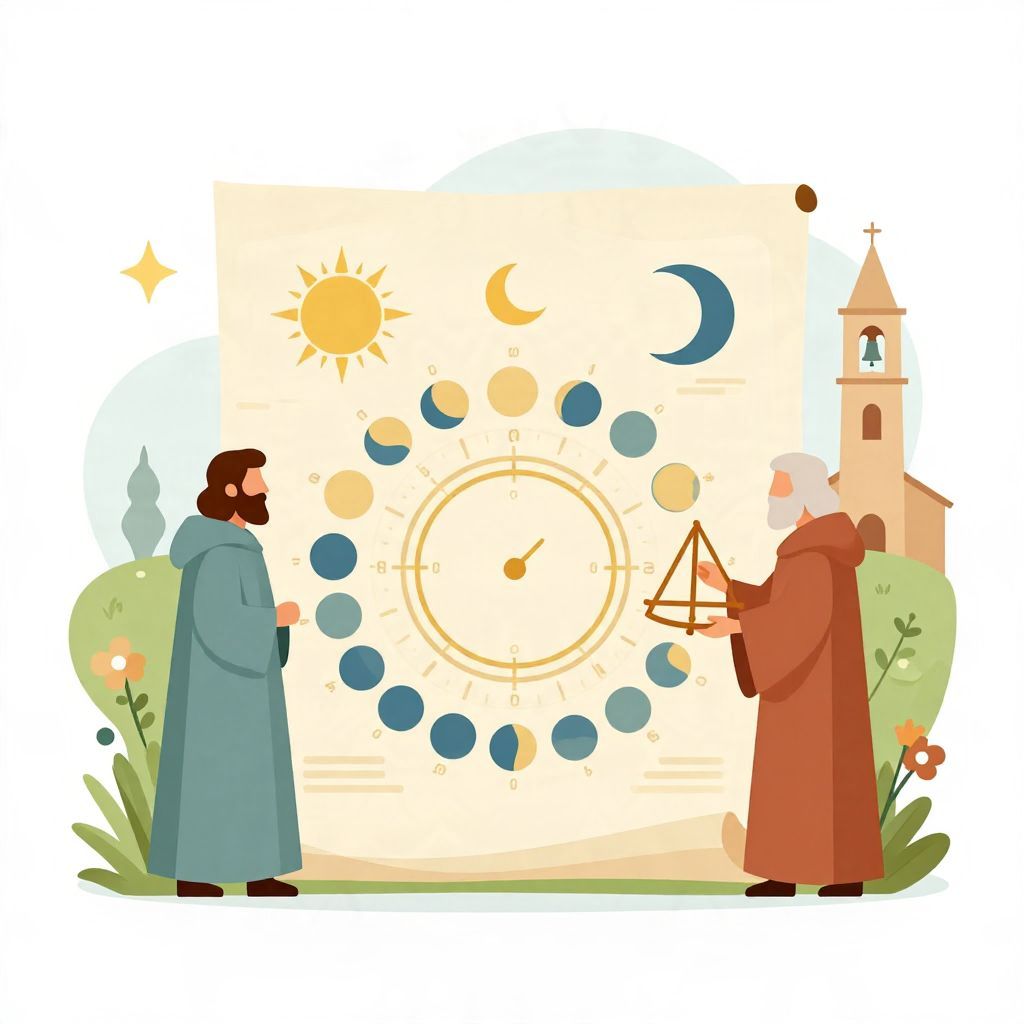
Why is Easter different every year? The short answer is that Easter is a movable feast: its date is tied to the lunar cycle, not fixed to the solar calendar like Christmas. That means it can fall on different Sundays between late March and late April in Western Christianity.
The rule was shaped by early Christian history, disagreements over calendars, and the church’s effort to link Easter to the timing of the Jewish Passover and the spring equinox. The result is a date that changes each year, even though the holiday itself celebrates the same event.
Why is Easter different every year?
Easter changes because it is calculated using both the sun and the moon. In most Western churches, Easter falls on the first Sunday after the first full moon following the spring equinox. Since the lunar cycle does not match the solar year exactly, the date shifts from year to year.
The historical origin of Easter’s changing date
Easter did not begin as a fixed holiday on a civil calendar. Early Christians were trying to determine the proper time to commemorate the resurrection of Jesus, and they inherited a world in which Jewish feast days, Roman calendars, and local customs all mattered. The date was debated for centuries before a broad rule emerged.
From Passover to Easter
The earliest Christians associated Jesus’ death and resurrection with Passover, the Jewish festival that commemorates liberation from Egypt. The New Testament places the crucifixion during Passover season, so the timing of Easter was always connected to the Hebrew lunar calendar rather than to a fixed Roman date.
Because Passover follows a lunar calendar, its date moves in relation to the solar year. Early Christians who wanted Easter to reflect that same seasonal and religious framework naturally ended up with a movable feast rather than a fixed one.
Early disagreements in the Christian world
In the first centuries of Christianity, communities did not all celebrate Easter on the same day. Some churches in Asia Minor observed the feast on the 14th day of the Jewish month of Nisan, regardless of the weekday. Others insisted that Easter should always be celebrated on a Sunday, the day associated with Jesus’ resurrection.
This disagreement became known in historical scholarship as the Quartodeciman controversy, from the Latin word for “fourteenth.” It was not merely a calendar dispute; it reflected different ways of understanding continuity with Judaism, the meaning of resurrection, and the authority of local churches.
How the church settled the rule
The modern logic behind Easter dates developed gradually, especially after the Council of Nicaea in 325 CE. The council did not leave behind a single surviving formula in the way people sometimes imagine, but it did support a common practice: Easter should be celebrated on a Sunday and not directly tied to the Jewish calendar by local calculation.
Over time, church authorities sought a standard method that would unify Christian observance across the empire. That effort produced a rule based on the spring equinox and the full moon, both of which could be estimated using ecclesiastical tables rather than observed directly in every place.
Why the spring equinox matters
The spring equinox marks the time of year when day and night are roughly equal. In the Western Christian tradition, Easter is linked to the first full moon after this seasonal marker. This connection gave Easter a symbolic relationship to renewal, light, and the turning of the seasons.
It also helped separate the feast from a purely fixed civil date. By anchoring Easter to astronomical cycles, the church preserved its connection to the natural year while still making Sunday the central day of celebration.
Why Sunday matters
Sunday became the weekly day of Christian worship because it was associated with the resurrection. That made Easter, above all, a Sunday feast. Even when the full moon occurs on another day of the week, Easter waits until the next Sunday.
This is why the holiday can never fall before late March or after late April in the Western calendar. The combination of equinox, lunar cycle, and Sunday rule creates a moving window rather than a fixed date.
Why the date can differ between Eastern and Western churches
Another reason Easter seems “different every year” is that it is not celebrated on the same date everywhere. Most Western churches use the Gregorian calendar, introduced in 1582 to correct errors in the older Julian calendar. Many Eastern Orthodox churches continue to calculate Easter using the Julian system or related ecclesiastical tables.
Because the two calendars no longer line up exactly, Orthodox Easter often falls later than Western Easter. In some years the dates coincide, but in many years they do not.
The calendar reform of 1582
The Julian calendar, used in much of Europe for over a millennium, was slightly too long compared with the solar year. Over centuries, that small error accumulated. Pope Gregory XIII introduced a reform that adjusted the calendar and refined the calculation of Easter in the Western church.
The Gregorian reform improved seasonal accuracy, but it also created a lasting divide in Easter observance between Catholic and Protestant Europe on one side and many Orthodox communities on the other. This is one reason the holiday’s date can vary not only from year to year, but also by tradition.
The mathematics behind Easter’s shifting date
Easter is determined by a rule, not by a simple fixed date. In the Western tradition, it is celebrated on the first Sunday after the ecclesiastical full moon that follows the ecclesiastical spring equinox, usually treated as March 21. That means Easter can occur anywhere from March 22 to April 25.
This range is not random. It reflects the interaction of three cycles:
- the solar year, which defines the seasons;
- the lunar month, which affects the timing of the full moon;
- the seven-day week, which determines Sunday.
Because these cycles do not divide evenly into one another, the date of Easter shifts. A lunar month is about 29.5 days, while the solar year is about 365.24 days. Over time, those differences create changing combinations of moon phases and weekdays.
Ecclesiastical versus astronomical calculation
It is important to note that the church does not always use the exact astronomical full moon seen in the sky. Instead, it often uses ecclesiastical tables, which are standardized calculations. That means Easter may not always match the precise full moon visible in a given place.
This distinction matters historically because it shows that Easter is not simply an observational holiday. It is a liturgical one, shaped by tradition, authority, and calendar systems as much as by astronomy.
How the rule affected Christian culture
The changing date of Easter influenced more than worship. It shaped fasting, feast days, school calendars, agricultural rhythms, and public life across Christian Europe and beyond. Lent, Holy Week, and Pentecost all depend on Easter, so the entire liturgical season moves with it.
In medieval and early modern societies, this mattered deeply. Markets, processions, court schedules, and local festivals often followed the church year. A movable Easter meant a movable religious and social calendar.
Why people remembered Easter through seasons
Because Easter usually falls in spring in the Northern Hemisphere, it became associated with new life, flowers, and renewed light. Some of these associations are Christian in origin, while others reflect older seasonal customs that were later blended with Christian observance.
It is worth separating established history from popular folklore here. Modern Easter customs such as eggs and rabbits have complex cultural histories, and not every symbol can be traced directly to the earliest Christian church. The date itself, however, is firmly rooted in the church’s ancient calendrical decisions.
Why Easter still changes today
Easter continues to vary because the historical rule remains in force. Churches have generally preferred continuity with tradition over replacing the feast with a fixed civil date. Attempts to unify the celebration have been discussed for centuries, but no universal agreement has emerged.
That is why the holiday remains one of the most visible examples of how ancient religious practice still shapes modern life. Every year, the date changes because the method of calculation is built into the history of the feast itself.
A simple way to remember it
If you want the shortest practical explanation, it is this: Easter is not tied to one day of the month. It is tied to the first Sunday after the first full moon after the spring equinox. That formula is the legacy of early Christian attempts to connect Jesus’ resurrection, Passover season, and Sunday worship into one shared observance.
Conclusion
Easter is different every year because it was designed to be a movable feast, rooted in the lunar calendar, the spring equinox, and Sunday worship. Its changing date reflects centuries of Christian debate, calendar reform, and the effort to preserve a link between the resurrection story and the season of Passover. For a closer look at the calculation itself, see how the date of Easter is determined, or explore the historical context in how old Jesus was when he was crucified.