
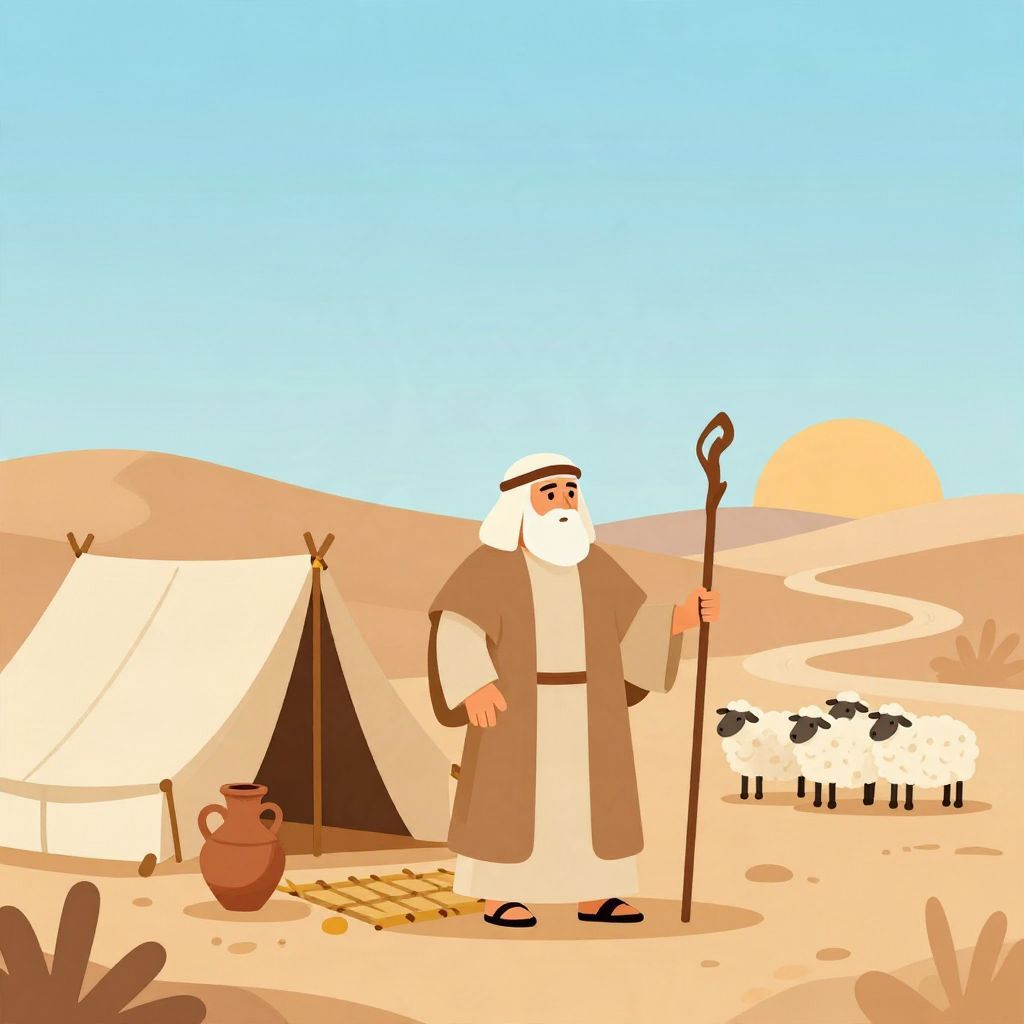
How long did Abraham live? In the biblical tradition, Abraham is said to have lived 175 years. That figure appears in the Book of Genesis and is the standard answer in Jewish, Christian, and Islamic historical memory, though historians treat it as a religious tradition rather than independently verifiable fact.
Because Abraham belongs to the world of early biblical narrative, his life is best understood through scripture, later interpretation, and the ancient Near Eastern setting in which the story is placed.
How Long Did Abraham Live?
According to Genesis, Abraham lived 175 years. The Bible says he died “in a good old age,” and was buried by his sons Isaac and Ishmael. This number is central to the traditional account, but it cannot be confirmed by archaeology or external contemporary records, so it is best read as part of sacred history.
Abraham’s Lifespan in the Biblical Text
The clearest source for Abraham’s age is Genesis 25:7–8, which states that Abraham died at 175. The same passage emphasizes that he had lived a full life and was gathered to his ancestors. In the biblical narrative, his longevity signals blessing, continuity, and the fulfillment of divine promise.
Key age markers in Genesis
- 75 years old when he left Haran for Canaan, according to Genesis 12:4.
- 100 years old when Isaac was born, according to Genesis 21:5.
- 175 years old at the time of his death, according to Genesis 25:7.
These milestones structure Abraham’s story more than a modern biography would. The narrative uses age to mark covenant, family succession, and the passing of a promise from one generation to the next.
Who Was Abraham in Historical Context?
Abraham is a foundational figure in the religious traditions of Judaism, Christianity, and Islam. In the Bible, he is portrayed as a patriarch from Mesopotamia who migrated to Canaan. Historically, however, scholars cannot verify Abraham as a single securely documented individual in the way they can later kings or emperors.
Why historians are cautious
There are no surviving inscriptions, administrative records, or archaeological finds that can definitively identify Abraham as a historical person. That does not mean the story is meaningless; rather, it means the account belongs to the realm of ancient tradition, shaped by later communities to explain origins, identity, and covenant.
Many historians therefore approach Abraham as a figure whose story reflects the memory, values, and worldview of the ancient Israelites. The narrative may preserve echoes of early second-millennium BCE pastoral life, but the text itself was likely written and edited much later.
What Does Abraham’s Age Mean?
Abraham’s age in Genesis is not just a number. It helps communicate themes of blessing, patience, and divine fulfillment. In the biblical world, long life often symbolized favor, wisdom, and continuity across generations. Abraham’s 175 years place him among the long-lived patriarchs of Genesis.
Long life in Genesis
Genesis presents several early figures as living extraordinarily long lives, including Adam, Noah, and others. These ages are part of the literary and theological style of the text. They are not treated by most historians as literal demographic data, but as a way of expressing ancient ideas about human beginnings and sacred ancestry.
Abraham’s lifespan is shorter than some earlier patriarchs in Genesis, yet still remarkably long by ancient standards. That contrast may also reflect a narrative movement away from primordial ages toward a more human-scale ancestral history.
Abraham’s Life Story: A Brief Timeline
While the exact historical date of Abraham’s life is uncertain, the biblical narrative gives a sequence of major events that shaped his legacy.
- Birth and early life: Abraham begins as Abram in Ur of the Chaldeans or, in some traditions, Haran.
- Call to leave home: At age 75, he departs for Canaan with Sarah, Lot, and their household.
- Covenant promises: God promises land, descendants, and blessing.
- Family struggles: Abraham and Sarah remain childless for years, leading to the birth of Ishmael through Hagar.
- Isaac’s birth: Sarah gives birth to Isaac when Abraham is 100.
- Testing and sacrifice narrative: Abraham is commanded to offer Isaac, a story central to later interpretation.
- Death: Abraham dies at 175 and is buried in the cave of Machpelah.
This sequence matters because it frames Abraham not simply as a long-lived ancestor, but as a transitional figure linking migration, covenant, family formation, and inheritance.
Where Did Abraham Come From?
The Bible places Abraham’s origins in Mesopotamia, a region associated with early urban civilization between the Tigris and Euphrates rivers. Genesis links him with Ur and Haran, both important names in the ancient Near Eastern landscape. These locations anchor the story in a recognizable cultural world, even if the biography itself is not independently confirmed.
Possible historical background
Some scholars think the Abraham narratives may preserve memories of semi-nomadic pastoral groups who moved between settled regions and grazing lands. Such movement was common in the ancient Near East. The story of a family leaving one homeland for another would have resonated deeply with later Israelite audiences, especially those reflecting on migration, exile, and identity.
Still, it is important not to overstate certainty. The text is ancient tradition, not a modern documentary record. The historical Abraham remains elusive, even though the cultural world of the story is real and well studied.
How Abraham’s Lifespan Is Understood in Different Traditions
Abraham is revered across multiple faiths, and his lifespan is usually accepted within those traditions as part of sacred history. The number 175 is not merely biographical; it contributes to Abraham’s role as a model of faith and obedience.
In Judaism
Abraham is the first patriarch and a covenantal ancestor of Israel. His long life underscores divine blessing and the continuity of the covenant through Isaac and Jacob.
In Christianity
Abraham is honored as a figure of faith who trusted God before the full development of the later biblical law. His life is often read symbolically as an example of belief and promise.
In Islam
Abraham, known as Ibrahim, is a major prophet and a model of submission to God. Islamic tradition respects his family line and spiritual significance, though the Qur’an does not present the same detailed chronological lifespan found in Genesis.
Why the Question Still Matters
Asking how long Abraham lived is really asking how the ancient world remembered its ancestors. The answer reveals how biblical writers used genealogy, age, and family succession to explain the origins of a people. Abraham’s 175 years mark him as a figure of extraordinary significance rather than ordinary biography.
For historians, the value of the question lies in the intersection of text, tradition, and memory. For believers, the number belongs to a sacred narrative that has shaped identity for millennia. In both cases, Abraham’s lifespan is part of a larger story about promise, migration, and inheritance.
Historical Significance of Abraham’s Death at 175
Abraham’s death closes one chapter and opens another. His burial by Isaac and Ishmael symbolizes a rare moment of family continuity in a narrative filled with tension. The burial place, the cave of Machpelah, later becomes a key ancestral site in biblical tradition.
That ending matters because it reinforces the patriarchal structure of Genesis: the promise does not end with Abraham’s death. Instead, it passes on through descendants, making lifespan part of a larger theology of legacy.
So, how long did Abraham live? In the biblical account, he lived 175 years. That figure is central to his role as a patriarch, even though historians cannot verify it as a literal historical age. If you want to place Abraham more precisely in biblical chronology, see when Abraham was born and compare his story with how long Adam and Eve lived.