
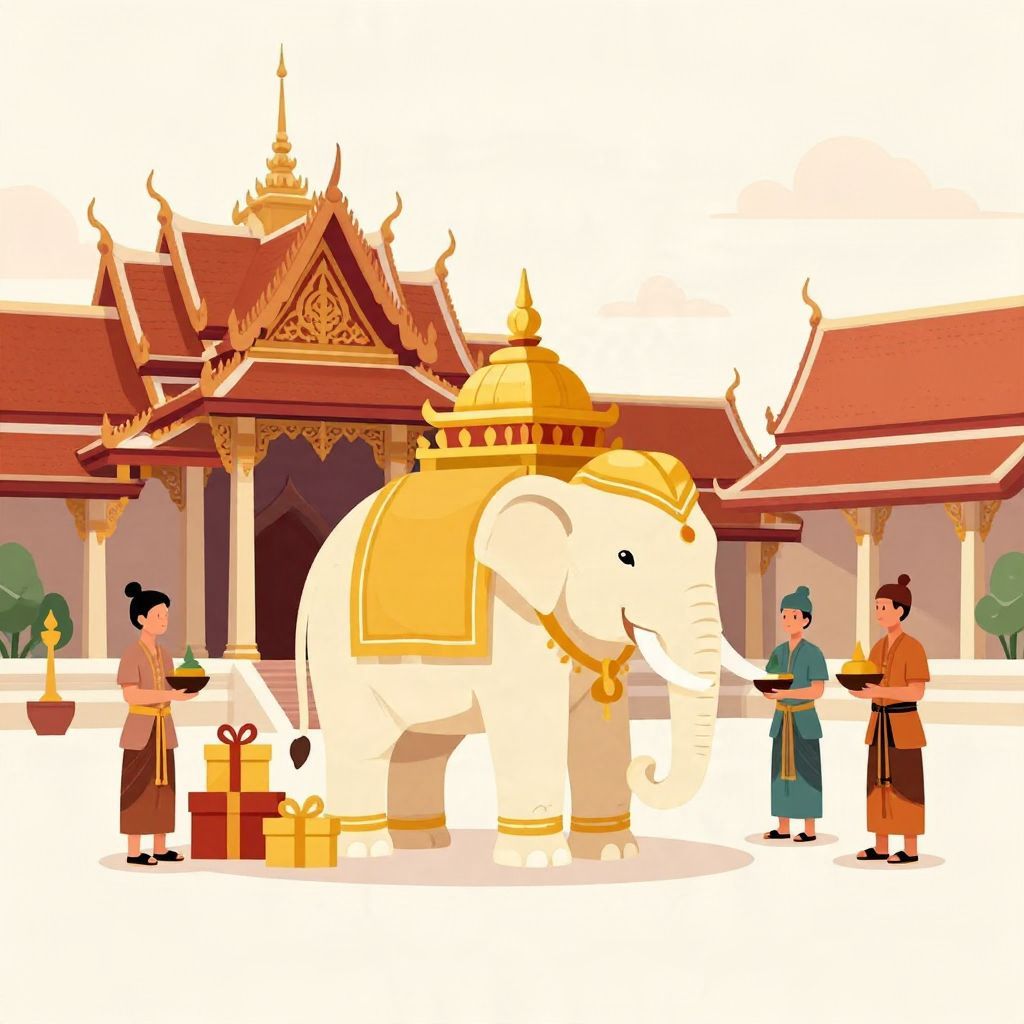
Why is it called a white elephant? The phrase comes from the historical importance of rare white elephants in South and Southeast Asia, where they were associated with kingship, sacred power, and prestige. Over time, however, the term came to mean something costly to own and difficult to maintain, especially when the object or project was more burdensome than useful.
The modern expression is therefore a mix of real history and later metaphor. It does not mean a literal elephant that is white in color; it refers to a symbolic animal whose value could become a burden rather than a blessing.
Why is it called a white elephant?
The term “white elephant” comes from the historical reverence for rare pale or albino elephants in royal courts, especially in Siam, now Thailand. Because these animals were considered sacred and could not be put to ordinary work, they were expensive to keep and often impractical. That combination of prestige and burden led to the modern meaning: something impressive but costly, useless, or troublesome.
The historical roots of the phrase
White elephants in South and Southeast Asia
In many Buddhist and Hindu traditions, elephants were symbols of power, wisdom, and kingship. A very rare pale elephant was especially prized. In Siamese royal culture, such animals were believed to bring legitimacy and good fortune to a ruler. They were not “white” in the sense of being snow-colored; many were light gray, pinkish, or albino in appearance.
Because these elephants were sacred, they were treated differently from ordinary working elephants. They could not be used for labor, sold casually, or exploited for profit. A king who received one was expected to honor it with care, housing, food, and attendants. That made the animal a status symbol, but also a financial responsibility.
Why the animal became a burden
The key to the phrase is not just rarity but cost. A white elephant could not be put to productive use, yet it still required expensive upkeep. In a royal setting, the gift of such an animal might seem magnificent, but it could strain resources. The symbolism of honor and the reality of maintenance created the tension that later shaped the idiom.
This is why the phrase eventually came to describe any possession, project, or institution that looks valuable but proves inconvenient, expensive, or useless. The historical animal was prestigious; the modern metaphor is often ironic.
How the phrase entered English
From royal symbol to idiom
English speakers encountered the phrase through reports and stories about Siam and other Asian courts in the 19th century, a period when European colonial expansion and travel writing introduced many regional customs to English-language audiences. The exact route into common English is difficult to pin down with one single origin moment, but by the 19th century the phrase was already being used figuratively.
In English, “white elephant” became a handy expression for something expensive to maintain and hard to dispose of. The meaning shifted from sacred prestige to practical burden, while retaining the sense of rarity and value. That shift is typical of idioms borrowed from another culture and reshaped by new social uses.
A popular story about kings and gifts
One widely repeated explanation says that a king would give a troublesome courtier a white elephant as a lavish but ruinous gift, because the recipient would have to bear the cost of caring for it. This story captures the spirit of the idiom, but it should be treated carefully. It is a plausible cultural explanation, not a single documented origin that can be proved for all uses of the phrase.
What historians can say with confidence is that white elephants were genuinely important in royal culture, and that the burden of maintaining them made them a powerful metaphor. The later English idiom grew from that reality rather than from a purely invented tale.
What did a white elephant mean in its original setting?
Royal legitimacy and sacred status
In Siamese tradition, ownership of a white elephant was tied to royal authority. A ruler who possessed one was seen as especially fortunate or divinely favored. The animal could symbolize a king’s virtue, prosperity, and connection to cosmic order. This helps explain why white elephants were not simply curiosities; they were part of a political and religious worldview.
In practice, that meant the elephant was both an honor and a public statement. It could reinforce a monarch’s prestige at home and abroad. But because it was sacred, it also had to be maintained according to ritual expectations, which made it expensive and cumbersome.
Not literally white, and not always the same thing
It is worth noting that “white elephant” did not always mean the same thing in every context. The term could refer broadly to unusually pale elephants, especially those with special markings or coloration. Modern English often simplifies this into a single image, but the historical reality was more nuanced.
That nuance matters because the phrase’s meaning depends on symbolism, not color alone. The animal’s rarity and religious significance gave it its power. The later idiom kept the sense of exceptional value while turning that value into irony.
How the meaning changed in modern English
From sacred gift to unwanted possession
By the late 19th and early 20th centuries, “white elephant” was commonly used in English to mean something that is costly, impractical, or hard to get rid of. The term could apply to a building, a piece of land, a machine, or even a public project. If something consumed money without delivering enough benefit, it might be called a white elephant.
This meaning survives today in business, politics, and everyday speech. A stadium that costs too much to maintain, an unused factory, or an overambitious project with little practical value may all be described this way. The phrase is often used critically, but not always unfairly; some “white elephants” begin as grand ideas and later become expensive liabilities.
Why the metaphor lasted
The phrase endured because it is vivid and flexible. It combines two ideas that are easy to remember: rarity and burden. Something can look magnificent and still be impractical. That contradiction gives the idiom its force. The historical white elephant was both revered and difficult to manage, which made it a perfect metaphor for prestige without utility.
In that sense, the phrase has remained surprisingly close to its historical roots. Even when used casually, it still carries the old tension between honor and cost.
Common misunderstandings about the phrase
It does not simply mean “white” and “elephant”
People sometimes assume the phrase is just a whimsical description of a rare animal. In fact, it is a cultural and historical expression with a specific background. The “white” part matters because it signals rarity and sacredness, not ordinary color. The “elephant” matters because elephants were already powerful symbols in Asian royal traditions.
It is not the same as a “white elephant gift” in every culture
In modern English, “white elephant gift” can also mean a humorous exchange of unwanted items, especially at holiday parties. That usage is related, but it is a later social development. It plays on the same idea of something burdensome or awkwardly valuable, though in a lighter and more playful way.
So while the phrase has become part of everyday speech, its deeper history remains tied to royal symbolism, religious reverence, and the practical costs of maintaining prestige.
Why the phrase still matters today
A lesson in how language changes
The history of “white elephant” shows how words can move from sacred meaning to everyday metaphor. A term rooted in royal ritual and religious belief became a shorthand for waste, excess, and impractical grandeur. That transformation reflects both cultural exchange and the way language adapts to new social needs.
It also shows how historical context can survive inside a phrase long after people stop thinking about the original setting. Many speakers use “white elephant” without knowing its connection to Southeast Asian kingship, yet the old meaning still shapes the expression.
A broader historical pattern
This is not unusual in history. Many modern idioms preserve traces of older societies, trade routes, empires, and beliefs. The phrase “white elephant” is one example of how prestige objects can become symbols of burden once their practical value is outweighed by their cost.
That is why the expression remains useful. It captures a timeless problem: something can be admired, expensive, and still not worth keeping.
Conclusion
It is called a white elephant because rare pale elephants were historically sacred and prestigious in parts of South and Southeast Asia, especially in royal culture, but they were also costly and impractical to maintain. English later turned that historical reality into a metaphor for something impressive yet burdensome. If you want to explore more phrase histories, you may also enjoy what is an elephant walk and why is it called a flea market.