
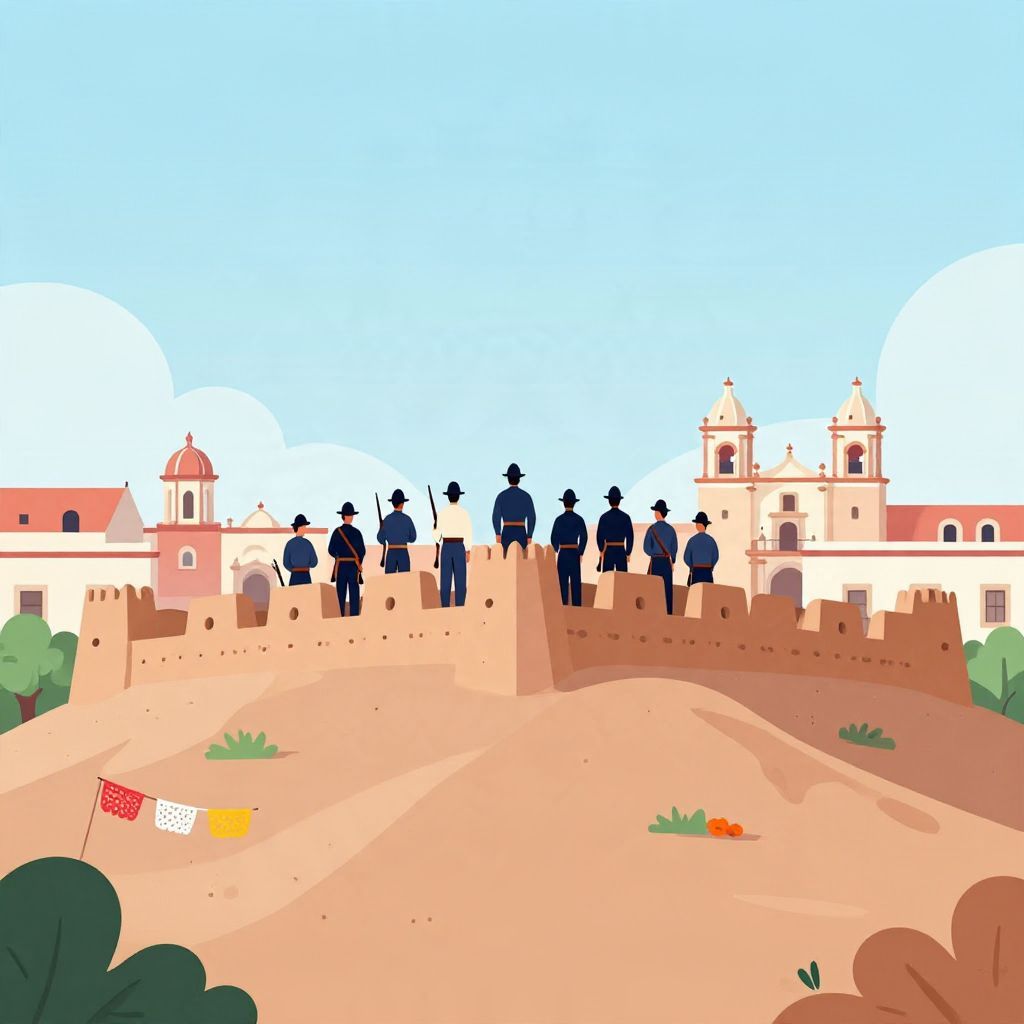
What is Cinco de Mayo celebrating? The short answer is that it commemorates the Mexican army’s victory over French forces at the Battle of Puebla on May 5, 1862. It is not Mexico’s independence day, though that is a common misunderstanding outside Mexico.
The holiday has a real historical core, but its meaning has changed over time. In Mexico, it is mainly a regional commemoration of resistance and national pride; in the United States, it has also become a broader celebration of Mexican American and Latino culture.
What Is Cinco De Mayo Celebrating?
Cinco de Mayo celebrates the Battle of Puebla, fought on May 5, 1862, when Mexican troops defeated a larger French army. The victory did not end the French intervention in Mexico, but it became a powerful symbol of Mexican resistance, especially because the French were considered one of the strongest armies in the world at the time.
The historical event behind Cinco de Mayo
To understand the holiday, it helps to place it in the turmoil of 19th-century Mexico. After years of war and political instability, Mexico faced a financial crisis in the early 1860s. President Benito Juárez suspended payments on foreign debts, which gave France, Britain, and Spain a pretext to intervene. Britain and Spain eventually withdrew, but France stayed and pursued a larger imperial project.
French forces advanced toward Mexico City, expecting an easy campaign. At Puebla, a Mexican army under General Ignacio Zaragoza fortified the city and resisted the attack. On May 5, 1862, the Mexicans repelled the French assault. The battle was tactically small compared with later conflicts, but it carried enormous symbolic weight because it showed that the French army could be beaten.
Why the Battle of Puebla mattered
The victory did not permanently stop France. French troops returned, occupied Mexico City, and later installed Archduke Maximilian of Austria as emperor. Still, Puebla mattered because it gave Mexicans a morale boost at a moment of crisis. It also became a story of national defense against foreign intervention, which is why it endured in memory far beyond the battlefield itself.
What Cinco de Mayo is not celebrating
One of the most common misconceptions is that Cinco de Mayo is Mexico’s Independence Day. It is not. Mexico’s independence is celebrated on September 16, marking the start of the independence movement in 1810. That date, not May 5, is the major national holiday associated with independence from Spain.
Cinco de Mayo is also not a celebration of Mexican military power in a broad sense, nor is it a national holiday observed with the same intensity across all of Mexico. Its importance is real, but it is more limited and historically specific than many people assume.
Common confusion with Mexican Independence Day
- Cinco de Mayo: commemorates the Battle of Puebla on May 5, 1862.
- Mexican Independence Day: commemorates the beginning of the independence struggle on September 16, 1810.
- Different meaning: one is about resisting French intervention; the other is about breaking away from Spanish colonial rule.
Why the Battle of Puebla became a symbol
Not every military victory becomes a holiday. The Battle of Puebla became symbolic because it occurred during a moment of national vulnerability and because the odds seemed stacked against Mexico. A smaller, less well-equipped force defeated a better-trained foreign army, and that outcome was easy to remember as a story of courage and self-determination.
There was also a political meaning. Benito Juárez’s liberal government was defending the Mexican republic against foreign intervention and domestic conservative opponents. Over time, the battle came to represent not just a military success but the survival of republican government and Mexican sovereignty.
Who was Ignacio Zaragoza?
Ignacio Zaragoza led the Mexican forces at Puebla. He was not the only important figure in the broader conflict, but his name is closely tied to the battle because of his leadership on the day of the victory. He died later in 1862, so he did not live to see the long historical afterlife of the event he helped make famous.
How Cinco de Mayo is celebrated in Mexico
In Mexico, Cinco de Mayo is observed most prominently in the state of Puebla, where the battle took place. There are parades, reenactments, civic ceremonies, and cultural events. In many other parts of Mexico, the day is noted but is not a major nationwide holiday on the scale of Independence Day or Revolution Day.
That regional pattern matters because it shows how historical memory works. A battle can be nationally meaningful without becoming the country’s biggest annual celebration. In Puebla, the holiday has local pride and historical depth; elsewhere, it may be observed more modestly or mainly in schools and civic settings.
What the day looks like today
- Military and civic parades in Puebla
- Historical reenactments of the battle
- School events and public speeches
- Traditional music, dance, and regional food
How Cinco de Mayo became bigger in the United States
Cinco de Mayo took on a different life in the United States, especially in the 20th century. Mexican American communities used the date to honor Mexican heritage, and later it spread more widely as a cultural celebration. In many places, however, the holiday became commercialized and detached from its historical meaning.
This shift is important. In the U.S., Cinco de Mayo is often treated as a broad celebration of Mexican culture, food, music, and identity. That use is not identical to the holiday’s original meaning, but it grew out of real community traditions and civil rights-era efforts to affirm Mexican American history and pride.
From commemoration to cultural holiday
The holiday’s expansion in the United States was shaped by migration, community activism, and public culture. For many Mexican Americans, the date offered a way to celebrate ancestry and resilience. Over time, businesses and media also turned it into a widely marketed event, sometimes flattening its history into stereotypes or party imagery.
The deeper historical context: Mexico, France, and empire
Cinco de Mayo cannot be separated from the wider 19th-century struggle over sovereignty in the Americas. France’s intervention in Mexico was part of a larger era in which European powers still tried to influence or control parts of the Western Hemisphere. Mexico’s resistance therefore had significance beyond one battlefield.
The French intervention eventually failed. The empire of Maximilian collapsed, and Juárez’s republic was restored. In hindsight, the Battle of Puebla stands out as an early, dramatic moment in that larger struggle. It did not end the war, but it helped define the moral narrative of resistance that later generations remembered.
Why the holiday lasted
Historical anniversaries endure when they can carry more than one meaning. Cinco de Mayo remembers a battle, but it also evokes endurance, sovereignty, and community identity. That flexibility helped the date survive as both a civic memory in Mexico and a cultural celebration in the United States.
Popular myths and historical accuracy
Because Cinco de Mayo is widely celebrated in some places, it has also accumulated myths. The biggest is the idea that it marks Mexican independence. Another is the assumption that it is a major national holiday throughout Mexico. Both ideas oversimplify the historical record.
It is also worth avoiding the idea that the holiday has a single fixed meaning for everyone. For some people, it is a remembrance of a battle; for others, it is a celebration of Mexican identity; for still others, it is simply a seasonal festival. The historical event is constant, but cultural meanings have changed over time.
What historians can say with confidence
- The Battle of Puebla took place on May 5, 1862.
- Mexican forces under Ignacio Zaragoza defeated a French army there.
- The battle did not end the French intervention, but it became a symbol of resistance.
- Mexico’s Independence Day is September 16, not Cinco de Mayo.
- Modern celebrations in the United States often emphasize Mexican heritage more broadly than the original battle alone.
Why Cinco de Mayo still matters
Cinco de Mayo remains meaningful because it connects history to identity. It recalls a moment when a weaker force defended its sovereignty against a powerful foreign army. That story resonated in Mexico in the 19th century and later found new life among Mexican Americans seeking to honor their heritage.
So, what is Cinco de Mayo celebrating? It is celebrating the Battle of Puebla and the broader idea of Mexican resistance and resilience. Its history is more specific than the popular image suggests, but that specificity is what gives the holiday its power. For related context, you may also want to read about how Cinco de Mayo is observed in Mexico and why the region is called Latin America.