
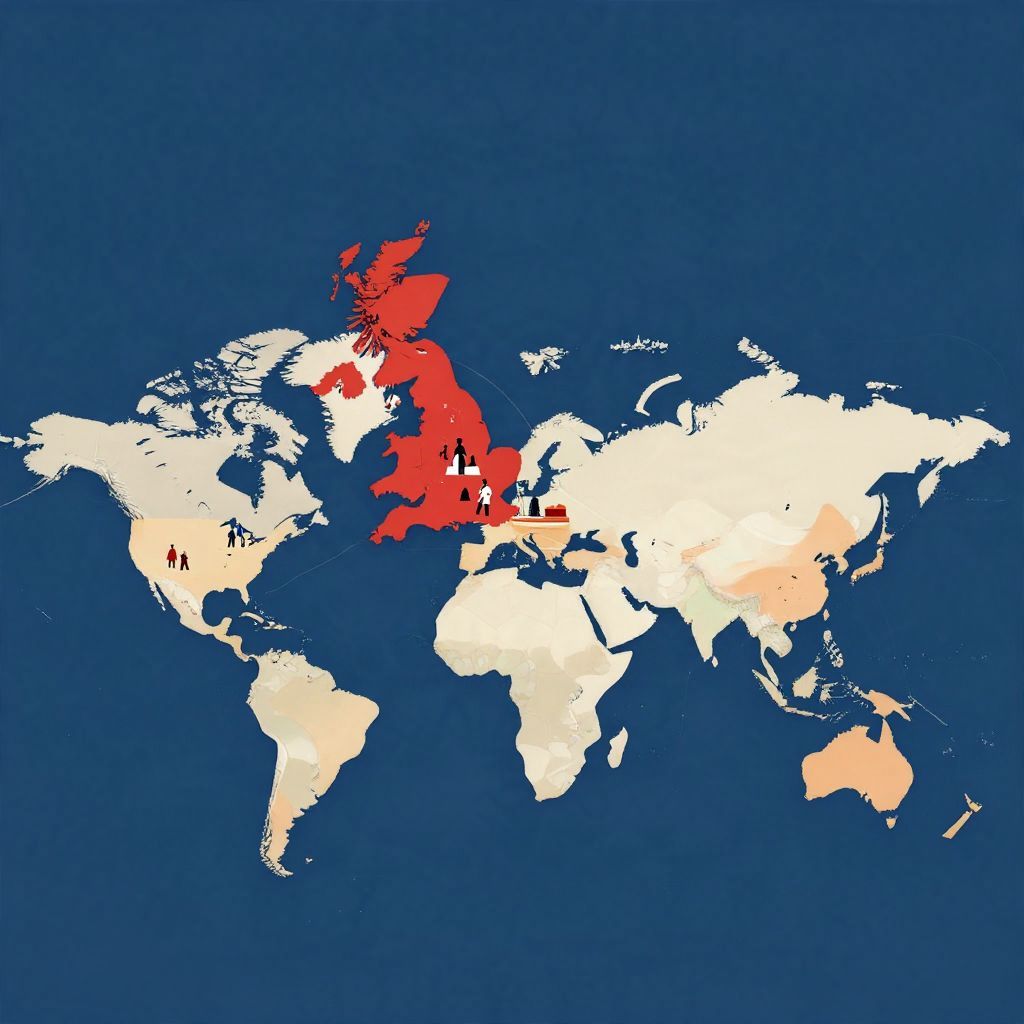
What was the largest empire in history? The answer depends on how “largest” is defined, but by the standard measure of land area, the British Empire was the largest in history. At its height in the early 20th century, it ruled about a quarter of the world’s land and population.
That said, other empires were enormous in their own eras, and some, such as the Mongol Empire, controlled vast contiguous territories with extraordinary speed. To understand the question properly, it helps to look at what an empire is, how historians compare them, and why size alone does not tell the whole story.
What Was the Largest Empire in History?
The British Empire is generally considered the largest empire in history by total land area, reaching roughly 13 million square miles in the early 20th century. If population is included, it also governed hundreds of millions of people across every inhabited continent, making it the most geographically widespread empire ever formed.
What Does “Largest” Mean in Imperial History?
“Largest” can mean different things: total land area, population, economic reach, or the extent of direct political control. Historians usually use land area when answering this question, because it is the clearest measure. By that standard, the British Empire ranks first, though other empires may have been more densely populated or more militarily concentrated.
Why the definition matters
- Land area: the most common way to compare empires.
- Population: useful, but harder to measure accurately in premodern history.
- Contiguity: some empires ruled connected territories, while others were scattered overseas.
- Control: some states claimed territory they did not fully govern in practice.
This is why the answer can vary slightly depending on the historian’s method. For example, the Mongol Empire may be the largest contiguous land empire, while the British Empire was the largest overall empire in terms of global reach.
Why the British Empire Became the Largest
The British Empire expanded over several centuries through naval power, trade, colonization, settlement, and conquest. Britain’s strong navy allowed it to control sea lanes, protect trade routes, and seize strategic ports. Its empire grew from the 16th century onward and reached its peak after the First World War, when Britain held territories in North America, the Caribbean, Africa, South Asia, the Middle East, and the Pacific.
Key stages of expansion
- 16th–17th centuries: early overseas colonies and trading posts.
- 18th century: gains in North America, the Caribbean, India, and at sea.
- 19th century: rapid expansion in Africa and Asia during the age of imperial competition.
- Early 20th century: the empire reaches its greatest territorial extent after World War I.
Britain did not build its empire in one dramatic conquest. Instead, it accumulated territory over time, often through war, diplomacy, commercial influence, and local alliances. That gradual process helped it become the largest empire in history.
How the British Empire Compared with Other Great Empires
The Mongol Empire
The Mongol Empire, founded by Genghis Khan in the early 13th century, is often described as the largest contiguous empire in history. At its height, it stretched across much of Eurasia, from eastern Asia toward eastern Europe and the Middle East. It was smaller than the British Empire in total area, but it was unmatched in the speed and scale of its overland expansion.
The Mongol Empire mattered because it connected regions through trade, diplomacy, and movement across the Eurasian landmass. Its reach was enormous, but it was not a global empire in the modern sense.
The Roman Empire
The Roman Empire was one of the most influential empires in history, but it was much smaller than the British Empire in area. At its height under emperors such as Trajan and Hadrian, Rome controlled lands around the Mediterranean, much of Western Europe, North Africa, and parts of the Near East. Its strength came from administration, roads, law, military discipline, and urban integration rather than global scale.
For readers interested in Rome’s scale, a useful comparison is the Roman Empire’s territorial extent versus later imperial systems. You can explore that further in how big the Roman Empire was.
The Spanish Empire
The Spanish Empire was the first truly global empire in the age of oceanic expansion. Spain ruled large parts of the Americas, the Philippines, and territories in Europe and Africa. It was not as large as the British Empire at its peak, but it pioneered the kind of transoceanic imperial system that Britain later expanded on a much larger scale.
The Russian Empire
The Russian Empire was enormous and largely continuous across Eurasia. It expanded eastward across Siberia and southward into Central Asia and the Caucasus. In land area, it was one of the largest empires in history, but it still fell short of the British Empire’s total extent.
How Big Was the British Empire at Its Peak?
At its height around 1920, the British Empire covered roughly one-quarter of the world’s land surface and governed about one-fifth of the global population. Exact figures vary depending on whether protectorates, mandates, and dominions are counted as fully imperial territory, but the empire’s scale was unmistakable.
What made it so vast?
- Naval supremacy made overseas control possible.
- Industrial power supplied ships, weapons, and commercial dominance.
- Financial networks linked London to global markets.
- Settlement colonies extended British influence across continents.
- Imperial administration allowed rule over territories with different legal and political statuses.
The empire was not uniform. Some territories were colonies governed directly, while others were protectorates, mandates, or self-governing dominions such as Canada, Australia, and New Zealand. This flexibility helped Britain manage a very large imperial system, though it also created tensions and contradictions.
Was the British Empire the Most Powerful Empire?
Not necessarily in every sense. “Largest” does not always mean “most powerful” at every moment. The British Empire had unmatched naval and commercial reach, but power can also mean military effectiveness, administrative control, or cultural influence. The Mongol Empire, for example, was extraordinarily powerful in conquest, while Rome was exceptionally durable and institutionally sophisticated.
Power can mean different things
- Military power: ability to conquer and deter rivals.
- Economic power: control of trade and finance.
- Administrative power: ability to govern diverse populations.
- Cultural power: language, law, religion, and institutions that outlast the empire itself.
Britain’s empire was powerful because it combined all four to a remarkable degree. Yet historians still distinguish between the largest empire and the most influential empire, because those are not always the same thing.
Why the Largest Empire in History Declined
The British Empire declined in the 20th century because of two world wars, rising nationalist movements, the cost of maintaining overseas rule, and the changing global balance of power. After 1945, decolonization accelerated across Asia, Africa, and the Caribbean. India’s independence in 1947 was especially significant, as it marked the loss of the empire’s most important and populous possession.
Major causes of decline
- World War I and World War II weakened British resources.
- Anti-colonial nationalism challenged imperial rule everywhere.
- Economic strain made empire harder to sustain.
- International pressure increasingly favored self-determination.
By the late 20th century, Britain had transformed from an imperial superpower into a former empire with a network of independent states, many of them linked through the Commonwealth.
Why This Question Still Matters
Asking what was the largest empire in history is not just a matter of trivia. It reveals how empires expanded, how historians measure power, and how global history was shaped by conquest, trade, migration, and resistance. The British Empire’s scale changed the modern world, but it also depended on violence, coercion, and unequal rule.
The largest empire in history was the British Empire, if measured by total land area. But the full historical picture is richer than a single ranking. The Mongol Empire was the largest contiguous land empire, Rome was one of the most enduring, and Spain helped create the first global imperial system. For more on imperial scale and decline, see how big the Roman Empire was and when the Holy Roman Empire fell.