
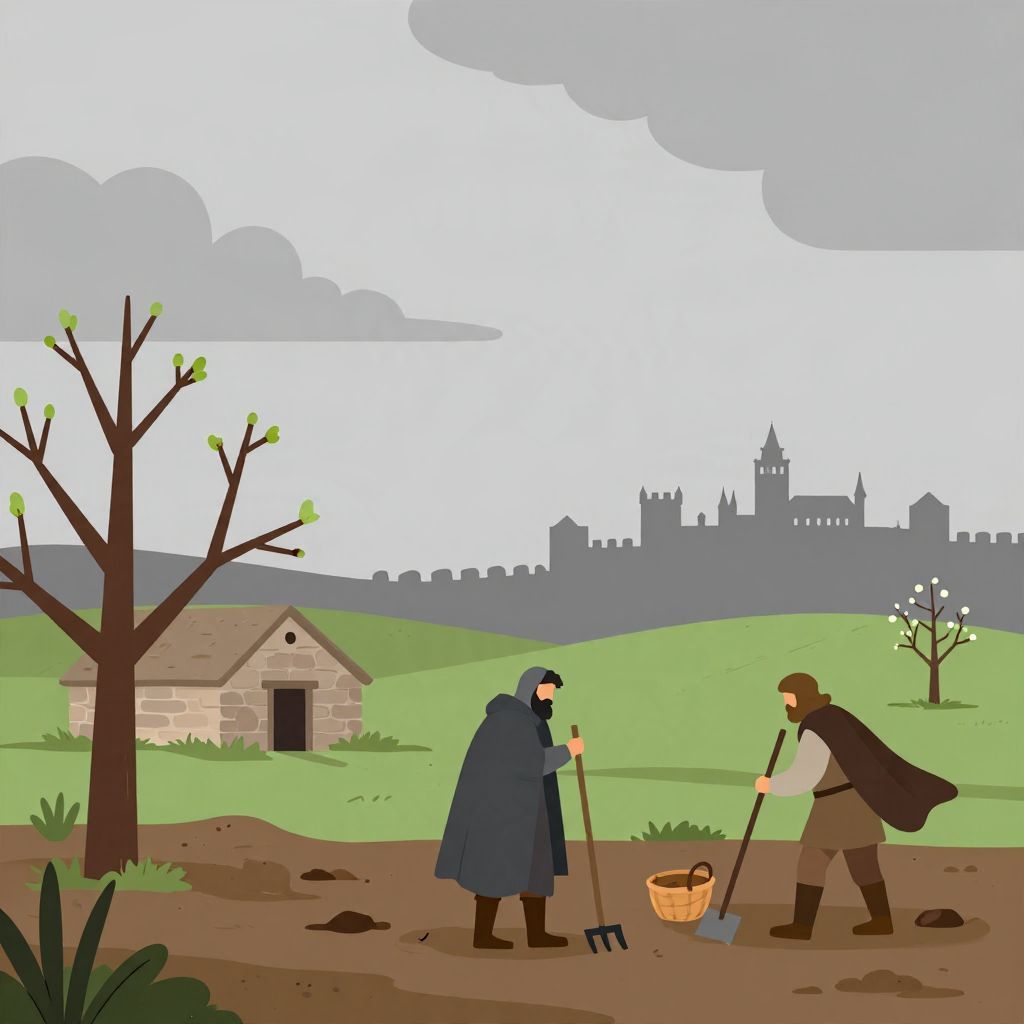
“April is the cruellest month” is one of the most famous opening lines in modern literature, but it is not a historical event or a proverb from the distant past. The phrase comes from T. S. Eliot’s 1922 poem The Waste Land, written in the aftermath of World War I and the upheavals of the early twentieth century.
Its historical significance lies in how powerfully it captured a generation’s sense of spiritual exhaustion, cultural fragmentation, and uneasy renewal. To understand the line, you need both its literary origin and the world that produced it.
What does “April is the cruellest month” mean historically?
The line comes from T. S. Eliot’s 1922 poem The Waste Land. Historically, it reflects the disillusionment of post-World War I Europe, where spring’s promise of rebirth could feel painful rather than comforting. Eliot turns a familiar symbol of renewal into an image of emotional and cultural distress.
Where did the phrase come from?
The phrase is the opening line of The Waste Land, first published in 1922. Eliot wrote the poem in the years after World War I, and it quickly became one of the defining texts of literary modernism. The line is not a historical saying passed down through centuries; it is a modern literary invention rooted in a specific historical moment.
The poem’s opening and its reversal of expectation
In much of Western tradition, April and spring symbolize growth, fertility, and hope. Eliot reverses that expectation. In the poem, spring does not comfort the broken or the numb; instead, it stirs memory, desire, and pain. That reversal is part of what made the line so striking to readers in the 1920s and beyond.
Why April?
April is associated with spring in the Northern Hemisphere, when nature begins to revive after winter. Eliot uses that seasonal symbolism to suggest that renewal can be unsettling when people are spiritually exhausted. In other words, what should bring life may also force people to confront loss, trauma, and unmet longing.
Why did Eliot write it in 1922?
Eliot wrote The Waste Land in the shadow of World War I, a conflict that shattered empires, killed millions, and left much of Europe politically unstable and psychologically scarred. The poem reflects that atmosphere of collapse. Its famous line captures the paradox of a world in which even rebirth feels cruel because it exposes what has been damaged or lost.
World War I and the mood of disillusionment
The war ended in 1918, but its consequences continued for years: mass bereavement, economic strain, political unrest, and a widespread sense that older certainties had failed. Artists and writers responded by breaking with older literary forms. Eliot’s dense, fragmented style mirrors a culture that no longer felt whole.
Modernism and fragmentation
The Waste Land is a landmark of literary modernism, a movement that often expressed uncertainty, alienation, and broken continuity. The poem’s structure is deliberately disjointed, full of shifting voices, allusions, and abrupt transitions. The opening line sets that tone immediately: instead of a hopeful beginning, readers encounter unease from the start.
How the line works in the poem
In context, the line is not simply saying that April is bad. Eliot suggests that spring awakens memory and desire in people who would rather remain dormant. Winter, in the poem’s logic, can be restful or numbing; spring forces growth, and growth can hurt. That is why the line feels both poetic and unsettling.
Spring as discomfort, not comfort
The poem contrasts winter and spring in a way that surprises readers. Winter can preserve emotional distance, while spring compels life to return. For Eliot’s speakers, that return is difficult. The “cruelty” lies in the pressure to feel, remember, and hope again in a world that has not healed.
Not a literal claim
It is important to distinguish literary meaning from historical fact. Eliot was not making a factual statement about the month of April. He was using seasonal imagery to express a cultural condition. The line has endured because it names a feeling many readers recognize: that change and renewal are not always pleasant.
What historical world shaped the poem?
The Waste Land emerged from a period of profound transition. The early 1920s were marked by the aftermath of war, the decline of old imperial orders, labor unrest, inflation, and anxiety about modern life. Eliot’s poem does not describe one event, but it belongs to this broader historical landscape of instability.
Europe after the Great War
By 1922, the map of Europe had changed. The Austro-Hungarian, Ottoman, German, and Russian imperial systems had been weakened or transformed. New states emerged, but peace did not bring immediate stability. Many people experienced the postwar years as a time of uncertainty rather than recovery.
The emotional aftermath of modern war
World War I introduced industrialized slaughter on a scale that shocked contemporaries. Trench warfare, artillery bombardment, and chemical weapons left deep psychological scars. Eliot’s poem does not narrate battles, but its tone of exhaustion and spiritual desolation reflects that broader historical trauma.
Timeline: the origins of the phrase
Here is the short chronology behind the line and its historical setting:
- 1914–1918: World War I devastates Europe and reshapes political and cultural life.
- 1919–1921: Eliot works through the poem’s material amid postwar disillusionment and personal strain.
- 1922: The Waste Land is published, introducing “April is the cruellest month” to a wide audience.
- After 1922: The line becomes one of the most quoted openings in English literature and a shorthand for painful renewal.
Why did the line become so famous?
The phrase became famous because it is short, memorable, and emotionally complex. It overturns a common idea—spring as happiness—and replaces it with ambiguity. It also speaks to a larger historical mood. Readers in the twentieth century, especially after the war, recognized the tension between outward renewal and inward damage.
A line that outlived its poem’s first moment
Although the poem is deeply tied to the postwar world, the line has remained relevant because it describes a recurring human experience. People often associate spring with renewal, but renewal can also mean disruption, grief, or confrontation with the past. That universality helped the phrase move beyond its original context.
From modernist poem to cultural shorthand
Over time, the line entered common speech as a way to describe difficult beginnings, emotional unease, or ironic renewal. In that sense, it became part of cultural memory. Yet its original force comes from the historical moment of its creation: a Europe struggling to recover from catastrophe while uncertain what recovery even meant.
Was Eliot the first to connect April with cruelty?
Eliot’s phrasing is original, but the idea that spring can be painful is older than the poem. Literature long before Eliot treated seasonal change as emotionally complicated. What makes this line distinctive is the sharpness of the formulation and the modern historical context that gives it added weight.
Older literary traditions
Poets before Eliot often linked spring with desire, memory, or melancholy. Seasonal imagery has long been used to express human moods. Eliot’s achievement was to compress that tradition into a single, unforgettable opening that feels both timeless and unmistakably modern.
Historical interpretation versus literary influence
From a historical perspective, the line matters less as a statement about April itself than as evidence of how early twentieth-century writers responded to crisis. It shows how literature can register historical trauma indirectly, through image, rhythm, and tone rather than through direct description.
Why the phrase still matters today
The enduring power of “April is the cruellest month” lies in its historical and emotional honesty. It captures the idea that renewal can be painful when people are carrying grief, memory, or social upheaval. That is why the line continues to resonate in discussions of literature, modern history, and cultural change.
Historically, the phrase is a product of the post-World War I world; culturally, it became a lasting symbol of modern uncertainty. If you want to explore the broader background of hardship and transformation in the modern era, you may also find the Dust Bowl and industrialization and imperialism useful points of comparison.