
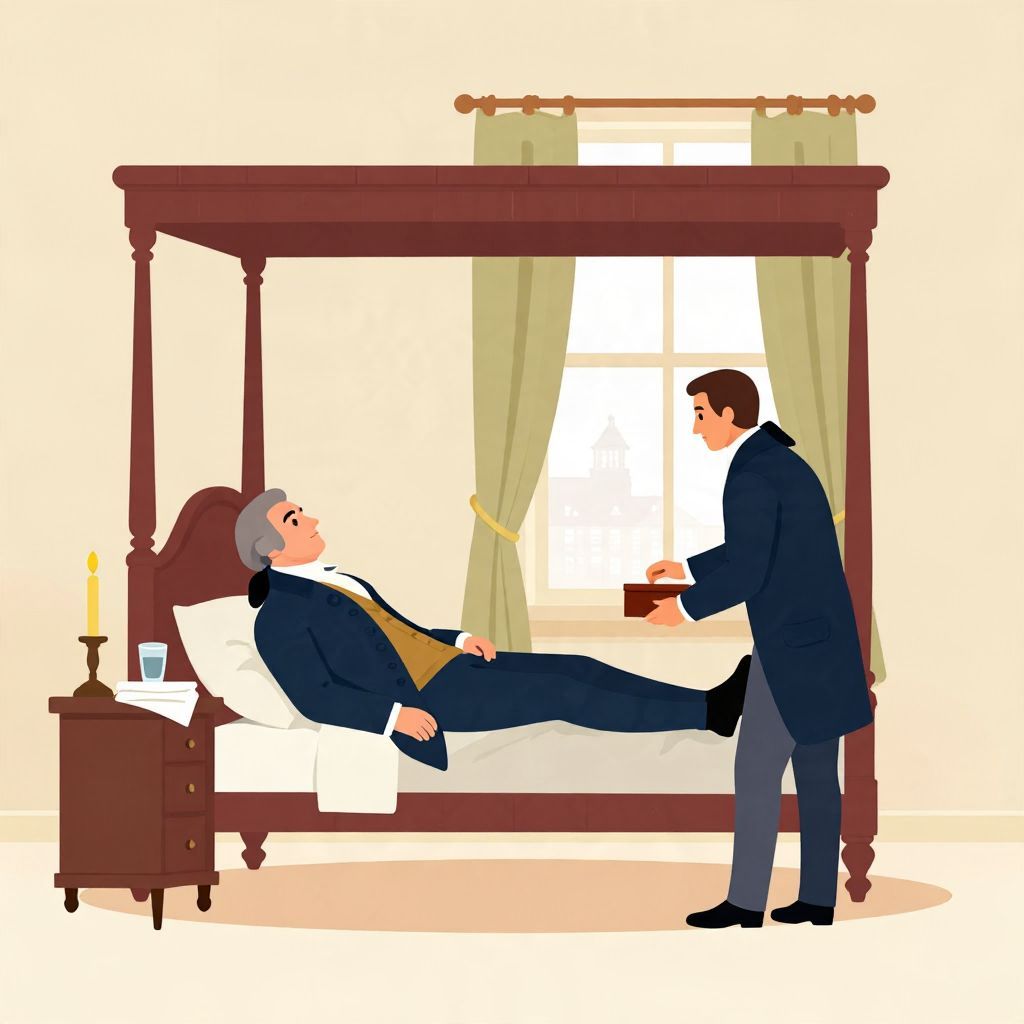
How did John Hancock die? The short answer is that the famous American patriot and Massachusetts statesman died of natural causes, most likely from complications of illness and age, on October 8, 1793, in Boston. He was 56 years old. Unlike some Revolutionary-era figures whose deaths were dramatic or violent, Hancock’s final years were shaped by chronic poor health.
His death came after a long public career that made him one of the best-known men in the new United States. He is remembered for his bold signature on the Declaration of Independence, but his life also included years of political leadership in Massachusetts and service during the American Revolution.
How did John Hancock die?
John Hancock died of natural causes in Boston on October 8, 1793, at age 56. Historical accounts indicate that he had suffered from recurring illness for years, and his death was not the result of violence, assassination, or an accident. While the exact medical diagnosis is not certain by modern standards, historians generally describe his death as the outcome of declining health in middle age.
What do historians know about his final illness?
Records from the late 18th century do not provide a modern medical explanation with precision. Physicians at the time used different terms than doctors do today, and many illnesses were difficult to diagnose accurately. What is clear is that Hancock had been in fragile health for some time before he died.
Chronic illness in the 18th century
In Hancock’s era, common ailments could become serious or fatal because medicine had limited tools for treatment. Infections, inflammatory diseases, and organ failure were often described in broad terms rather than with specific diagnoses. Hancock’s declining condition fits that broader historical pattern.
Why the exact cause is uncertain
Because surviving sources are limited, modern historians usually avoid naming a single definitive disease. Some older biographies and local traditions speculate about particular conditions, but those claims are not always well supported. The safest conclusion is that Hancock died after a period of illness, likely from complications associated with poor health rather than from any sudden event.
Who was John Hancock?
John Hancock was one of the most prominent political leaders of the American Revolution. Born in Massachusetts in 1737, he became a wealthy merchant, a leading patriot, president of the Second Continental Congress, and later the first elected governor of Massachusetts under the state constitution. His name became famous because he signed the Declaration of Independence in a large, unmistakable hand.
Why his signature became legendary
Hancock’s signature on the Declaration has become a symbol of American independence. Although many people today think of him as the man who “signed big,” the broader historical importance of Hancock lies in his political leadership, wealth, and influence in Revolutionary Massachusetts. His public role made his death notable in the early republic.
What happened in the years before his death?
Hancock’s final years were shaped by public service and recurring health problems. He remained an important figure in Massachusetts politics after the Revolution, serving as governor for much of the 1780s and early 1790s. Even as his health weakened, he continued to hold a central place in the state’s political life.
Key events leading up to 1793
- 1737: John Hancock was born in Braintree, Massachusetts.
- 1760s–1770s: He rose to prominence as a merchant and patriot leader in Boston.
- 1776: He served as president of the Continental Congress and signed the Declaration of Independence.
- 1780s: He became the first elected governor of Massachusetts under the new state constitution.
- 1793: He died in Boston after years of declining health.
Where did John Hancock die?
Hancock died in Boston, Massachusetts, the city that had been central to his political and commercial life. Boston was not only his home but also the place where he built his fortune, became a revolutionary leader, and later served as a major public official. His death there underscored how closely his life was tied to Massachusetts.
Boston’s importance in Hancock’s career
Boston was the center of resistance to British imperial policy in the years before the Revolution. Hancock’s political identity was formed in that environment, and his public reputation grew through events such as the protests, boycotts, and political confrontations of the 1760s and 1770s. Dying in Boston connected his life story to the city that helped define the Revolution itself.
Was John Hancock’s death politically significant?
His death was not a turning point in the way a battlefield death or assassination might have been, but it did mark the passing of one of the Revolution’s most recognizable leaders. By 1793, the United States was still a young nation, and the deaths of major Revolutionary figures were reminders that the generation of independence was aging and disappearing.
A generation moving into history
Hancock belonged to the cohort that had led resistance to Britain, declared independence, and helped establish state governments. As those leaders died, Americans began to remember them as founders rather than active political actors. Hancock’s death contributed to that shift from lived revolution to national memory.
How was Hancock remembered after his death?
After Hancock died, he was remembered both as a political leader and as a symbol of the American Revolution. His signature became even more famous over time, often overshadowing the rest of his career. Yet contemporaries also knew him as a wealthy merchant, a benefactor of revolutionary causes, and a long-serving governor.
Public memory and later reputation
In the 19th and 20th centuries, Hancock’s name became shorthand for a signature, especially in American English. That popular memory is only part of the historical picture. In reality, he was influential because he helped finance and legitimize the Patriot cause at a critical moment. His death closed the life of a man who had moved from elite merchant to revolutionary statesman.
Why do people still ask how John Hancock died?
People often ask this question because Hancock is famous, but his death is less widely known than his signature. The question also reflects a broader interest in the personal endings of major historical figures. In Hancock’s case, the answer is straightforward: he died quietly, after illness, rather than in a dramatic historical event.
Separating fact from legend
There is no reliable historical evidence that Hancock died under mysterious or violent circumstances. Popular storytelling sometimes turns famous lives into dramatic endings, but the documented record points to a more ordinary conclusion. That ordinary death does not diminish his importance; it simply reflects the realities of 18th-century life.
What is the historical takeaway?
John Hancock died on October 8, 1793, in Boston from natural causes after years of poor health. His death was not dramatic, but his life was. He helped shape the American Revolution, served as governor of Massachusetts, and became one of the most recognizable names in U.S. history. For readers interested in the deaths of other famous historical figures, see how Marie Antoinette died and how John Wayne Gacy died.