
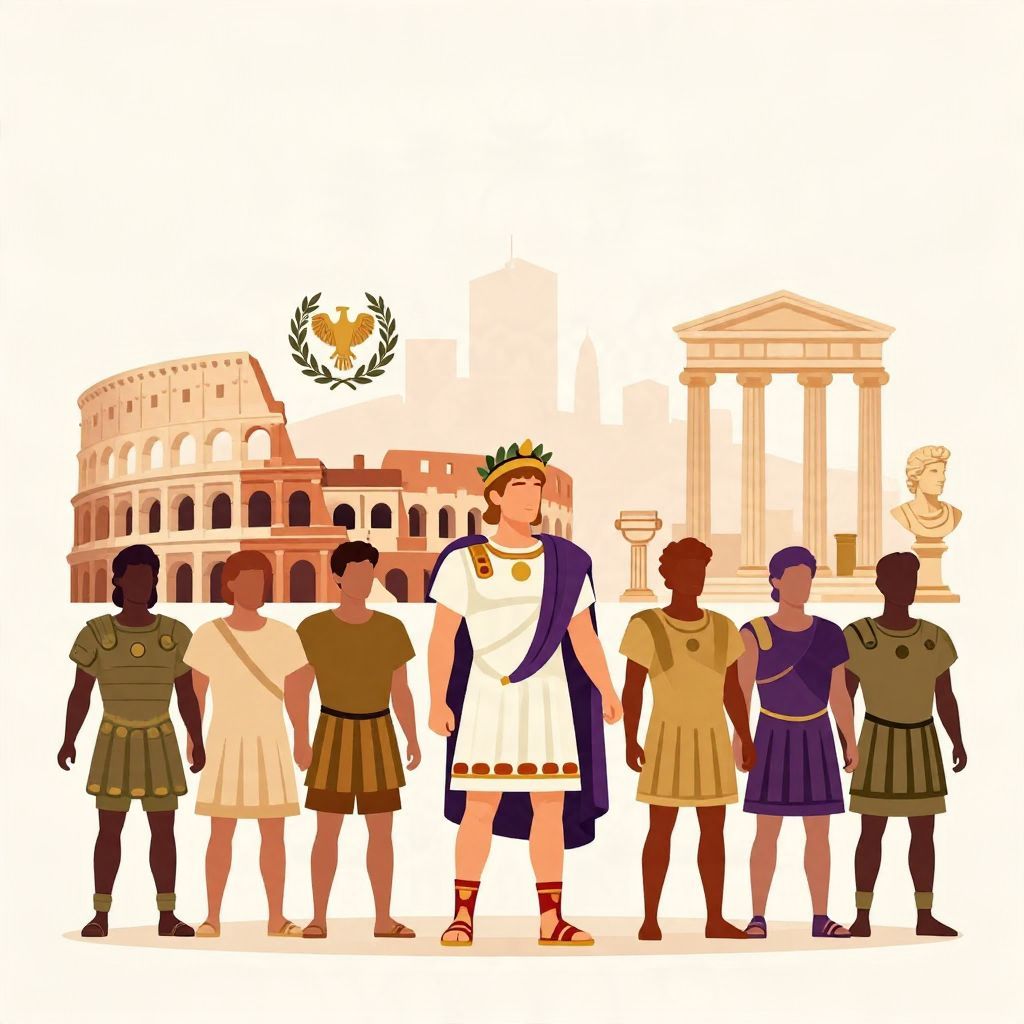
How many emperors did Rome have? The short answer is that there is no single fixed number unless you define exactly what counts as a Roman emperor. If you mean the emperors of the Roman Empire from Augustus onward, the total depends on whether you include co-emperors, short-lived usurpers, and the emperors of the Eastern Roman Empire.
Because Rome’s imperial system lasted for centuries and changed over time, historians usually give approximate totals rather than one universally agreed figure. The best answer is that Rome had well over 100 emperors in the broadest sense, and many more if every claimant and co-ruler is counted.
How Many Emperors Did Rome Have?
In the most common historical count, the Roman Empire had roughly 70 to 80 emperors if you mean the main rulers of the unified empire from Augustus in 27 BCE to the fall of the Western Empire in 476 CE. If you include the Eastern Roman emperors, often called Byzantine emperors, the total rises to well over 100. If you count short-lived claimants and co-emperors, the number becomes even higher.
Why the Number Is Not Simple
Roman imperial history does not fit neatly into one list because the title “emperor” was not always used in the same way. Some rulers shared power, some ruled only a few months, and some were recognized in one part of the empire but not another. That is why different books and websites may give different totals.
What counted as an emperor?
In Roman political life, the emperor was the man who held supreme military and political authority, but this authority was often wrapped in traditional republican language. The Romans did not begin with a clear office called “emperor” in the modern sense. Instead, rulers accumulated powers such as imperium, tribunician authority, and control of the army.
Why historians disagree on the total
- Co-emperors: Some emperors ruled together, especially in the later empire.
- Usurpers: Many generals and nobles claimed the throne but ruled only briefly or locally.
- Regional division: After the empire split, East and West had separate imperial lines.
- Different counting methods: Some lists count only officially recognized emperors; others include every claimant.
The Roman Empire’s First Emperor
The first Roman emperor was Augustus, formerly Octavian, who consolidated power after the civil wars that followed Julius Caesar’s assassination. In 27 BCE, he received the honorific title Augustus and became the first ruler to establish the imperial system that would define Rome for centuries.
Augustus did not call himself king, and Romans remained sensitive to the memory of monarchy. Instead, he presented his rule as a restoration of order. This carefully managed political settlement marked the beginning of the imperial age, even though the old republican institutions continued to exist in name.
How Rome’s Emperors Were Counted Over Time
The early empire
The early emperors ruled the unified Roman state from Augustus through the crisis-ridden third century. This period included famous rulers such as Tiberius, Claudius, Nero, Trajan, Hadrian, and Marcus Aurelius. If you count only the major recognized emperors of this era, the number is much smaller than if you include every brief claimant during civil war years.
The crisis of the third century
From roughly 235 to 284 CE, Rome experienced repeated civil wars, invasions, assassinations, and rapid turnovers in power. Several emperors ruled for only months, and in some years multiple men claimed the throne at once. This period is one reason the total number of Roman emperors becomes difficult to pin down exactly.
The later empire and co-emperors
By the late third and fourth centuries, emperors often ruled alongside colleagues. The empire was sometimes divided administratively, and rulers could be senior emperors or junior co-emperors. This system helped manage a vast territory, but it also complicates any simple count of “how many emperors Rome had.”
How Many Roman Emperors Were There in the West?
If you count the emperors of the Western Roman Empire from Augustus to the deposition of Romulus Augustulus in 476 CE, the total is usually placed at about 80, depending on whether brief rivals are included. The Western line ended when imperial authority in Italy collapsed, though Roman institutions and identity did not disappear overnight.
The last Western emperor, Romulus Augustulus, is often treated as the final emperor of ancient Rome in popular history. In reality, the western imperial office had already become weak and dependent on military strongmen. His deposition was symbolically important, but it was the endpoint of a long decline rather than a sudden collapse.
How Many Roman Emperors Were There in the East?
The Eastern Roman Empire continued for nearly a thousand years after the West fell. Its rulers are still Roman emperors in a historical sense, even though later historians often call them Byzantine emperors. If included, the imperial total rises substantially, eventually bringing the overall number of Roman emperors to well over 100.
The Eastern emperors ruled from Constantinople and preserved Roman law, administration, and imperial ideology. Famous examples include Constantine I, who founded Constantinople as a new imperial capital, and Justinian I, whose reign saw major legal reforms and ambitious reconquests. The final Eastern emperor was Constantine XI Palaiologos, who died defending Constantinople in 1453.
Should Usurpers Be Counted?
One of the biggest reasons the answer changes is the question of usurpers. A usurper was someone who claimed the imperial throne without secure legal recognition. Some usurpers controlled territory and armies for a time, while others were defeated almost immediately. Whether to count them depends on the purpose of the list.
Examples of disputed rulers
- Men who were proclaimed emperor by their troops but never fully controlled Rome.
- Rivals who ruled only a province or a regional capital.
- Short-lived emperors during civil war and succession crises.
For political history, these figures matter because they show how unstable imperial succession could be. For a simple classroom count, however, many historians exclude them to avoid confusion.
Why Roman Succession Was So Unstable
Rome never developed a fully settled hereditary system like later monarchies. Although emperors often tried to pass power to sons, adopted heirs, or chosen successors, the army, the Senate, palace intrigue, and provincial power all influenced succession. That made the imperial office powerful but often precarious.
Military support was especially important. An emperor needed the loyalty of the legions, and when that loyalty shifted, a new ruler could emerge. Civil war was therefore not an exception but a recurring feature of Roman political life. This is why the empire produced so many emperors over time.
Famous Roman Emperors and What They Represent
Some emperors became especially memorable because they marked turning points in Roman history. A few examples help show the range of the imperial office:
- Augustus established the imperial system.
- Claudius expanded Roman rule in Britain.
- Nero became associated with tyranny in later tradition.
- Trajan presided over Rome’s greatest territorial extent.
- Hadrian consolidated and defended the empire’s borders.
- Diocletian reorganized the empire and introduced the Tetrarchy.
- Constantine I legalized Christianity and reshaped imperial government.
- Justinian I left a lasting legal legacy.
These names are often better remembered than the many short-lived emperors because they had longer reigns or left clearer marks on Roman institutions.
The Best Short Answer for Most Readers
If you want the simplest historically responsible answer, say this: Rome had around 70 to 80 emperors in the Western Empire alone, and well over 100 if you include the Eastern Roman emperors and disputed claimants. The exact number depends on how strictly you define “emperor” and which rulers you decide to count.
That is why no single total is universally accepted. Roman imperial history stretched across centuries, changed shape over time, and included many rulers whose legitimacy was contested. The number is less important than the fact that Rome’s empire was long-lived, politically complex, and often unstable in succession.
Historical Takeaway
Rome did not have one neat, fixed number of emperors because its imperial system evolved over more than 1,400 years if the Eastern Empire is included. The safest answer is that Rome had dozens upon dozens of emperors, with the total depending on whether you count only major rulers or every claimant and co-emperor. For related reading, see how many Roman emperors there were and how long the Roman Empire lasted.