
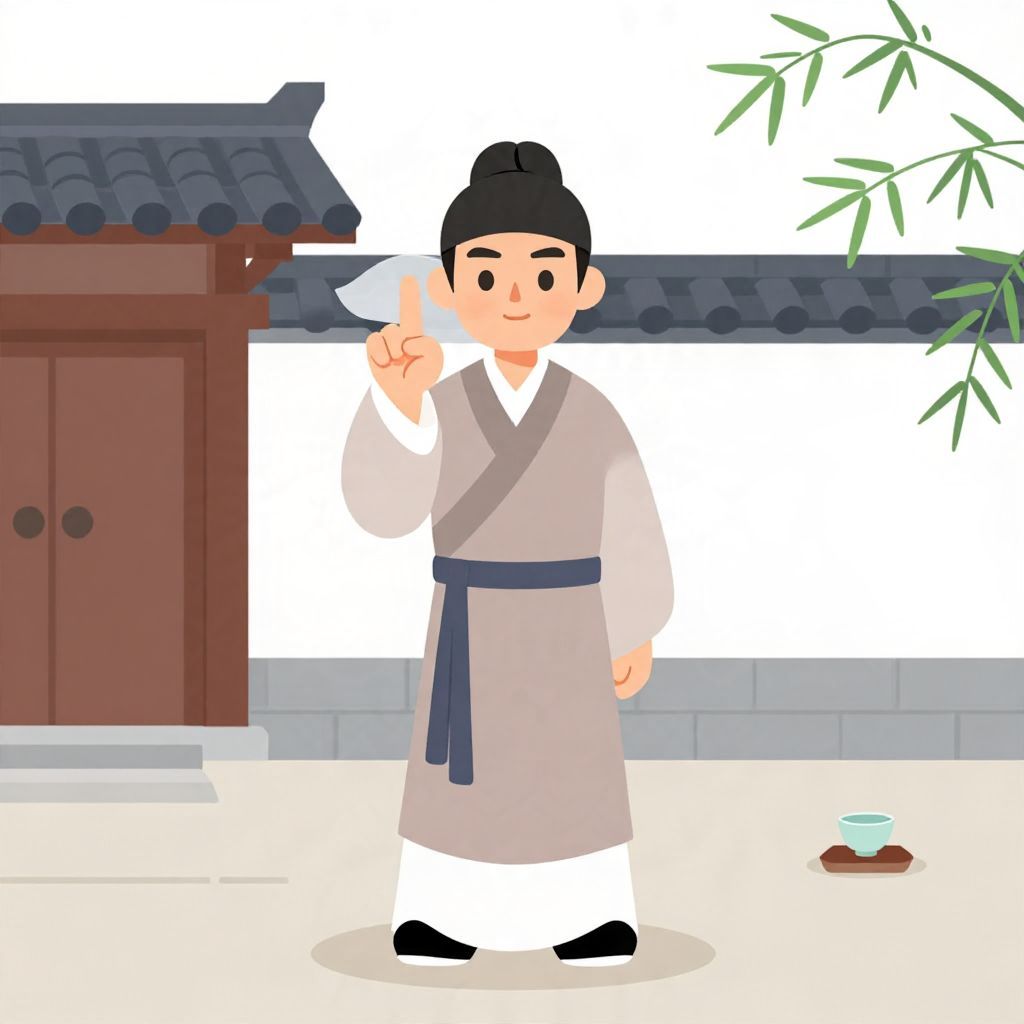
The question “Is the pinky finger the middle finger in China?” sounds simple, but it mixes up anatomy, gesture, and cultural meaning. In historical and linguistic terms, the answer is no: the pinky is not the middle finger in China, just as it is not in English-speaking countries. What can differ is how fingers are named, counted, and symbolized in Chinese culture.
That distinction matters because gestures can carry very different meanings across societies. In China, as elsewhere, the same finger may be associated with counting, etiquette, insult, promise-making, or superstition depending on context and period.
Is the Pinky Finger the Middle Finger in China?
No. In China, the pinky finger is still the smallest finger, not the middle finger. The confusion usually comes from language translation, gesture differences, or online myths. Chinese speakers may use different terms for fingers and hand gestures, but the physical position of the pinky and middle finger has never been reversed in Chinese history.
How Fingers Are Named in Chinese
Basic finger terms
Modern Mandarin uses descriptive names for fingers. The middle finger is called zhōngzhǐ (middle finger), and the pinky is commonly called xiǎozhǐ (little finger). These names are straightforward and reflect the finger’s size or position. Older Chinese texts and regional dialects may use other expressions, but the underlying idea is the same.
This matters because some internet claims confuse a language difference with a bodily difference. A word can be translated differently, but that does not change which finger is which. In Chinese history, there is no evidence of a culture-wide belief that the pinky functioned as the “middle finger” anatomically.
Counting and hand symbolism
Chinese counting traditions sometimes use finger gestures in ways unfamiliar to outsiders. Merchants, market sellers, and children have long used hand signs to represent numbers. These systems are practical and regional, not proof that finger identities were ever swapped. The pinky may be used in a counting gesture, but that is not the same as calling it the middle finger.
Where the Confusion Comes From
Translation errors and online myths
One common source of confusion is the loose translation of finger-related slang or gesture vocabulary. A phrase that refers to a finger gesture may be translated too literally, or a joke may be repeated without context. Over time, this can produce the false idea that Chinese culture “uses the pinky as the middle finger.”
Another source is the assumption that all cultures use the same gestures in the same way. They do not. A hand sign that means “small,” “promise,” “number six,” or “insult” in one place can mean something else elsewhere. But cultural variation in gesture meaning is not the same as changing the anatomy or basic naming of fingers.
Different gestures, not different fingers
In many societies, the middle finger is associated with insult because of a long history of obscene gesture traditions. In China, insulting gestures have existed too, but they have not depended on redefining the pinky as the middle finger. Instead, different gestures developed their own meanings in local social life, etiquette, and performance.
Finger Gestures in Chinese History
Etiquette, hierarchy, and social behavior
Chinese history placed strong emphasis on ritual behavior, respect, and hierarchy. From imperial times through the modern era, bodily conduct mattered in formal settings. Bowing, kneeling, hand placement, and controlled speech all signaled status and respect. Finger gestures, especially rude ones, were therefore read within a broader culture of etiquette.
Because public behavior was closely watched, gestures could carry social consequences. A rude sign might be understood as disrespect toward an elder, official, or rival. But historical evidence shows variation by region and period rather than a single universal “Chinese finger code.”
Gesture in theater, markets, and everyday life
Chinese opera, street performance, and market life all used expressive hands. Performers relied on precise hand movements to communicate character, emotion, and status. Merchants and laborers also used finger signs to communicate in noisy environments. These practical uses of the hand helped shape cultural habits, but they did not redefine the pinky as the middle finger.
In everyday life, people often relied on context rather than fixed gesture dictionaries. A raised pinky could suggest delicacy, youth, or a counting sign in some settings. The middle finger, by contrast, remained the middle finger.
What Historical Evidence Actually Shows
No evidence of a reversed finger system
There is no credible historical evidence that China ever had a standard system in which the pinky was considered the middle finger. Chinese medical texts, artistic depictions, daily-use language, and modern terminology all distinguish the fingers in ordinary ways. If a claim sounds dramatic, it is usually a modern internet invention rather than a historical fact.
That does not mean Chinese culture lacked distinctive hand symbolism. It simply means the symbolism was layered on top of normal anatomy. The hand was meaningful, but not physically reclassified.
Why historians are cautious
Historians avoid turning scattered anecdotes into sweeping claims. A local custom in one province, a slang term in one city, or a joke in one era cannot be generalized to all of China across centuries. China is vast, linguistically diverse, and historically changing. Any serious answer must account for that complexity.
So the best-supported conclusion is simple: the pinky finger was never historically the middle finger in China. Differences lie in language, gesture meaning, and etiquette—not in the identity of the finger itself.
Chinese Culture, Symbolism, and the Power of the Hand
Fingers in medicine and philosophy
Traditional Chinese medicine and philosophical writing often treated the body as interconnected. Hands, fingers, pulses, and movement could be discussed in relation to health and balance. This gave fingers symbolic importance, but not a new anatomy. The pinky remained the smallest finger, and the middle finger remained central in position.
Such traditions remind us that historical cultures often attached meaning to the body without altering basic physical categories. A finger could symbolize refinement, weakness, strength, or social role while still being recognized as the same finger.
Modern misunderstanding and cultural stereotyping
Today, claims about “the pinky being the middle finger in China” often appear in meme culture or casual online discussion. These claims can flatten a complex civilization into a single joke. That is misleading. Chinese history includes regional diversity, changing customs, and long-standing attention to gesture, but not a reversal of finger identity.
It is more accurate to say that China, like many cultures, has its own gesture traditions and its own language for body parts. Those traditions are historically interesting on their own without needing exaggerated claims.
Short Answer for Readers and Searchers
If you are asking for the direct historical answer, it is no: the pinky finger is not the middle finger in China. Chinese language and culture have distinct names and gestures for fingers, but there is no historical evidence that the pinky was ever treated as the middle finger. The confusion comes from translation, slang, and internet myths.
Why This Question Matters
This question is useful because it shows how easily cultural differences can be misunderstood. A small error about a finger can reveal a larger habit of oversimplifying other societies. Historical thinking asks us to separate anatomy from symbolism, and local custom from universal rule.
In China, as in other places, gestures have history. They can express respect, insult, counting, or identity. But the fingers themselves have always remained what they are. If you want to explore more cultural misconceptions and symbols in Chinese history, see what the Great Wall of China was for and, for a broader look at how names and meanings travel in culture, why New York is called the Big Apple.