
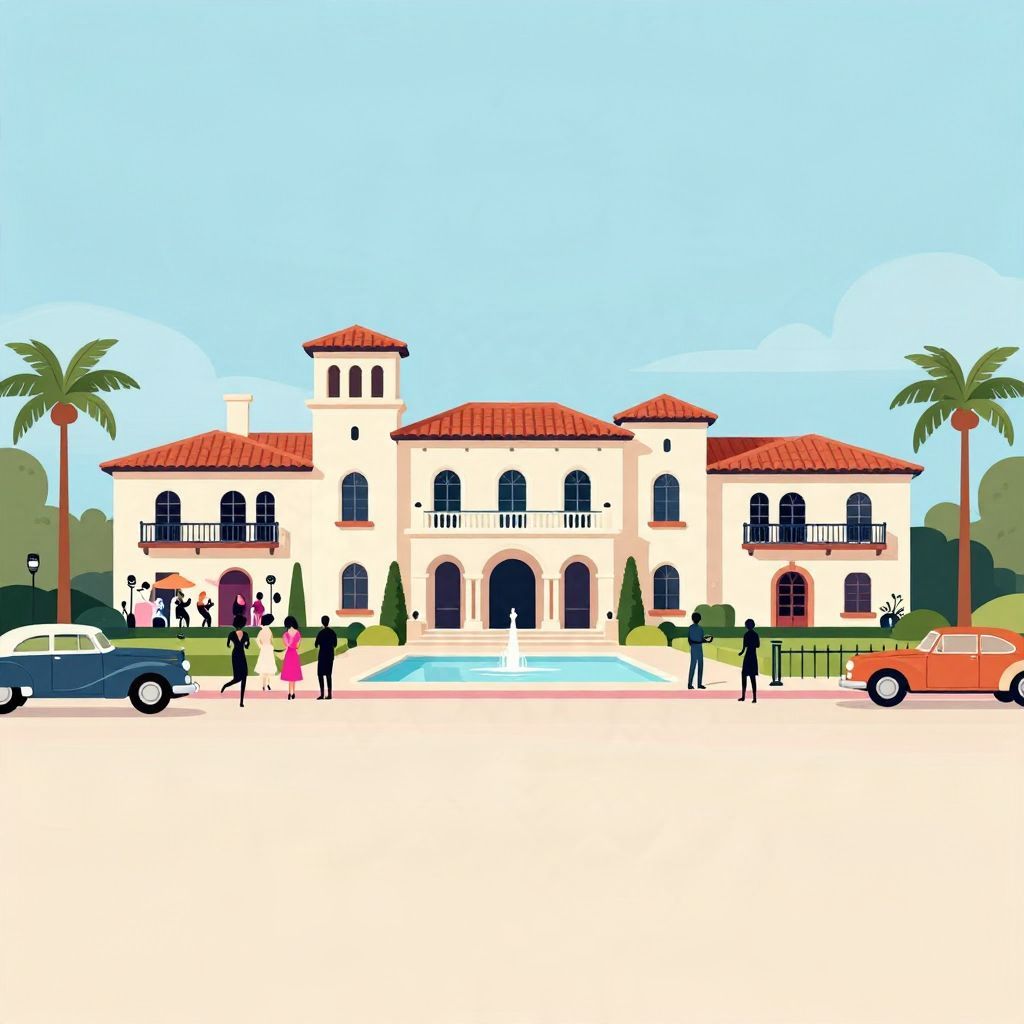
What happened to the Playboy Mansion is a story of rise, reinvention, decline, and preservation. Once the private home and social headquarters of Hugh Hefner, the Los Angeles estate became one of the most famous houses in America, tied to celebrity culture, media power, and the sexual revolution of the late 20th century.
After Hefner’s death in 2017, the mansion’s future changed dramatically. It was sold, renovated, and repurposed rather than preserved as a public museum, marking the end of an era in which the house itself symbolized the Playboy brand.
What happened to the Playboy Mansion?
The Playboy Mansion was sold after Hugh Hefner’s death, and its new owners began extensive renovation and redevelopment work. The house remained standing, but it stopped functioning as the center of Playboy’s social life. In historical terms, the mansion shifted from a private celebrity landmark into a highly valued Los Angeles property with a new commercial future.
From private home to cultural icon
The mansion’s history began long before it became famous. The main house in Holmby Hills, Los Angeles, was built in the 1920s, but it became the Playboy Mansion in 1971 when Hugh Hefner bought it. He moved into the estate and used it as both a residence and a stage for the Playboy image: luxury, exclusivity, and carefully managed scandal.
For decades, the mansion hosted parties, media events, and gatherings that made it one of the best-known private homes in the United States. It was not just a house; it was a symbol of a larger cultural shift in postwar America, when celebrity, consumerism, and changing attitudes toward sex became deeply intertwined.
Why the mansion mattered
- It served as the home of Hugh Hefner, the founder of Playboy.
- It became a visual shorthand for the Playboy brand and its lifestyle marketing.
- It reflected the rise of celebrity culture in late 20th-century America.
- It was associated with both glamour and controversy.
The mansion’s peak years under Hugh Hefner
During the 1970s, 1980s, and 1990s, the Playboy Mansion reached its cultural peak. Hefner lived there for decades, and the estate became famous for its parties, its grotto, and its role in entertainment journalism. The house appeared in photographs, television coverage, and countless pop-culture references, helping to turn a private residence into a public myth.
At the same time, the mansion’s image was never simple. Supporters saw it as a symbol of freedom, style, and social experimentation. Critics saw it as a monument to the objectification of women and the excesses of male privilege. Both readings are historically important because they show how the mansion reflected broader debates in American culture.
How the mansion’s image changed over time
- 1970s: It became a glamorous symbol of the Playboy empire.
- 1980s–1990s: It remained a celebrity landmark and media fixture.
- 2000s: Its image became more nostalgic as Playboy’s influence declined.
- After 2017: The house became less a living symbol and more a historic property.
What caused the Playboy Mansion to change?
The mansion changed because the world around it changed. Playboy magazine was no longer the cultural force it once had been, print media lost influence, and public attitudes toward sexuality, celebrity, and gender shifted. The estate also became harder to maintain as a living headquarters for a brand that had lost much of its old power.
Another major factor was ownership. Hefner had made the mansion inseparable from his personal identity. Once he died in 2017, the house could no longer function in the same way. Its meaning depended on a single owner, and without him it became a property to be sold, managed, and adapted for a new use.
Key causes of the mansion’s transformation
- The decline of Playboy as a dominant print and lifestyle brand.
- Changing social attitudes toward sexuality and entertainment.
- The practical cost of maintaining a large historic estate in Los Angeles.
- Hugh Hefner’s death, which ended the mansion’s original purpose.
The sale after Hefner’s death
Hugh Hefner died in September 2017 at age 91. Before his death, the mansion had already become less central to Playboy’s operations, but it still carried enormous symbolic value. In 2016, the property was sold to billionaire Daren Metropoulos in a deal widely reported as a major turning point in the mansion’s history. Hefner was allowed to remain there until his death.
The sale came with an important condition: the main house would not be demolished. That meant the mansion would survive physically, even as its role changed. In historical terms, this was a preservation-by-contract outcome rather than a museum-style conservation effort.
What the new ownership meant
- The mansion was no longer a private home for Hefner.
- The site remained one of Los Angeles’s most famous addresses.
- Renovation and modernization became the likely future.
- The property’s symbolic value remained high, even as its function changed.
Was the Playboy Mansion demolished?
No, the Playboy Mansion was not demolished. The main house was preserved, though the property underwent changes after the sale. This is an important distinction because many people assume a famous estate disappears once its owner dies. In this case, the structure remained, but its historical identity as “Hefner’s home” ended.
That difference matters. Buildings can survive while their cultural meaning changes completely. The mansion still exists as a real estate asset and architectural site, but its most famous chapter belongs to the era when it served as the center of the Playboy world.
The mansion’s historical impact
The Playboy Mansion had an outsized impact on American popular culture. It helped define the public image of Playboy for half a century and became one of the most recognizable private homes in the country. Its history also reveals how personal branding, media power, and architecture can combine to create a cultural landmark.
At the same time, the mansion’s legacy is contested. For some, it represents a glamorous and influential chapter in entertainment history. For others, it is inseparable from the exploitation and gender politics associated with Playboy’s business model. A balanced historical view has to hold both truths at once.
Why historians and cultural critics still care
- It illustrates the rise of lifestyle branding in modern America.
- It shows how a private residence can become a public symbol.
- It reflects changing ideas about celebrity, privacy, and sexuality.
- It marks the decline of one of the 20th century’s most famous media empires.
Timeline of major events
Here is a simple timeline of the mansion’s key historical moments:
- 1920s: The original house is built in Holmby Hills, Los Angeles.
- 1971: Hugh Hefner buys the property and makes it the Playboy Mansion.
- 1970s–2000s: The mansion becomes a cultural icon and celebrity venue.
- 2016: The property is sold, with Hefner allowed to remain there.
- 2017: Hefner dies, ending the mansion’s original era.
- After 2017: The house is renovated and repurposed under new ownership.
What the Playboy Mansion means today
Today, the Playboy Mansion is best understood as a preserved symbol of a vanished media age. It no longer functions as the glamorous headquarters of the Playboy lifestyle, but it remains famous because of what it once represented: wealth, celebrity, controversy, and the power of image in modern America.
Its story is not simply about a house. It is about the rise and decline of a cultural empire, and about how buildings can outlast the social worlds that made them famous. For readers interested in the fate of iconic institutions and the people behind them, related stories include what happened to Pan Am Airlines and what happened to Junko Furuta.