
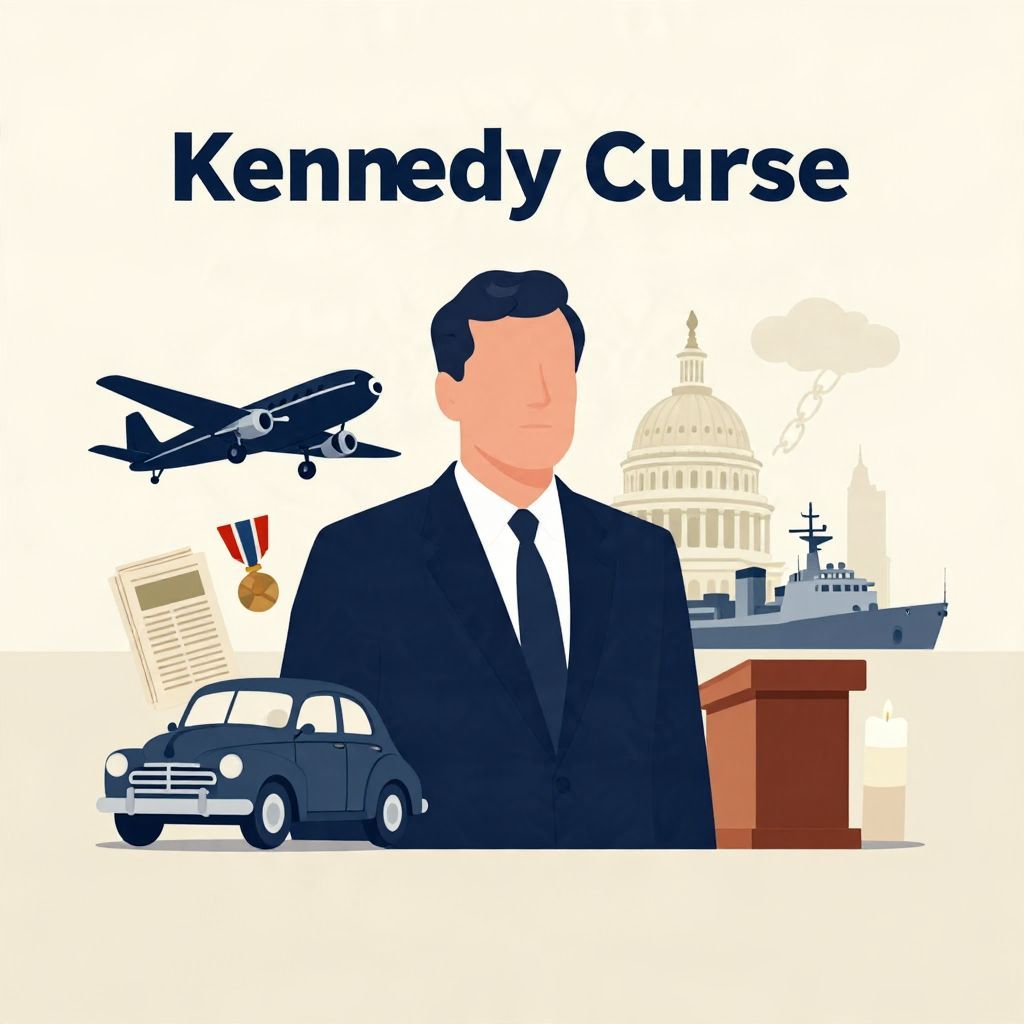
What is the Kennedy Curse? It is the popular belief that repeated tragedies have haunted the Kennedy family across generations, especially in the 20th century. The phrase suggests a pattern of untimely deaths, accidents, illness, and scandal surrounding one of America’s most famous political dynasties.
Historically, though, the “curse” is not evidence of a supernatural force. It is a cultural explanation for a series of very public misfortunes that became more visible because the Kennedys were powerful, wealthy, and constantly in the news.
What Is the Kennedy Curse?
The Kennedy Curse is a modern popular term for the many tragedies that struck members of the Kennedy family, especially from the 1940s onward. It is not a historical fact in the literal sense, but a label used by journalists and the public to describe a cluster of deaths, injuries, and scandals that seemed unusually frequent in one prominent family.
Where Did the Idea of the Kennedy Curse Come From?
The idea grew gradually as the family’s public profile expanded. The Kennedys were already notable by the 1930s and 1940s, but the deaths of sons and daughters, wartime losses, and later political assassinations made the family appear marked by extraordinary misfortune. As each new tragedy occurred, newspapers and commentators reinforced the notion of a “curse.”
The phrase became especially powerful after the assassination of John F. Kennedy in 1963, followed by the murder of Robert F. Kennedy in 1968 and the plane crash that killed John F. Kennedy Jr. in 1999. Those events gave the idea a lasting place in American popular memory.
Which Kennedy Tragedies Shaped the Legend?
Several events helped build the legend, though not every family misfortune is equally central to the story. The most cited tragedies include deaths in war, political assassinations, plane crashes, and serious illness. Together, they created a sense of repeated calamity across the family line.
Early losses in the family
The Kennedys experienced tragedy before they became a national political dynasty. Joseph P. Kennedy Jr., the eldest son, was killed in 1944 during World War II while serving as a naval aviator. His death was a major blow to the family and also changed the political future of the Kennedys, since he had originally been expected to pursue public office.
In 1948, Kathleen “Kick” Kennedy died in a plane crash in France. Her death added to the sense that the family was unusually vulnerable to sudden catastrophe.
Assassinations and political violence
The most famous tragedy was the assassination of President John F. Kennedy in Dallas on November 22, 1963. His death shocked the United States and the world, and it transformed the Kennedy family into a symbol of both glamour and grief.
Five years later, Robert F. Kennedy was assassinated after winning the California Democratic presidential primary in 1968. Because both brothers were killed at the height of national political life, the family’s suffering took on a larger historical meaning. It seemed to many Americans that the Kennedys had been singled out by fate.
Later accidents and scandals
The legend continued in later decades. John F. Kennedy Jr., his wife Carolyn Bessette Kennedy, and her sister Lauren Bessette died in a plane crash off Martha’s Vineyard in 1999. That event revived the curse narrative for a new generation.
Other family troubles also fed the myth: the lobotomy and lifelong disability of Rosemary Kennedy, the death of David Kennedy from a drug overdose in 1984, and the death of Michael Kennedy in a skiing accident in 1997. While these events were not politically significant in the same way as the assassinations, they contributed to the broader image of a family repeatedly struck by tragedy.
Why Did People Believe the Kennedy Curse Was Real?
People tend to look for patterns in dramatic events, especially when those events involve a famous family. In the Kennedys’ case, several factors made the “curse” idea persuasive: wealth, visibility, repeated tragedy, and the family’s almost mythic place in American politics. The more famous the family became, the more each loss seemed to confirm the story.
Media attention amplified the pattern
The Kennedys lived in the age of mass media. Their private griefs became public stories, and each new event was reported as part of a larger family saga. That constant coverage made the tragedies feel connected, even when they had different causes and occurred in different contexts.
Public fascination with dynasties
Americans have long been fascinated by political families, and the Kennedys were often portrayed as the closest thing the United States had to royalty. That status encouraged a dramatic, almost literary interpretation of their lives. A family seen as exceptional is also more likely to be described as exceptionally blessed or cursed.
What Is the Historical Reality Behind the Curse?
Historically, the Kennedy Curse is best understood as a narrative, not an explanation. The family did experience an unusual number of high-profile tragedies, but there is no evidence of supernatural causation. Many of the events had ordinary historical causes: war, aviation risks, political violence, illness, and chance.
It is also important to remember that the Kennedy family was large. Large families have more opportunities for accidents, illness, and personal struggles over time. Because the Kennedys were prominent, those events were far more visible than similar tragedies in less famous families.
Chance, risk, and public life
Some Kennedy tragedies were linked to the risks of the era. Military service in World War II was dangerous. Small aircraft were less safe in the mid-20th century than they are today. High-profile political figures in the 1960s also faced real threats of assassination in a period of intense social conflict. These are historical conditions, not mystical ones.
How the Kennedy Curse Became Part of American Culture
The Kennedy Curse became more than a family story; it became a cultural shorthand for repeated bad luck. In journalism, politics, and popular conversation, it is often used to describe any family or group that seems to suffer one disaster after another. The phrase endures because it is brief, memorable, and emotionally powerful.
It also reflects a broader American habit of turning public figures into legends. The Kennedys were not only politicians; they were symbols of ambition, youth, privilege, and national hope. When tragedy struck, the contrast between promise and loss made the story especially haunting.
Myth and memory
Over time, the Kennedy Curse has functioned like a modern myth. It does not require belief in magic to be meaningful. Instead, it expresses a public sense that some families seem to carry an extraordinary burden of fate. In that sense, the “curse” tells us as much about American storytelling as it does about the Kennedys themselves.
Was the Kennedy Family Really Unlucky?
In a broad sense, yes: the family endured a remarkable number of painful events. But “unlucky” is a descriptive judgment, not a historical cause. The better question is why the Kennedys became the most famous example of a tragic family in modern American history. The answer lies in their visibility, political power, and repeated exposure to the dangers of public life.
Some historians and commentators also note that the family’s ambition and social position placed many members in high-risk environments. Politics, aviation, and wartime service all carried dangers. Still, the specific sequence of losses was unusual enough that the curse narrative became hard to resist.
Why the Kennedy Curse Still Matters
The Kennedy Curse remains relevant because it shows how history and myth can merge. A real sequence of tragedies became a lasting story about destiny, privilege, and loss. The phrase continues to appear in discussions of the family because it captures a genuine historical pattern, even if it mislabels the cause.
For historians, the most useful approach is to separate evidence from legend. The evidence shows a family repeatedly hit by tragedy. The legend turns that fact into a curse. Understanding both helps explain why the Kennedys remain such a powerful part of American memory.
In the end, the Kennedy Curse is best understood as a cultural explanation for a series of real misfortunes, not as a literal historical force. If you want to explore the family’s wider story, you may also be interested in why JFK Jr. died in a plane crash and how the Kennedys made their money.