
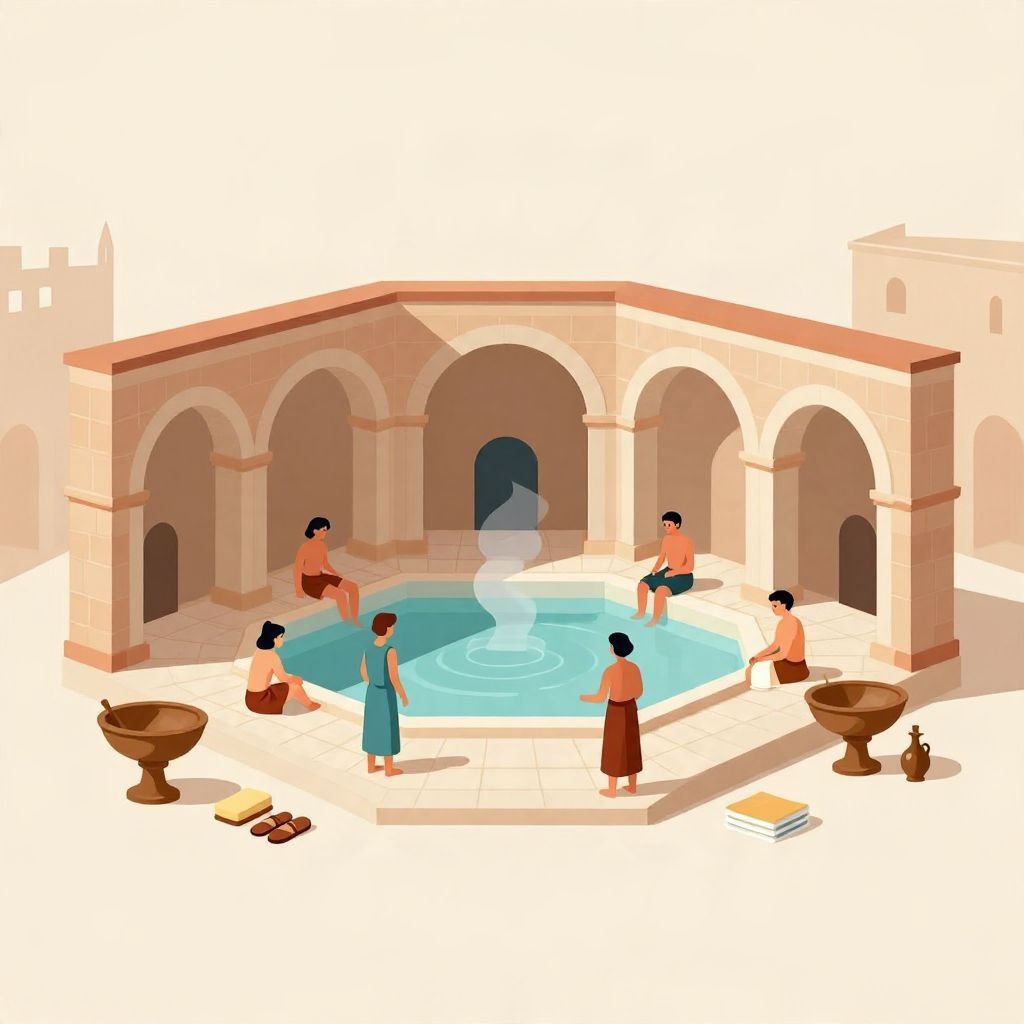
What is a bath house? In historical terms, a bath house is a building or complex designed for washing, soaking, and often socializing in communal water spaces. Across many societies, bath houses were more than places to get clean: they were centers of health, ritual, leisure, and public life.
Their meaning changed over time. From ancient Roman thermae to Ottoman hammams, Japanese sento, and later public baths in industrial cities, bath houses reflect how different cultures understood hygiene, the body, and community.
What Is a Bath House?
A bath house is a purpose-built place for bathing, usually with shared facilities such as pools, tubs, steam rooms, or washing areas. Historically, bath houses served practical needs, but they also became important social institutions where people met, relaxed, conducted business, and sometimes performed religious or medical rituals.
The Origins of Bath Houses
Bathing in dedicated spaces is very old, but the bath house as a distinct building appears in several early civilizations. Archaeological evidence shows that the Indus Valley Civilization, ancient Mesopotamia, Egypt, Greece, and Rome all developed bathing practices in organized settings. The exact “first” bath house is difficult to name because bathing spaces evolved independently in different regions.
Early bathing and ritual cleansing
In many ancient societies, washing was tied to purity as well as comfort. Water could symbolize renewal, preparation for worship, or removal of pollution. This meant that early bath spaces were often connected to temples, palaces, or elite households before becoming more public.
Greek and Roman developments
The Greeks used public bathing spaces, but it was the Romans who made the bath house into one of the most recognizable institutions of the ancient world. By the late Republic and especially under the Empire, Roman bath complexes became large, architecturally sophisticated, and open to broad sections of the population. They included changing rooms, cold and hot baths, exercise areas, and courtyards.
How Roman Bath Houses Worked
Roman bath houses, or thermae, were among the most elaborate public buildings in antiquity. They usually followed a sequence of rooms: a warm room, a hot room, and a cold plunge area. Many also had furnaces beneath the floors and walls to heat the air and water. These buildings were engineering achievements as much as social spaces.
Common features of Roman baths
- Apodyterium: a changing room
- Tepidarium: a warm room for gradual adjustment
- Caldarium: a hot room for sweating and bathing
- Frigidarium: a cold room or plunge pool
- Palaestra: an exercise courtyard in larger complexes
Bathing in Rome was not only about hygiene. People exercised, discussed politics, negotiated business, and relaxed. Some bath houses were grand imperial showpieces, such as the Baths of Caracalla and the Baths of Diocletian, which demonstrated both civic generosity and imperial power. Entry fees were often low, making baths accessible to many urban residents.
Bath Houses in the Islamic World and Ottoman Empire
After the classical world, bath house traditions continued and transformed. In the Islamic world, bathing became closely associated with cleanliness, social etiquette, and religious life. The hammam, or bath house, developed as a major urban institution from the early medieval period onward. It was especially important in cities across the Middle East, North Africa, and later the Ottoman Empire.
The hammam tradition
Hammams generally included warm, hot, and cool rooms, along with washing areas and spaces for massage or rest. They were often linked to mosques, markets, and neighborhood life. Because ritual cleanliness mattered in Islamic practice, bath houses supported both daily hygiene and preparation for prayer or special occasions.
Ottoman bath houses became especially famous for their architecture and social role. They served men and women at different times or in separate sections, and they could be used for weddings, childbirth-related rituals, and community gatherings. In many cities, the hammam was a place where social boundaries were both reinforced and negotiated.
Bath Houses in East Asia
Bathing culture also developed in East Asia in forms shaped by local customs and beliefs. In Japan, public bath houses known as sento became common in urban areas, especially from the early modern period onward. These were not always luxurious; many were practical neighborhood facilities for ordinary people who lacked private bathing space at home.
Japanese sento and onsen culture
Japanese bathing traditions were influenced by both religious purity ideas and everyday urban life. While onsen are natural hot springs, sento are man-made public bath houses. Both became part of a broader culture in which bathing was associated with health, relaxation, and social routine. In crowded cities, they offered a vital service long before private bathrooms were common.
Bath Houses in Europe After Antiquity
In medieval and early modern Europe, bath houses remained present, though their popularity and reputation changed over time. Some towns had public baths, barber-surgeons’ bath houses, or steam baths. Yet concerns about morality, disease, and changing medical ideas led to the decline of many communal bathing traditions in some regions, especially after the late Middle Ages.
Why some bath houses declined
Historians have debated the causes of this decline. It was not a simple result of one event. Changing attitudes toward sexuality, the spread of certain disease theories, urban regulation, and the cost of maintaining baths all played a role. In some places, people bathed less communally and more privately, but this shift happened unevenly and over a long period.
Bath Houses and Public Health in the Modern Era
Bath houses took on new importance in the nineteenth and early twentieth centuries, especially in industrial cities. As urban populations grew and many working-class homes lacked indoor plumbing, public baths offered a practical solution. They were often built by municipalities, charities, or reform groups concerned with hygiene and social welfare.
Public baths and reform
Modern public bath houses were part of broader public health campaigns. Reformers believed that access to bathing could reduce dirt, improve dignity, and encourage healthier living. Some bath houses offered simple washrooms and showers; others included swimming pools, laundry facilities, or recreational spaces. Their rise shows how a very old institution adapted to modern urban needs.
What Bath Houses Meant in Different Societies
Bath houses were never just about washing. Their meaning depended on local culture, religion, class, and city life. In some places they were civic monuments; in others, neighborhood necessities. In some societies they supported ritual purity; in others, they were associated with leisure, medicine, or status.
Social and cultural roles
- Hygiene: cleaning the body when private bathrooms were unavailable or uncommon
- Health: bathing, steam, and massage were often linked to healing
- Ritual: purification before prayer, festivals, or life events
- Community: a place to meet neighbors and exchange news
- Status: grand bath houses displayed wealth and civic pride
Because bath houses were shared spaces, they also reveal how societies managed privacy, gender, class, and public behavior. Rules about who could enter, when, and under what conditions varied widely. In many cases, bath houses were carefully regulated spaces rather than free-for-all public rooms.
Bath Houses in Popular Memory
Today, the word “bath house” can mean different things depending on context. Historically, it refers to communal bathing buildings. In modern usage, it may also describe spa facilities or specialized social venues. This can create confusion, but the historical bath house is best understood as a public or semi-public bathing institution with deep roots in urban life.
Why Bath Houses Matter in History
Bath houses matter because they show how ordinary activities can become central to civilization. They connect architecture, technology, religion, medicine, and social life. From Roman engineering to Ottoman urban culture and modern public health reform, bath houses reveal that cleanliness was never only a private matter. It was also a public, cultural, and political one.
In short, a bath house is a historically significant building for communal bathing, but its deeper importance lies in what it tells us about the societies that built and used it. If you want to explore related topics, you may also enjoy reading about what a chateau is and what a buccaneer is.