
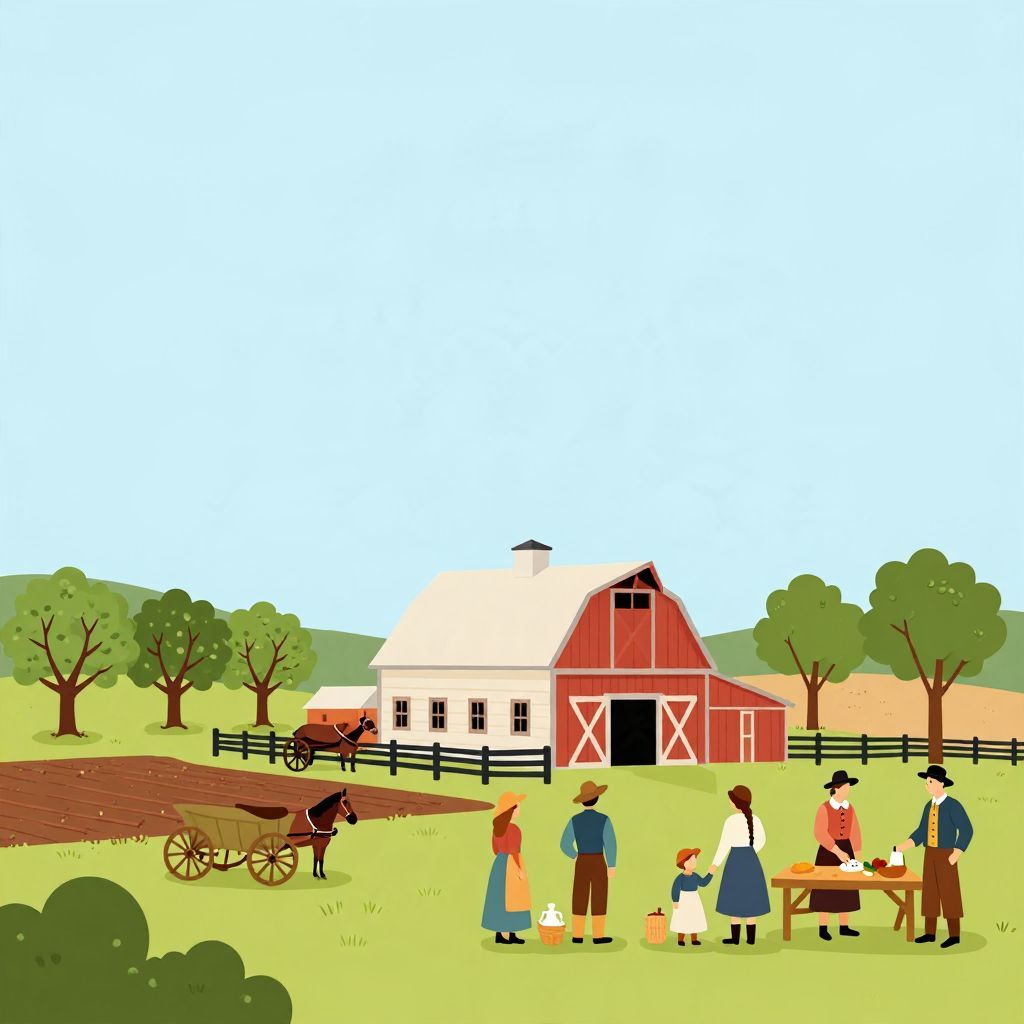
What is Pennsylvania Dutch? The short answer is that it refers to a German-speaking ethnic group that settled in colonial Pennsylvania and their descendants, not people from the Netherlands. The name comes from an older use of the word “Dutch,” which once could mean “German” or “Germanic” in English-speaking America.
Over time, Pennsylvania Dutch became both an ethnic identity and a cultural label for distinctive speech, religion, foodways, farming traditions, and material culture that developed in the Mid-Atlantic region from the late 1600s onward.
What Is Pennsylvania Dutch?
Pennsylvania Dutch refers mainly to German immigrants and their descendants who came to Pennsylvania in the 17th and 18th centuries, along with the culture and dialect they developed there. Despite the name, they are not Dutch from the Netherlands; “Dutch” here is an older English term related to “Deutsch,” meaning German.
Why the Name “Pennsylvania Dutch” Is Misleading
The term is one of the most common sources of confusion in American history. Modern readers often assume it means people from the Netherlands, but historically English speakers used “Dutch” more loosely than they do today. In this case, the word reflects a linguistic mix-up between Deutsch and “Dutch,” not a Dutch national origin.
“Dutch” once had a broader meaning
In early modern English, “Dutch” could sometimes refer to German speakers in general, especially in colonial North America. Over time, the meaning narrowed to the people of the Netherlands, but the older usage survived in the phrase “Pennsylvania Dutch.” The community itself often called its language Deitsch or Deutsch.
Not all Pennsylvania Dutch are the same
The label covers a range of groups with different religious and cultural backgrounds. Some were Lutheran or Reformed Protestants; others were Mennonites, Amish, Brethren, and related Anabaptist communities. They shared German roots, but they did not all live the same way or hold the same beliefs.
Where Did the Pennsylvania Dutch Come From?
The Pennsylvania Dutch were largely immigrants from German-speaking parts of Europe, especially the Palatinate, along with regions that are now parts of southwestern Germany, Switzerland, Alsace, and neighboring areas. Most arrived in Pennsylvania between the late 1600s and the mid-1700s, a period shaped by war, religious tension, and economic hardship in Europe.
Why they left Europe
Many migrants came because their home regions had been devastated by conflict, taxation, and political instability. The Palatinate in particular suffered during the wars of the late 17th and early 18th centuries. Religious minorities also sought places where they could worship with fewer restrictions. Pennsylvania, founded by William Penn, offered unusual opportunities for land ownership and relative religious toleration.
Why Pennsylvania attracted them
Pennsylvania’s reputation mattered. Penn advertised the colony as a place of religious liberty and economic promise, and its fertile land drew farmers, artisans, and tradespeople. Philadelphia became a major entry point, and from there many German-speaking settlers moved into the interior counties. By the mid-18th century, German speakers formed one of the largest ethnic communities in colonial Pennsylvania.
How Pennsylvania Dutch Culture Developed
Pennsylvania Dutch culture did not remain a simple transplant from Europe. It changed in America through contact with English speakers, other immigrant groups, and the practical demands of frontier life. The result was a distinct regional culture that was German in origin but unmistakably Pennsylvanian in form.
The Pennsylvania Dutch dialect
One of the best-known features is the dialect often called Pennsylvania Dutch, more accurately Pennsylvania German. It developed from several German dialects and was spoken widely in homes, churches, and communities. The language helped preserve identity across generations, even as many speakers also learned English for trade and public life.
Religion and community life
Religion played a major role in shaping the community. Mennonites, Amish, and other Anabaptist groups emphasized plain living, adult baptism, mutual aid, and separation from some forms of worldly life. Lutheran and Reformed congregations, by contrast, often integrated more readily into broader colonial society while still preserving German-language worship for a time.
Farming, crafts, and settlement patterns
Many Pennsylvania Dutch families became successful farmers. They brought agricultural knowledge from Europe and adapted it to Pennsylvania’s land and climate. Their barns, house plans, quilts, painted furniture, and decorative motifs became part of a recognizable regional style. These traditions were not frozen relics; they evolved as families balanced inheritance, economy, and faith.
A Brief History of the Pennsylvania Dutch in America
The history of the Pennsylvania Dutch is closely tied to colonial settlement, the American Revolution, and the growth of the United States. Their story is not one of a single event but of gradual migration, adaptation, and cultural persistence across centuries.
- Late 1600s: The first significant German-speaking settlers arrive in Pennsylvania.
- Early to mid-1700s: Large-scale migration expands German-speaking communities in southeastern and south-central Pennsylvania.
- Revolutionary era: Pennsylvania Dutch communities respond in varied ways to the American Revolution, with some supporting independence and others remaining cautious or pacifist.
- 19th century: English becomes more dominant, but dialect and traditions continue in many rural communities.
- 20th century to present: Amish and some other groups maintain strong cultural continuity, while the broader Pennsylvania Dutch identity becomes a heritage label as well as a lived identity.
During the American Revolution
The Revolutionary era did not produce a single Pennsylvania Dutch political stance. Some German-speaking Pennsylvanians supported the Patriot cause, while others, especially pacifist groups, tried to avoid military involvement. Their diversity matters: the Pennsylvania Dutch were never a monolithic bloc with one political voice.
Assimilation and survival
As the 19th century progressed, many descendants shifted toward English language use and broader American identities. Yet cultural survival remained strong in certain communities, especially among the Amish and Mennonites. Even where the dialect declined, foods, family names, folk art, and regional customs continued to signal Pennsylvania Dutch heritage.
Pennsylvania Dutch, Amish, and Mennonite: What’s the Difference?
These terms are related but not identical. “Pennsylvania Dutch” is the broadest label. It can describe the historic German-speaking population of Pennsylvania and, in some contexts, the culture associated with them. Amish and Mennonite are specific religious groups within that wider heritage.
Amish
The Amish are a Christian Anabaptist group known for plain dress, horse-and-buggy travel in many communities, and a strong emphasis on separation from modern worldliness. They are part of the Pennsylvania Dutch heritage, but not all Pennsylvania Dutch are Amish.
Mennonite
Mennonites also trace their roots to Anabaptist traditions. Some Mennonite groups preserved a distinctive way of life, while others became more assimilated. Like the Amish, they are connected to Pennsylvania Dutch history, but they represent only one part of it.
Wider Pennsylvania Dutch identity
Many people with Pennsylvania Dutch ancestry are not Amish or Mennonite at all. They may simply have German-speaking colonial ancestors and family traditions shaped by the region. In that sense, Pennsylvania Dutch is both an ethnic-historical term and a cultural one.
Food, Folklore, and Everyday Traditions
Popular interest in Pennsylvania Dutch culture often centers on food, folk beliefs, and decorative arts. These are important, but they should not be treated as the whole story. They are expressions of a much larger history of migration, adaptation, and community continuity.
Foodways
Many dishes associated with Pennsylvania Dutch cooking reflect German roots adapted to American ingredients and rural life. Examples include scrapple, chow-chow, pot pie in the Pennsylvania sense, shoofly pie, and various sausages, breads, and pickled foods. These foods became part of a regional identity that extended beyond any single religious group.
Folk art and symbols
Hex signs, fraktur, painted furniture, and quilt patterns are among the best-known visual traditions linked to Pennsylvania Dutch culture. Some of these practices had religious or protective meanings; others became decorative over time. Popular culture has sometimes romanticized them, but they are best understood as living expressions of community aesthetics and belief.
Folklore and superstition
Stories about charms, cures, and protective symbols are common in Pennsylvania Dutch folklore. These traditions should not be confused with official religious doctrine. Like many folk cultures, the Pennsylvania Dutch combined formal faith with local custom, practical knowledge, and inherited beliefs.
How the Term Is Used Today
Today, “Pennsylvania Dutch” can mean different things depending on context. In historical writing, it often refers to the German-speaking settlers and their descendants in colonial and early America. In popular usage, it may refer more narrowly to Amish and Mennonite communities in Pennsylvania and nearby states. Both uses are common, which is why the term can be confusing.
Historical identity
As a historical identity, Pennsylvania Dutch describes a major immigrant stream in colonial America and a lasting regional culture. Their influence helped shape Pennsylvania’s language patterns, farming landscape, religious diversity, and culinary traditions.
Living heritage
As a living heritage, the term still matters to families and communities who preserve dialect, faith practices, and customs passed down over generations. In some areas, especially in Pennsylvania, Ohio, and Indiana, Pennsylvania Dutch traditions remain visible in daily life.
Why Pennsylvania Dutch History Matters
The history of the Pennsylvania Dutch shows how immigrant communities can preserve identity while also changing in response to a new land. It also demonstrates how language can shift in meaning over time, creating confusion long after the original historical context has faded.
Most importantly, the Pennsylvania Dutch story is not just about a name. It is about migration, religious freedom, adaptation, and cultural survival in early America. If you want to explore related topics, you may also find what acculturation means in history and how cultural preservation appears in architecture useful next reads.