
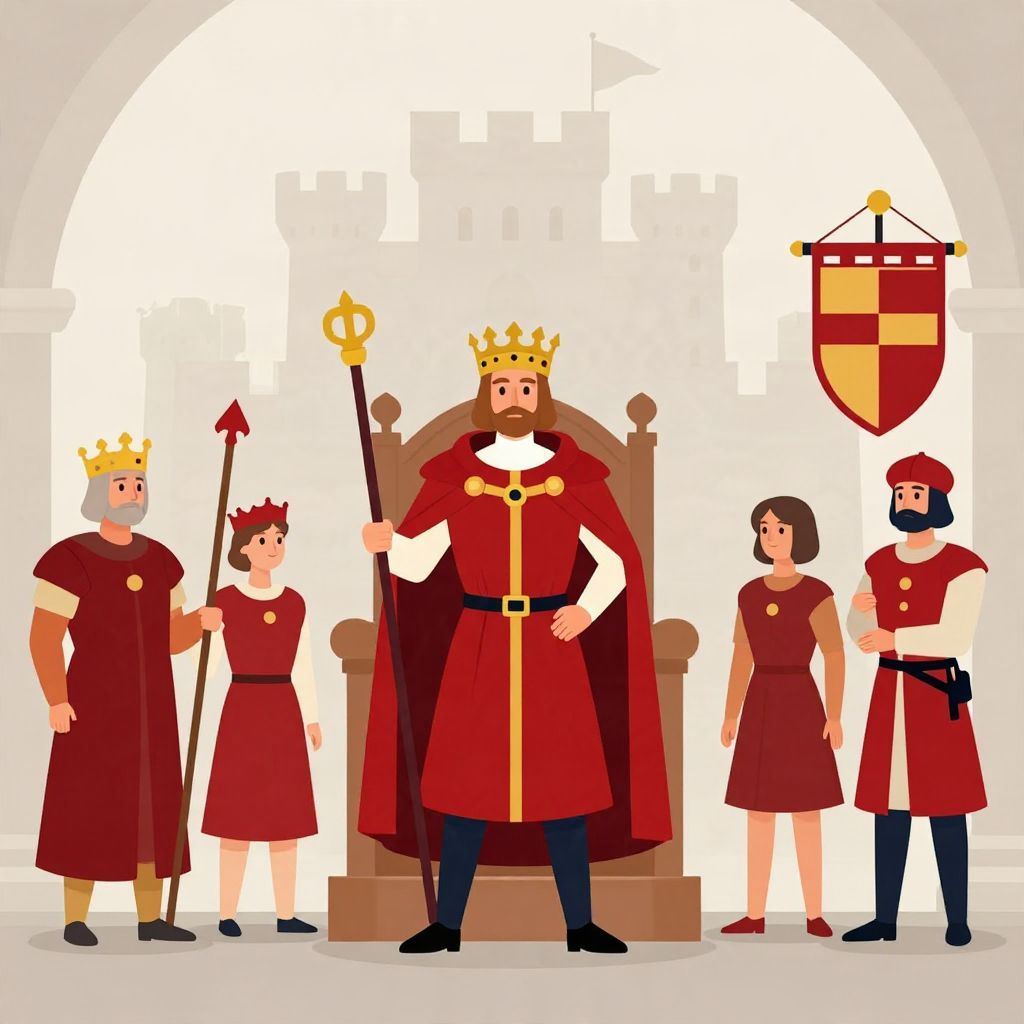
When people ask, “What is a duke in royalty?” they are usually asking about one of the highest noble ranks in European history. A duke was not a king, but he was often among the most powerful nobles in a kingdom, sometimes ruling a large territory or holding a title granted by a monarch.
The meaning of “duke” changed over time. In some periods it described a military leader; in others, a hereditary aristocratic title tied to land, status, and service to the crown.
What Is A Duke In Royalty?
A duke is a high-ranking noble, traditionally just below a king or prince and above most other aristocrats. In medieval and early modern Europe, dukes often governed important regions, commanded armies, and advised monarchs. The title usually signaled prestige, land, and political influence, though its exact powers varied by country and century.
Where Did the Title “Duke” Come From?
The word “duke” comes from the Latin dux, meaning “leader.” In the late Roman Empire, a dux was a military commander, not yet a hereditary noble title. Over time, especially in post-Roman Europe, the term evolved into a rank of nobility associated with leadership, territory, and elite status.
From Roman commander to medieval noble
In the Roman world, a dux was someone appointed to lead troops or defend a frontier. After the western Roman Empire weakened in the 400s and 500s, local rulers, warlords, and regional governors in Europe adopted older Roman terms and adapted them to new political realities. By the early Middle Ages, “duke” had become a title for powerful territorial lords.
The rise of territorial duchies
As medieval kingdoms took shape, rulers often delegated authority over large borderlands or strategically important regions to dukes. These regions became known as duchies. Some duchies were highly autonomous, especially in places like the Holy Roman Empire, where dukes could be nearly independent princes. Others were more tightly controlled by kings.
What Did a Duke Actually Do?
A duke’s duties depended on the time and place. In many medieval kingdoms, a duke governed land, collected revenues, maintained order, and raised soldiers for the monarch. In some cases, the title was mainly honorific by the later Middle Ages, while in others it still carried real administrative and military authority.
Common responsibilities of a duke
- Administering a duchy or large estate
- Providing troops or military leadership to the crown
- Advising the king or queen at court
- Managing justice, taxation, or local governance
- Representing a family’s prestige and political standing
In feudal society, a duke was often part of the king’s broader system of loyalty and service. The monarch granted title and land, and the duke owed military support and political allegiance in return. This relationship was not always smooth; powerful dukes could become rivals to the crown.
How Was a Duke Different from a King, Prince, or Earl?
Royal and noble titles formed a hierarchy, but the details varied by country. In general, a king ruled a sovereign kingdom, while a duke was a noble beneath the king. A prince might be a royal family member or a ruler of a smaller state. An earl, count, or marquess usually ranked below a duke in the British and European noble systems.
Basic rank in many European traditions
- King or queen
- Prince or princess, depending on the country
- Duke or duchess
- Marquess or margrave
- Earl or count
- Viscount
- Baron
This ranking is most familiar in the British system, but other monarchies used different structures. In France, the Holy Roman Empire, Spain, and other states, noble titles could carry different legal meanings and social weight.
The Duke in Medieval Europe
The duke became especially important in the Middle Ages, when political power was fragmented and kings often depended on regional elites. Some dukes controlled vast territories and could challenge royal authority. In this era, a duke was not merely a ceremonial figure; he could be a major political actor in war, diplomacy, and succession disputes.
Powerful duchies and semi-independent rulers
Several medieval duchies became centers of regional power. Normandy, Burgundy, Bavaria, Saxony, and Aquitaine are well-known examples. In some cases, dukes built dynasties that rivaled kings. The dukes of Normandy, for instance, eventually produced William the Conqueror, who became king of England in 1066.
That example shows an important truth: noble titles were not fixed forever. A duke could rise in power, marry into royal families, inherit new lands, or even become a monarch. The title was part of a fluid political world shaped by war, inheritance, and royal favor.
Was a Duke Always Royal?
No. A duke was usually not royal by birth unless he belonged to a royal family. The title itself was noble, not automatically royal. However, in some monarchies, princes of the royal house were given ducal titles, especially in Britain and France, making the connection between dukedom and royalty stronger in popular imagination.
Royal dukes and non-royal dukes
A “royal duke” typically means a duke who is also a member of the ruling family. For example, British princes have often been created dukes as part of their public role. By contrast, many dukes in history were not related to the monarch at all and held their titles through inheritance or royal grant.
This distinction matters because the word “duke” can refer either to a noble rank or, in some contexts, to a royal title held by a prince. The title does not by itself make someone a king’s child or heir.
Dukes in Britain: A Special Case
In England and later Britain, the dukedom became the highest rank of the peerage. The first English dukedom was created in 1337, when Edward III made his son Edward, the Black Prince, Duke of Cornwall. Soon after, the title of Duke of Lancaster and others followed as the monarchy formalized aristocratic rank.
Why British dukes became so famous
British dukes gained prominence because the peerage system became highly structured and closely tied to politics, landownership, and court life. Some dukes were among the wealthiest landowners in the kingdom. Their titles were often hereditary, passing through family lines according to legal rules of inheritance.
Over time, the British duke became less of a regional ruler and more of a top aristocrat with social prestige, political influence in the House of Lords, and ceremonial importance. Even so, the title remained strongly associated with elite status.
How Did the Meaning of Duke Change Over Time?
The title shifted from military command to territorial rule and then, in many places, to hereditary nobility and court rank. As monarchies centralized power, dukes lost many of the independent governing powers they had once possessed. By the early modern period, a duke was often more a noble title than a governing office.
Key stages in the title’s evolution
- Late Roman era: dux as military leader
- Early Middle Ages: regional ruler or war leader
- High Middle Ages: territorial noble with major political power
- Early modern period: hereditary aristocratic rank under stronger monarchies
- Modern era: largely ceremonial in many countries
In modern monarchies, dukes usually hold honorific status rather than governing authority. Their role is symbolic, social, or ceremonial, though the title still carries historical prestige.
What Is a Duchess?
A duchess is the female equivalent of a duke, though the title can work in two ways. A woman may be a duchess in her own right if she inherits the title, or she may be a duchess by marriage to a duke. In royal families, the title often appears in both forms, depending on the rules of succession and the customs of the realm.
Why Did Dukes Matter in History?
Dukes mattered because they stood at the intersection of monarchy and local power. They could support a king, oppose a king, or even become kings themselves. Their duchies often served as military, economic, and political centers. Studying dukes helps explain how medieval and early modern states actually worked.
They also show how monarchy was never just about one ruler at the top. It depended on a network of nobles, landholders, and regional elites whose loyalties shaped politics for centuries.
So, What Is a Duke in Royalty?
In historical terms, a duke is a high-ranking noble title that developed from the Roman word for “leader” and came to denote powerful territorial lords under monarchies. In royal contexts, a duke may be a noble beneath the king or a prince given a dukedom. The title’s meaning changed over time, but it always signaled rank, privilege, and political importance.
Understanding dukes helps make sense of royal history, noble hierarchy, and the way power was shared in Europe. If you want to explore the topic further, you may also find it useful to read about what a duchess is and what a royal title means.