
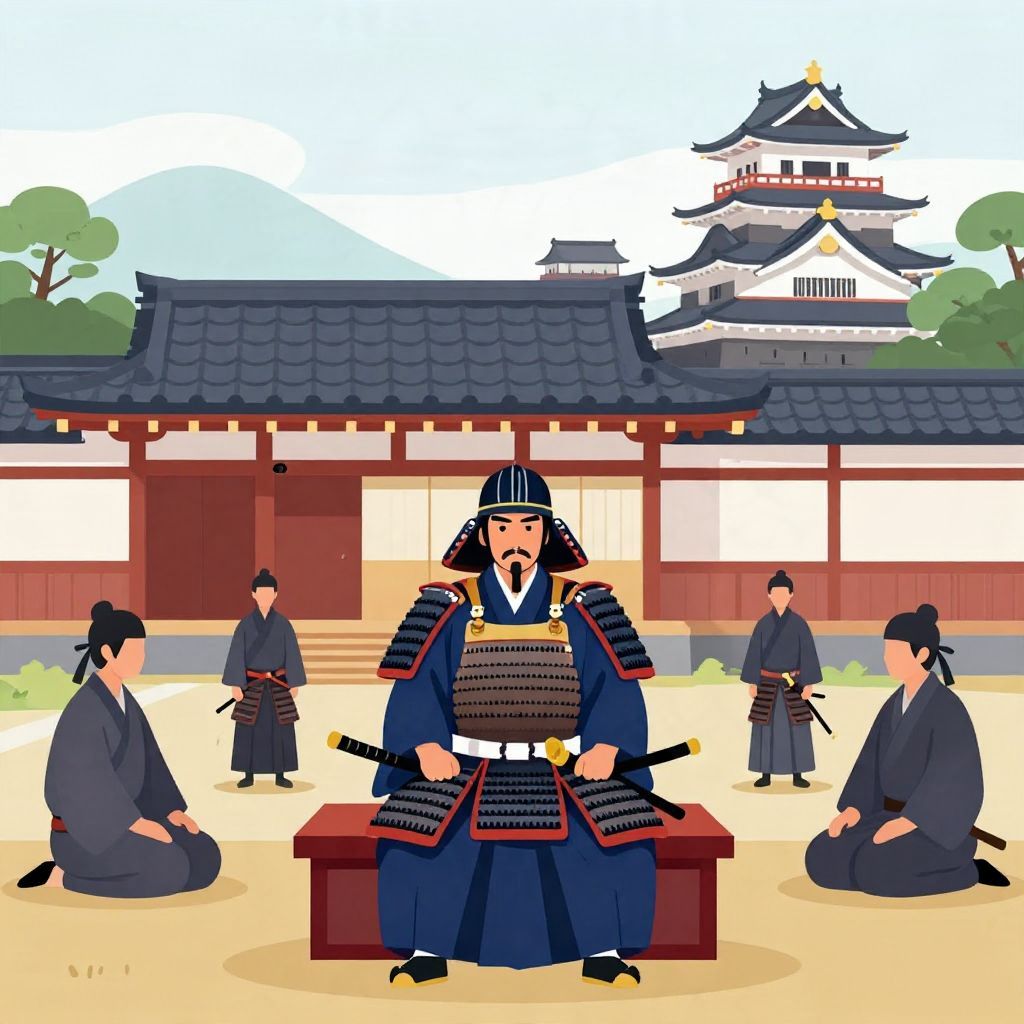
What is a shogun in Japan? In simple terms, a shogun was Japan’s military ruler, appointed by the emperor but often holding the real political power. The title became central to Japanese history from the late 12th century, when warrior leaders began to dominate government, until the Meiji Restoration ended the shogunate in 1868.
Understanding the shogun helps explain how Japan was governed for centuries: not by emperors alone, but by a military elite that controlled land, law, and war. The shogunate shaped samurai culture, feudal politics, and Japan’s long period of relative stability before the modern era.
What Is a Shogun in Japan?
A shogun was the supreme military commander of Japan and, in practice, the country’s strongest political leader during the shogunate periods. Although the emperor remained the symbolic sovereign, the shogun and his government usually directed administration, warfare, and relations among regional lords.
The Meaning and Origin of the Word “Shogun”
The word shogun is a shortened form of Sei-i Taishōgun, often translated as “Great General for Subduing the Barbarians.” Originally, this was a temporary military title granted for campaigns against frontier peoples in early Japan, not a permanent office of national rule.
Over time, the title changed meaning. What began as an honorific for battlefield commanders eventually became the title of the de facto ruler of Japan. This shift reflected the growing power of warrior families and the weakening of court-centered government in Kyoto.
From battlefield title to political office
In the early centuries of Japanese history, the imperial court in Kyoto held formal authority. But as local military clans gained land, followers, and influence, the old court system struggled to control the provinces. The shogun emerged from this environment as a leader who could impose order through force and loyalty networks.
How Did the Shogunate Begin?
The first widely recognized shogunate was established by Minamoto no Yoritomo in 1185 or 1192, depending on how historians define the start. He had defeated the rival Taira clan in the Genpei War and built a military government in Kamakura. The exact date is debated because his power grew gradually before the formal title was granted.
Yoritomo’s government marked a major turning point. Instead of the emperor’s court directly ruling the country, a warrior administration managed military affairs and increasingly oversaw land rights, vassals, and provincial governance. This was the beginning of the Kamakura shogunate.
Why did military rule develop?
- The imperial court depended on aristocratic traditions that were less effective in distant provinces.
- Powerful samurai families controlled land and armed retainers.
- Civil conflict made military leadership attractive as a source of order and protection.
- The emperor’s authority remained sacred, but practical power shifted to those who could enforce decisions.
How Did a Shogun Govern Japan?
The shogun ruled through a military government known as the bakufu, literally “tent government,” a term that reflected its origins in wartime command. The bakufu was not identical to the imperial court. It was a parallel system built around warriors, vassals, and regional control.
Shoguns appointed or confirmed local military governors, mediated disputes among lords, and maintained order through networks of loyalty. In later periods, especially under the Tokugawa, the shogunate also regulated travel, foreign contact, social hierarchy, and the behavior of daimyo, the territorial lords.
Emperor and shogun: who had power?
The emperor remained the legitimate sovereign in a ceremonial and religious sense, and imperial legitimacy mattered deeply in Japanese politics. But in most shogunal eras, the emperor did not directly command the army or administer the provinces. The shogun exercised real governing power while the emperor provided symbolic continuity and prestige.
The Major Shogunates in Japanese History
Japan had three major shogunates, each shaped by different political conditions. Together they show how the office evolved from a military command into a long-lasting form of rule.
- Kamakura shogunate (1185/1192–1333): founded by Minamoto no Yoritomo; established warrior government after the Genpei War.
- Ashikaga shogunate (1336–1573): also called the Muromachi shogunate; weaker central control, with increasing conflict among regional warlords.
- Tokugawa shogunate (1603–1868): founded by Tokugawa Ieyasu; created a more stable and centralized system that lasted more than 250 years.
The Kamakura shogunate
The Kamakura shogunate was the first durable warrior government. It developed institutions to reward loyal samurai and manage land disputes. Its authority was tested by the Mongol invasions of 1274 and 1281, which it repelled, but the costs of defense strained the regime and weakened its political foundations.
The Ashikaga shogunate
The Ashikaga shogunate moved the center of power back to Kyoto, but it never controlled the country as effectively as the Kamakura or Tokugawa governments. Over time, powerful regional lords became increasingly independent. This fragmentation contributed to the Sengoku period, an era of near-constant warfare among competing daimyo.
The Tokugawa shogunate
The Tokugawa shogunate, founded after Tokugawa Ieyasu’s victory at the Battle of Sekigahara in 1600 and formal appointment in 1603, brought a long era of peace. The Tokugawa family ruled from Edo, modern Tokyo, and built a highly structured political order that limited large-scale war and kept daimyo under close supervision.
What Was Life Like Under a Shogun?
Life under a shogunate varied by period and social rank, but the system generally placed warriors at the top of society. Samurai served as retainers, administrators, and military officers. Farmers, artisans, and merchants occupied lower formal ranks, though merchants could become economically powerful, especially in the Tokugawa era.
For ordinary people, shogunal rule could mean stability, tax obligations, local administration, and strict social expectations. It also meant that peace, especially under the Tokugawa, allowed towns, commerce, literacy, and urban culture to expand.
Samurai and the shogun
The shogun depended on samurai loyalty. In return, samurai received stipends, land rights, or positions of authority. This relationship was central to Japanese feudal society. Yet it also created tension, because many samurai were bound to serve a lord whose power depended on balancing rival families and rewarding service carefully.
Was the Shogun More Powerful Than the Emperor?
In many historical periods, yes, in practical terms. The emperor was the highest symbol of legitimacy, but the shogun usually controlled military force and government administration. That said, the emperor’s role was never meaningless. Imperial approval helped legitimize shogunal authority, and the court remained culturally important throughout Japanese history.
This dual system is one reason Japanese politics can seem unusual from a modern perspective. Formal sovereignty and real power were often separated. The emperor represented continuity and sacred authority, while the shogun handled the realities of rule.
How Did the Shogunate End?
The shogunate ended in 1868 with the Meiji Restoration. Reformers and anti-shogunate forces restored political power to the emperor, arguing that Japan needed a centralized modern state to resist Western pressure and compete internationally. The Tokugawa shogunate had already been weakened by internal strain and foreign intrusion in the mid-19th century.
After 1868, Japan abolished the shogunate system and built a new imperial government. The emperor became the formal head of state in a modern nation-state, while the old warrior order lost its political role. This was not simply the fall of one family, but the end of an entire system of military rule that had shaped Japan for centuries.
Why Does the Shogun Matter in Japanese History?
The shogun matters because the office explains how Japan was governed for much of its premodern history. It shows that political power can exist in layered forms: one ruler may be symbolic, while another governs in practice. The shogunate also helps explain the rise of samurai culture, the structure of feudal Japan, and the long peace of the Tokugawa era.
Just as importantly, the shogun was not a static institution. Its meaning changed from military commander to national ruler, and its authority rose and fell with the balance between court, warriors, and regional lords. That evolution is central to understanding Japan’s political development.
Quick Summary
- A shogun was Japan’s military ruler.
- The title originally meant a general appointed for military campaigns.
- The first shogunate emerged under Minamoto no Yoritomo in the late 12th century.
- Three major shogunates shaped Japanese history: Kamakura, Ashikaga, and Tokugawa.
- The emperor remained the symbolic sovereign, while the shogun usually held real power.
- The shogunate ended in 1868 with the Meiji Restoration.
So, what is a shogun in Japan? It was the military leader who often governed the country in the emperor’s name, especially from the late 1100s to 1868. To explore the wider warrior world around shogunal rule, see what a shogun is and the role of a ronin in Japanese history.