
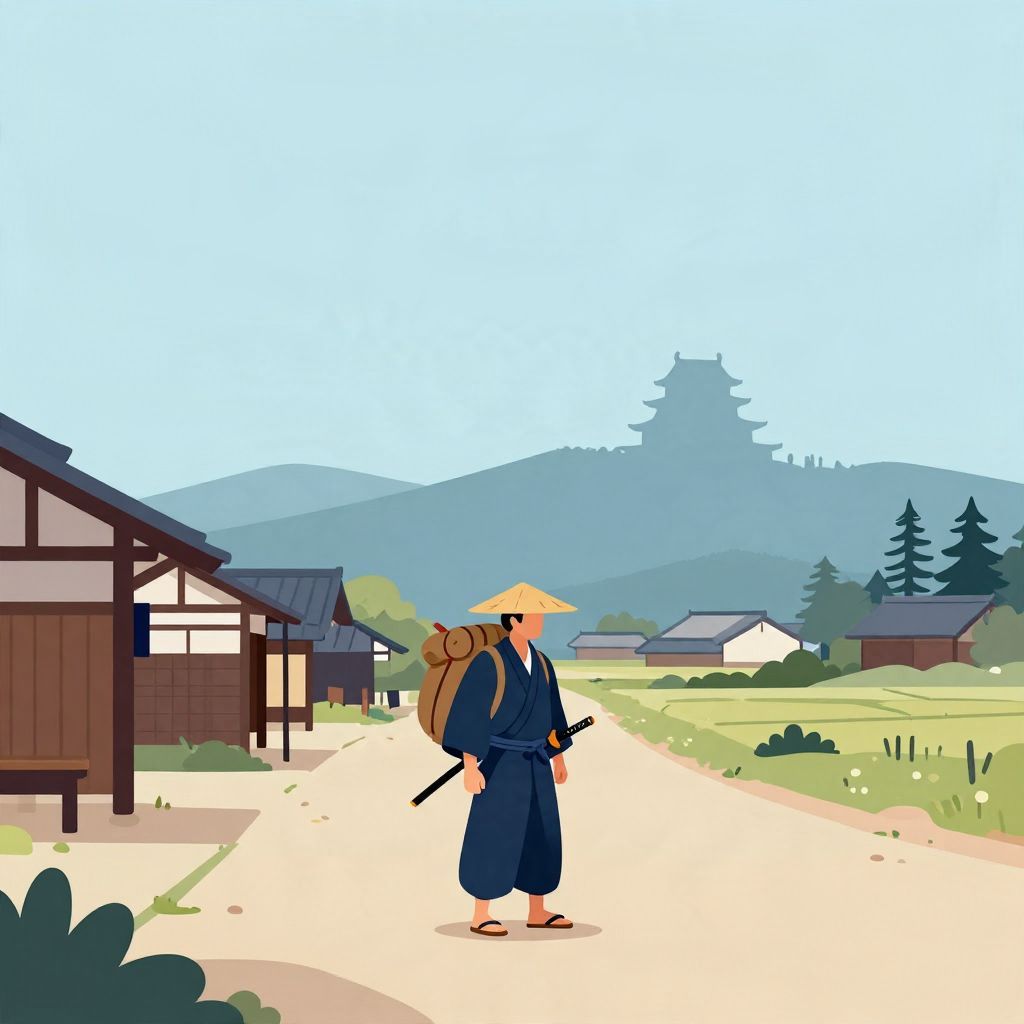
What is a ronin? In Japanese history, a ronin was a samurai without a lord. The word came to describe a warrior who had lost his place in the social order through the death, disgrace, or dismissal of his master, or who had left service on his own. Over time, ronin became a powerful symbol in Japanese culture: honorable independence to some, social failure to others.
Their story is tied to the rise and transformation of samurai society from the medieval period through the long peace of the Tokugawa shogunate. To understand ronin, it helps to look at the meaning of the term, the historical conditions that created them, and the way later generations remembered them.
What Is A Ronin?
A ronin was a samurai who had no master to serve. In feudal Japan, samurai were expected to belong to a lord’s household and live by loyalty, service, and status. When that bond was broken, the samurai became a ronin. The term could imply poverty, freedom, disgrace, or danger depending on the period and the person.
The Meaning And Origins Of The Word Ronin
The word ronin is usually written with characters meaning “wave person,” suggesting someone drifting without a fixed place. That image fits the historical meaning well: a warrior adrift from his social anchor. The term appears in Japanese usage by the medieval period, though its exact early development is not perfectly documented.
How the term was used
In practice, ronin were not a single uniform class. Some were former retainers seeking new employment. Others had been left without a lord after a battle, political purge, or the extinction of a family line. A few deliberately became ronin rather than accept a new master, especially if they had been dishonored or had personal reasons to leave service.
Why Did Ronin Exist In Feudal Japan?
Ronin existed because samurai life was built on personal loyalty rather than a modern state system. A warrior’s status depended on service to a daimyo, or regional lord, and that relationship could end suddenly. War, inheritance disputes, confiscations, and political realignments all produced unemployed warriors.
Major causes of ronin status
- The death of a lord, especially if no heir was accepted or the domain was reduced.
- Political punishment, such as the loss of a domain after a failed alliance or offense against the shogunate.
- Military defeat, which could leave retainers scattered and masterless.
- Voluntary departure, when a samurai resigned, was expelled, or refused to continue service.
The largest numbers of ronin appeared during periods of war and upheaval, especially the late medieval era and the transition into Tokugawa rule in the early 1600s. When Japan became more politically stable under the shogunate, the number of masterless warriors did not disappear, but their social role changed.
Ronin In The Sengoku And Early Edo Periods
The Sengoku period, roughly the 15th through early 17th centuries, was an age of near-constant warfare. Lords rose and fell rapidly, and samurai could lose service overnight. In this environment, ronin were often soldiers for hire, bodyguards, mercenaries, or opportunists looking for a new patron.
From warlords to peace
After Tokugawa Ieyasu established shogunal dominance in the early 1600s, Japan entered the Edo period, a long era of relative peace. This stability reduced the need for huge standing armies. Many samurai who had once served in wartime found themselves with fewer opportunities, and some became ronin because their lords had been defeated or because their skills were no longer needed in the same way.
This shift mattered. In wartime, a ronin might still find a new master quickly. In peacetime, a masterless samurai could face social and financial uncertainty. The ideal of samurai loyalty remained strong, but the reality of employment became more fragile.
What Was Life Like For A Ronin?
Life as a ronin could be precarious. Samurai status did not automatically guarantee wealth, and without a lord’s stipend, many ronin struggled to support themselves. Some became teachers, guards, bureaucrats, or bodyguards. Others drifted into crime, gambling, or street violence. Popular culture often remembers ronin as swordsmen, but many spent much of their lives trying simply to survive.
Not all ronin lived the same way
There was no single ronin experience. A highly trained former retainer from an important house might still have connections and prospects. A poorer samurai with no network could fall quickly into hardship. Some ronin formed groups or schools, while others lived alone and moved from place to place. Their status was socially ambiguous: they were still samurai in training and etiquette, but they lacked the secure identity of service.
Ronin, Honor, And The Samurai Code
Ronin are often associated with honor, especially in later storytelling, but historical reality was more complicated. Samurai ideals emphasized loyalty, obedience, and duty to one’s lord. Losing one’s master could therefore be seen as shameful, even when the cause was beyond the samurai’s control. At the same time, some ronin were admired for independence, skill, or moral resolve.
The tension between duty and independence
This tension made ronin a compelling figure in Japanese history. A samurai who remained loyal to a dead or dishonored master might be praised in some contexts and condemned in others. A ronin who sought revenge or justice could be celebrated as steadfast, while a ronin who wandered without purpose might be viewed as rootless. The meaning depended on conduct, not just status.
The Forty-Seven Ronin And Historical Memory
The most famous ronin in Japanese history are the Forty-Seven Ronin of the early 18th century. After their lord, Asano Naganori, was forced to commit seppuku in 1701, his retainers became masterless. They later avenged him by killing Kira Yoshinaka. The story became one of the best-known tales in Japanese culture.
History and legend
The event is historical, but later retellings turned it into a moral drama about loyalty, sacrifice, and justice. The Tokugawa authorities treated the case carefully because it raised difficult questions: should revenge be punished as disorder, or admired as loyalty? The ronin were eventually ordered to commit seppuku, which preserved official order while allowing a measure of honor in their deaths.
Over time, the Forty-Seven Ronin became a cultural touchstone in plays, books, and later films. Their story shaped how many people imagine ronin in general, even though most masterless samurai did not live such dramatic lives.
How The Tokugawa State Managed Ronin
The Tokugawa shogunate tried to maintain social order through class hierarchy and strict control over samurai. Ronin were a challenge to that system because they were trained warriors without a clear place in the chain of command. Authorities sometimes viewed them as a security risk, especially during unrest or when unemployed samurai gathered in large numbers.
Policy and social control
The shogunate and domains used several methods to manage ronin:
- They encouraged samurai to enter service under another lord when possible.
- They monitored masterless warriors as potential troublemakers.
- They restricted weapons and movement more tightly in some settings.
- They relied on status rules to keep samurai attached to a recognized household.
These measures did not eliminate ronin, but they helped prevent them from becoming a permanent alternative political class. In a society that valued order, a masterless warrior was both a practical problem and a symbolic one.
Ronin In Popular Culture
Modern audiences often encounter ronin through novels, theater, film, and manga, where they are portrayed as lone swordsmen, wandering protectors, or morally complex outsiders. This image draws on real history but also simplifies it. A ronin was not automatically a heroic wanderer; many were ordinary men coping with economic and social instability.
Why the image endured
The ronin figure endured because it captures a universal historical theme: what happens when a person’s identity depends on a system that no longer supports them? In Japanese culture, the ronin became a way to explore loyalty, loss, independence, and survival. That is why the term remains recognizable far beyond the history of feudal Japan.
What A Ronin Was Not
It is easy to confuse ronin with any wandering warrior, but the term has a specific meaning. A ronin was not simply a swordsman, and not every unemployed man with military skills was a ronin. The key feature was status: he had been a samurai and no longer had a lord. That distinction matters because it ties the term to Japan’s feudal hierarchy.
Common misunderstandings
- A ronin was not necessarily a criminal.
- A ronin was not always poor, though many were.
- A ronin was not the same as a peasant soldier or common mercenary.
- A ronin could sometimes regain service and cease being masterless.
The Historical Significance Of Ronin
Ronin reveal how Japanese society worked beneath the ideal of orderly loyalty. They show the human cost of war, political change, and rigid status systems. They also demonstrate how a social category can become a cultural symbol. In history, ronin were masterless samurai; in memory, they became a powerful image of wandering, discipline, and moral choice.
So, what is a ronin? It is a masterless samurai, but also much more than that: a figure shaped by Japan’s feudal order, its wars, its peace, and the stories later generations told about loyalty and loss. If you want to explore the wider world of warrior culture, you may also enjoy reading about what a shinobi was and, in a different maritime setting, what a buccaneer was.