
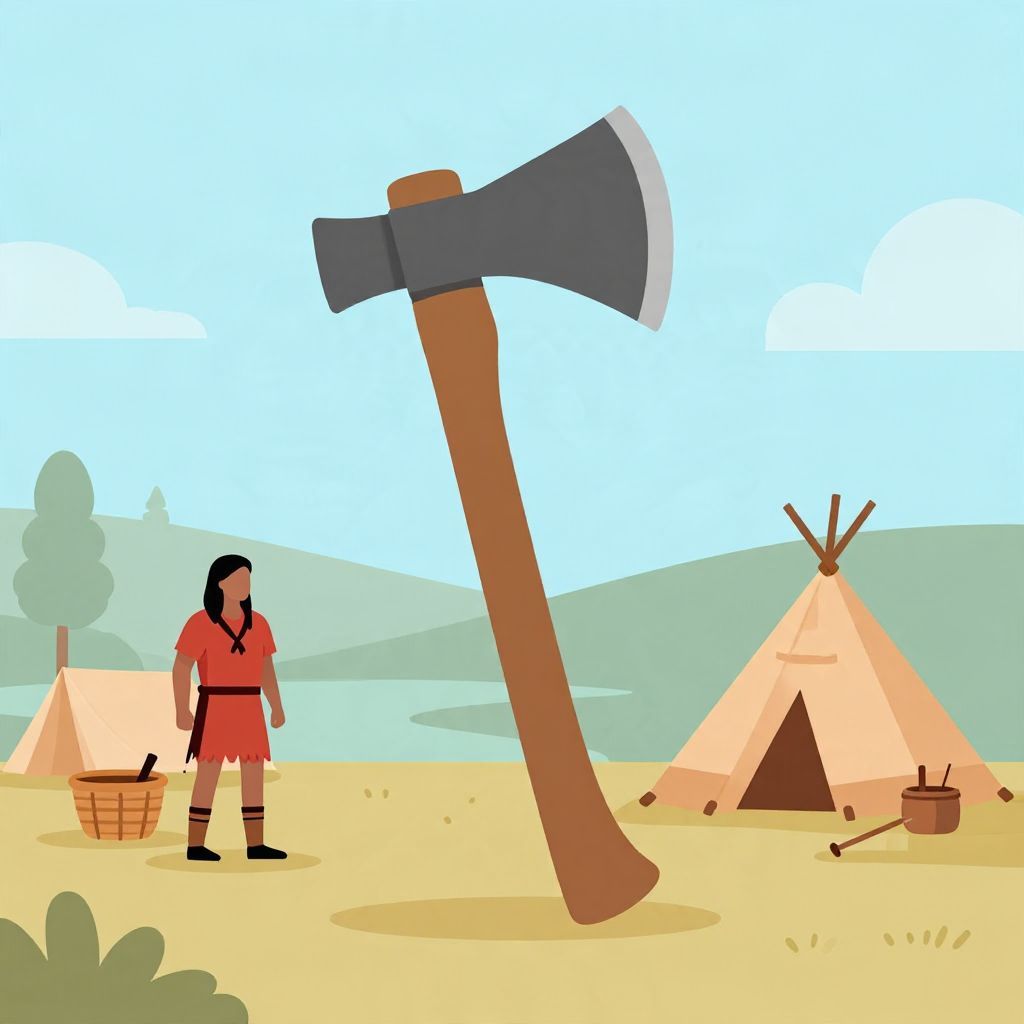
What is a tomahawk? At its simplest, a tomahawk is a small axe or axe-like tool that became especially associated with Indigenous peoples of North America. Over time, it served as a practical implement, a weapon, a trade item, and later a symbol in colonial and military encounters. Its history is broader and older than many people assume.
The tomahawk’s meaning changed across centuries. It began as a versatile tool made from stone, wood, and later metal, and it evolved through contact between Native communities and Europeans. Understanding the tomahawk means looking at technology, trade, warfare, and culture together.
What is a tomahawk?
A tomahawk is a light axe, usually with a straight handle and a small cutting head, originally used by Indigenous peoples of North America as a tool and weapon. The word now refers both to traditional forms and to later metal versions influenced by European trade goods and frontier warfare.
Where did the tomahawk come from?
The tomahawk did not begin as a single invented object with one fixed origin. Rather, it developed from older Native North American chopping and striking tools, especially stone axes and hatchet-like implements. Before European contact, many Indigenous communities used stone-headed tools for woodworking, hunting tasks, and combat.
Pre-contact roots
Archaeological evidence shows that Indigenous peoples across North America used a wide range of axes, adzes, and club-like weapons long before Europeans arrived. These tools varied by region and material availability. Some had stone heads hafted to wooden handles; others were shaped for specific tasks such as cutting wood, processing hides, or fighting at close range.
European contact and metal heads
After the 16th and 17th centuries, trade with Europeans introduced iron and steel blades. Metal heads made tomahawks lighter, sharper, and easier to produce in standardized forms. This did not replace Indigenous design so much as transform it. Native craftsmen and traders adapted new materials to existing forms and uses.
What does the word “tomahawk” mean?
The English word “tomahawk” came into use through contact with Indigenous languages in eastern North America, especially Algonquian language groups. The exact linguistic path is debated, but the term entered colonial English as a general label for Native axes and striking weapons. It later broadened in meaning.
Because the word traveled through colonial observation rather than through a single written invention, its early spelling and usage varied widely. English speakers often used “tomahawk” for both the object itself and, more loosely, for Native weapons in general. That broad usage sometimes obscured the diversity of Indigenous tool traditions.
How was a tomahawk used historically?
Historically, a tomahawk was a multipurpose object. It could chop wood, prepare camp materials, cut meat, and function as a close-combat weapon. In many communities, its value came from versatility rather than from being designed only for war. That practical flexibility helped it remain important in daily life.
Tool and weapon
As a tool, the tomahawk was useful for light cutting and shaping. As a weapon, it was effective in hand-to-hand fighting and could be thrown in some contexts, though the popular image of constant throwing is often exaggerated. Most historical uses were practical and immediate, not theatrical.
Trade and diplomacy
Tomahawks also circulated as trade goods. European traders exchanged metal axes and hatchets with Native communities, and these items became part of broader systems of diplomacy, alliance-building, and material exchange. In some cases, the gifting of weapons or tools carried political meaning as well as practical value.
How did the tomahawk change in the colonial era?
The colonial era reshaped the tomahawk in major ways. European ironworking traditions influenced its form, while Native users adapted the object to local needs. The result was not a simple replacement of “old” by “new,” but a fusion of technologies shaped by trade, conflict, and cultural exchange.
Pipe tomahawks
One of the best-known later forms is the pipe tomahawk, a combination of axe and smoking pipe that became prominent in the 18th century. These objects were often made in metal and used in diplomacy, ceremony, and display. They were not merely weapons; they could symbolize peace, alliance, or status depending on context.
Pipe tomahawks are especially important because they show how material culture can carry layered meanings. An object that could cut wood or strike in battle could also be used in ritual settings. That dual use reflects the complexity of intercultural relations in colonial North America.
Frontier imagery and myth
As European settlement expanded, the tomahawk became a powerful symbol in frontier storytelling. Colonial and later American writers often portrayed it as a Native weapon of war, sometimes in exaggerated or hostile ways. These images shaped popular memory, but they do not capture the full historical reality of the object.
Was the tomahawk only an Indigenous weapon?
No. Although the tomahawk is strongly associated with Indigenous North American history, Europeans and Euro-Americans also adopted related forms. Soldiers, traders, and frontiersmen used small axes and hatchets for utility and combat. In military contexts, similar lightweight axes appeared in different forms across cultures.
Still, it is important not to erase the tomahawk’s Indigenous identity. The object’s history is rooted in Native technology and Native adaptation. European adoption came later and often reflected colonial contact rather than original invention.
What kinds of tomahawks existed?
There was no single universal tomahawk. Different regions and periods produced different styles, materials, and uses. Some were plain working tools; others were ceremonial or elaborately decorated. The diversity matters because “tomahawk” is a broad category, not one fixed design.
- Stone tomahawks — earlier forms made before widespread metal trade.
- Metal trade tomahawks — iron or steel versions exchanged through commerce.
- Pipe tomahawks — combined weapon and ceremonial pipe, especially in the 18th century.
- Decorative or status tomahawks — objects made for display, diplomacy, or gift-giving.
Why was the tomahawk historically important?
The tomahawk matters because it sits at the intersection of technology, culture, and power. It was practical enough for everyday work, flexible enough for warfare, and symbolic enough to appear in diplomacy and ceremony. Few objects better illustrate how Indigenous societies adapted to changing material worlds.
It also helps historians understand colonial exchange. The spread of metal tomahawks shows how trade altered Indigenous life without simply replacing it. Native peoples were not passive recipients of European goods; they selected, modified, and repurposed tools according to their own needs and traditions.
Military and political significance
In the 18th century, tomahawks appeared in the context of imperial rivalry, alliance-making, and frontier violence. British, French, and later American colonial powers all interacted with Indigenous nations in ways that made such tools politically meaningful. A tomahawk could signal friendship, hostility, or readiness for defense depending on the setting.
What is the difference between a tomahawk and a hatchet?
In modern English, “hatchet” and “tomahawk” can overlap, but they are not identical in historical meaning. A hatchet is a general small axe. A tomahawk usually refers more specifically to Indigenous North American forms or to objects inspired by them. The distinction is partly cultural and historical, not just technical.
That said, the boundary is not always rigid. Colonial writers often used these terms loosely, and modern popular culture has blurred them further. For historical accuracy, it is best to treat “tomahawk” as a culturally specific type of small axe with Indigenous North American origins and later adaptations.
How has the tomahawk been remembered in modern times?
Today, the tomahawk appears in museums, historical reenactments, Indigenous art, sports imagery, and popular entertainment. Modern references sometimes flatten its history into a stereotype of “tribal” warfare, but serious historical study shows a more nuanced story of craftsmanship, exchange, and adaptation.
In some contemporary contexts, the tomahawk has also become a symbol detached from its original setting. That can obscure its Indigenous roots. A historically grounded view recognizes both the object’s practical function and the cultural histories attached to it.
The historical meaning of a tomahawk, in brief
The tomahawk is more than a small axe. It is a historically important Indigenous North American tool and weapon that evolved through centuries of use, trade, and cultural exchange. Its story includes pre-contact Native technology, colonial contact, metalworking, diplomacy, and later myth-making. In that sense, the tomahawk is a compact symbol of North American history itself.
If you want to explore related frontier and weapon history, you may also find what a buccaneer was and what a dir is useful for comparison.