
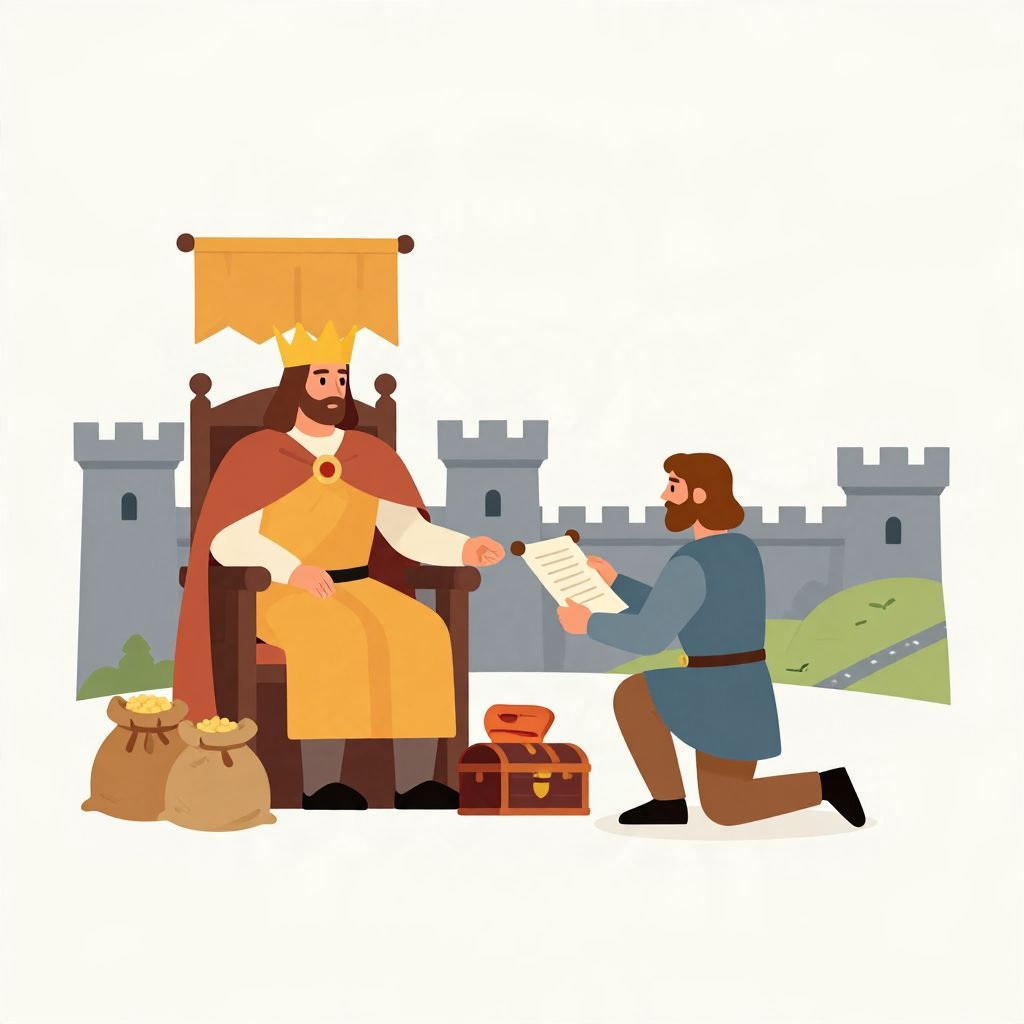
What is a vassal state? In history, the term refers to a political entity that keeps some local government but is subordinate to a stronger power. It usually owes tribute, military support, or loyalty in exchange for protection, recognition, or limited autonomy.
The idea has existed in many forms across ancient, medieval, and early modern history. Because the term is often used loosely, it is important to separate formal dependency from broader influence, occupation, or alliance.
What Is a Vassal State?
A vassal state is a polity that is not fully sovereign because it depends on a more powerful state. It may keep its own ruler, laws, or institutions, but its foreign policy, military obligations, or tribute are controlled by the dominant power. The exact arrangement varied widely by era and region.
Origins and Historical Meaning of Vassalage
The word “vassal” comes from medieval European feudal language, where a vassal was a person who held land or office from a lord in return for service. Over time, historians applied the term more broadly to states that were politically subordinate. That broader usage is helpful, but it can also blur important differences between feudal relationships and interstate politics.
From personal loyalty to political dependence
In medieval Europe, vassalage was often personal: a noble swore loyalty to a lord and received land or privileges in return. When historians speak of a “vassal state,” they are borrowing that logic and applying it to governments. The state remains partly intact, but its independence is constrained by a superior power.
Why historians use the term carefully
Not every dependent state was technically a vassal state, and not every subordinate relationship looked the same. Some paid tribute voluntarily to avoid war; others were forced into submission after conquest. Some retained internal autonomy, while others were effectively controlled from abroad. For that reason, scholars often prefer more precise terms such as tributary state, client state, protectorate, or satellite state, depending on the period.
How Vassal States Worked in Practice
Vassal states usually existed through a mix of coercion and compromise. A dominant empire might allow a local ruler to stay in place if that ruler accepted outside authority. In return, the subordinate state might send tribute, provide soldiers, recognize the suzerain’s supremacy, or avoid independent diplomacy.
Common features of vassal states
- Tribute or tribute-like payments to the stronger power
- Military obligations, such as supplying troops or supporting campaigns
- Limited foreign policy, especially restrictions on alliances and diplomacy
- Local autonomy in internal administration, religion, or law
- Recognition of superiority through ceremonies, titles, or formal submission
Autonomy was often uneven
Some vassal states were nearly independent in daily life, while others were tightly supervised. A ruler might govern locally but be unable to choose successors freely, wage war independently, or conduct trade without approval. In many cases, the relationship changed over time as the balance of power shifted.
Vassal States in Ancient History
Vassalage is much older than medieval Europe. Ancient empires frequently ruled through subordinate kings and city-states rather than direct administration alone. This was especially common in regions where conquest was expensive or where local elites could be used to stabilize rule.
The Assyrian and Persian empires
The Neo-Assyrian Empire, which expanded in the first millennium BCE, often installed or supported local rulers who owed allegiance and tribute. Later, the Achaemenid Persian Empire used a flexible imperial system in which subject peoples and local elites retained some authority under imperial oversight. These arrangements helped large empires govern vast territories with relatively limited direct control.
Hittites, Egypt, and Levantine kingdoms
In the Late Bronze Age, major powers such as the Hittites and New Kingdom Egypt interacted with smaller kingdoms in the Levant through treaties, tribute, and dependency. Some of these states were not annexed outright but were drawn into imperial spheres. The famous diplomatic world of this era shows that “vassal” relationships were often negotiated, not simply imposed.
China and the tributary system
In East Asian history, especially in relation to imperial China, historians sometimes describe neighboring polities as tributary or subordinate states. These relationships were not always identical to European-style vassalage. They often combined ritual acknowledgment, trade access, and political deference. The key point is that dependence could be diplomatic and symbolic as much as military.
Vassal States in Medieval and Early Modern History
The concept is especially familiar in medieval and early modern history, when empires, kingdoms, and principalities frequently overlapped. Stronger powers often preferred indirect rule because it was cheaper and less disruptive than direct annexation.
Feudal Europe and overlordship
In medieval Europe, kings, dukes, counts, and princes often stood in layered relationships of obligation. Some rulers were effectively vassals of larger monarchs, especially in borderlands or conquered territories. However, the legal and political landscape was fragmented, so the term “vassal state” can oversimplify a web of overlapping loyalties.
The Ottoman Empire and client rulers
The Ottoman Empire used a variety of subordinate arrangements. Some regions were directly ruled, while others retained local dynasts under Ottoman supremacy. In places such as Wallachia, Moldavia, and Transylvania at different times, local rulers governed internally but acknowledged Ottoman dominance and paid tribute. These arrangements helped the empire extend influence without constant direct occupation.
Eastern Europe and the steppe frontier
On the Eurasian frontier, powerful nomadic and settled states alike used dependency relationships. The Crimean Khanate, for example, had complex ties with larger powers at different moments. Such relationships could be fluid, shifting from alliance to subordination to rebellion as military strength changed.
Vassal State, Client State, Protectorate, or Satellite State?
These terms are related but not interchangeable. They all describe unequal relationships between states, yet each has a different historical flavor and legal meaning. Understanding the differences helps avoid using “vassal state” too broadly.
Client state
A client state depends on a stronger power for support and usually follows its strategic interests. The term is common in discussions of ancient Rome and modern geopolitics. It often implies influence rather than formal feudal-style obligation.
Protectorate
A protectorate is a territory or state under the protection of a stronger power, which often controls defense and foreign affairs. In theory, the protected state retains some internal self-rule. In practice, protectorates often functioned as unequal arrangements that limited sovereignty.
Satellite state
“Satellite state” is most often used for the 20th century, especially in reference to states aligned with or dominated by a superpower. The term suggests strong dependence and reduced freedom of action, but it belongs to a modern international context rather than feudal history.
Tributary state
A tributary state sends payments or gifts to a dominant power, often in exchange for peace or trade access. Tribute does not always mean total political control, so a tributary state may be less constrained than a full vassal state.
Why Powerful States Used Vassal Systems
Vassal arrangements were practical. Direct rule over distant or culturally diverse territories was costly, and empires often lacked the administrative capacity to govern everything directly. By working through local rulers, powerful states could expand influence while reducing the need for permanent occupation.
Strategic advantages
- Lower administrative costs
- Fewer troops needed for daily governance
- Access to local knowledge and existing institutions
- Buffer zones against rival powers
- A way to reward cooperation without full annexation
Risks and instability
Vassal systems were fragile. Subordinate rulers might rebel, switch allegiance, or exploit the dominant power’s weakness. Because the arrangement depended on power imbalance, it could collapse quickly if the stronger state suffered military defeat, financial strain, or internal crisis.
How Vassal States Ended
Vassal states usually disappeared through one of three paths: annexation, independence, or transformation into a more formal colonial or treaty-based relationship. Sometimes a subordinate ruler was replaced by direct imperial officials. In other cases, a vassal state became fully independent when the dominant empire declined.
From dependency to annexation
When a dominant state wanted tighter control, it might absorb a vassal outright. This often happened after repeated rebellions or when a strategic frontier became more important. Direct annexation removed local autonomy but also increased administrative burdens.
From vassalage to modern sovereignty
The rise of modern international law changed the language of political dependence. By the 19th and 20th centuries, states increasingly claimed formal sovereignty, even when they were heavily pressured by great powers. Older vassal relationships gave way to colonial rule, protectorates, spheres of influence, and alliance systems.
Why the Term Still Matters
“Vassal state” remains useful because it captures a recurring pattern in history: unequal power disguised by partial autonomy. It helps explain how empires expanded without always ruling directly and how smaller states survived by accepting subordination. At the same time, the term should be used with care, because historical relationships were often more complex than the word suggests.
In short, a vassal state was a dependent political entity that retained some local authority while acknowledging the supremacy of a stronger power. The exact form varied from ancient empires to medieval kingdoms and modern client systems, but the basic pattern was the same: limited autonomy in exchange for obedience, tribute, or strategic cooperation. For related context, see what political ideology is and what mercantilism is.