
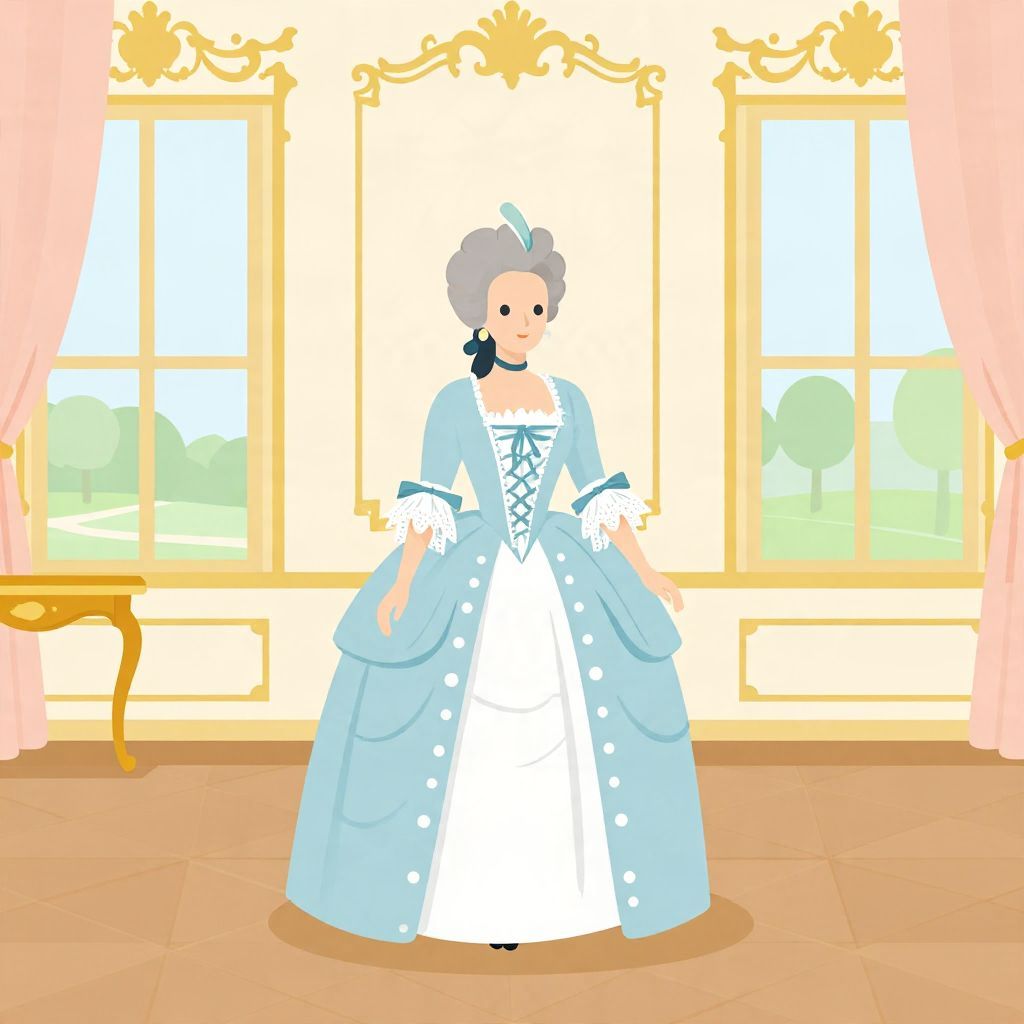
Who is Marie Antoinette? She was the Habsburg archduchess who became queen of France as the wife of Louis XVI, and one of the most famous figures of the French Revolution. Born in 1755 in Vienna, she was not a French-born monarch but a foreign princess drawn into a crisis that transformed France and ended with her execution in 1793.
Her life has been remembered through scandal, propaganda, and tragedy. Some stories about her are exaggerated or false, but her real biography reveals how monarchy, public opinion, and revolution collided in late 18th-century Europe.
Who is Marie Antoinette?
Marie Antoinette was the last queen of France before the French Revolution ended the monarchy. Born Maria Antonia of Austria, she was the daughter of Empress Maria Theresa and Holy Roman Emperor Francis I. She married the future Louis XVI in 1770, became queen in 1774, and was executed by guillotine in Paris on 16 October 1793.
Early Life in Austria
A Habsburg Princess
Marie Antoinette was born on 2 November 1755 in Vienna, in the powerful Habsburg dynasty. She grew up in a court shaped by dynastic politics, Catholic ritual, and imperial diplomacy. As one of many children of Maria Theresa, she was raised less as an independent political actor than as a valuable piece in Europe’s marriage alliances.
Education and Preparation for Marriage
Her education was respectable but not exceptional by elite standards. She learned court manners, music, religion, and some languages, though she was never fully comfortable in formal French. That weakness later became part of the criticism aimed at her, especially when French observers judged her as foreign, frivolous, or politically indifferent.
Why Did Marie Antoinette Become Queen of France?
Marie Antoinette became queen because her marriage was designed to strengthen the alliance between Austria and France. In the 18th century, royal marriages were diplomatic tools. Her union with Louis, the Dauphin of France, symbolized a major shift in European politics after generations of rivalry between the Habsburgs and the Bourbons.
The Marriage Alliance
The wedding took place in 1770 when she was still a teenager. The marriage was meant to secure peace and cooperation between two historic enemies. In practice, it also made Marie Antoinette a target of suspicion in France, where many people distrusted Austria and resented the idea of a foreign queen influencing the French court.
Life as Queen of France
From Dauphine to Queen
Marie Antoinette became queen in 1774 when Louis XVI inherited the throne. At first, she enjoyed popularity, youth, and curiosity from the public. Over time, however, the court at Versailles and the wider French public became increasingly critical of her spending, her social circle, and her perceived political influence.
Versailles and Court Politics
The French court was highly ceremonial and intensely political. At Versailles, every gesture could be interpreted as a sign of favor or exclusion. Marie Antoinette preferred a more private social life than the rigid court expected, which made her seem aloof. Her friendships, entertainments, and retreats from formal etiquette were often portrayed as arrogance rather than personal preference.
Fashion, Image, and Public Criticism
She became a trendsetter in dress and style, and her image spread through portraits, pamphlets, and gossip. That visibility made her famous, but also vulnerable. Critics blamed her for extravagance, although the finances of France were shaped by much larger structural problems, including debt, war, and an unequal tax system. She became a symbol onto which anxieties about monarchy were projected.
Did Marie Antoinette Really Say “Let Them Eat Cake”?
There is no reliable evidence that Marie Antoinette said “Let them eat cake.” The phrase appears in earlier forms before it was attached to her, and historians generally treat it as a false attribution. The story became popular because it neatly captured the image of a detached and uncaring queen, even though it is not a trustworthy historical quotation.
Why the Myth Endured
The legend survived because it was politically useful. During the Revolution, opponents of the monarchy used stories like this to show the royal family as indifferent to suffering. The phrase has remained famous, but it tells us more about revolutionary propaganda and later memory than about Marie Antoinette’s actual words or beliefs.
Marie Antoinette and the French Revolution
From Queen to Political Target
When the French Revolution began in 1789, Marie Antoinette became one of its most hated symbols. She was blamed for corruption, waste, and resistance to reform. Her foreign birth made her especially suspect, and pamphlets often portrayed her as immoral or politically manipulative. In reality, she had influence, but not unlimited power over French policy.
The Royal Family at Versailles and the Flight to Varennes
As the Revolution deepened, the royal family tried to navigate a collapsing political order. In 1791, they attempted to flee France in the Flight to Varennes, hoping to reach a safer base and possibly negotiate from a position of strength. The escape failed, and the family was brought back under guard. After that, trust in the monarchy deteriorated sharply.
War, Suspicion, and the End of the Monarchy
France went to war with several European powers in 1792, and revolutionary leaders increasingly viewed the king and queen as threats to the nation. The monarchy was abolished, and the royal family was imprisoned. Marie Antoinette’s position became especially dangerous because she was seen not just as a former queen, but as a possible link to foreign enemies.
Trial and Execution
Imprisonment
Marie Antoinette was held first in the Temple prison after the monarchy was overthrown. Her son was taken from her, and her circumstances became harsher as revolutionary politics radicalized. By 1793, the revolutionary government had little interest in mercy, and her trial was designed more to condemn than to investigate fairly.
The Trial
She was charged with a range of offenses, including treason and alleged misconduct. Some accusations were political, while others were deeply personal and sensationalized. The trial reflected the revolutionary climate: the former queen was not only a defendant but a symbol of the old regime that many revolutionaries wanted to destroy.
Death in 1793
Marie Antoinette was executed by guillotine in Paris on 16 October 1793. Her death marked the final collapse of her public role and became one of the most famous moments of the Revolution. For supporters of the monarchy, she became a martyr; for revolutionaries, her execution was part of the remaking of France.
How Should Historians Understand Marie Antoinette?
Not Just a Villain, Not Just a Victim
Modern historians usually avoid reducing Marie Antoinette to either a cruel spendthrift or a helpless innocent. She was a real political figure who made choices, supported allies, and defended the monarchy. At the same time, she was also trapped by structures larger than herself: dynastic politics, court culture, fiscal crisis, and revolutionary upheaval.
Gender, Power, and Propaganda
As a queen, she was judged by standards that mixed politics with gender expectations. Women in power were often criticized more harshly than men for similar behavior. Pamphlets attacked her sexuality, spending, and foreign origins in ways that reveal as much about revolutionary culture as about Marie Antoinette herself. Her image became a battlefield for political meaning.
Legacy and Historical Significance
Marie Antoinette remains significant because her life shows how monarchy could become vulnerable in an age of public politics. She was not the cause of the French Revolution, but she became one of its most recognizable symbols. Her story illustrates the power of rumor, the fragility of royal authority, and the speed with which public opinion could turn against a ruler.
Today, she is remembered through biographies, films, fashion, and political debate, but the historical Marie Antoinette was more complex than the legend. She was a Habsburg princess, a French queen, a mother, a political scapegoat, and a victim of revolutionary justice. If you want to explore her final days, see how Marie Antoinette died, or learn more about the famous phrase linked to her in what “let them eat cake” means.