
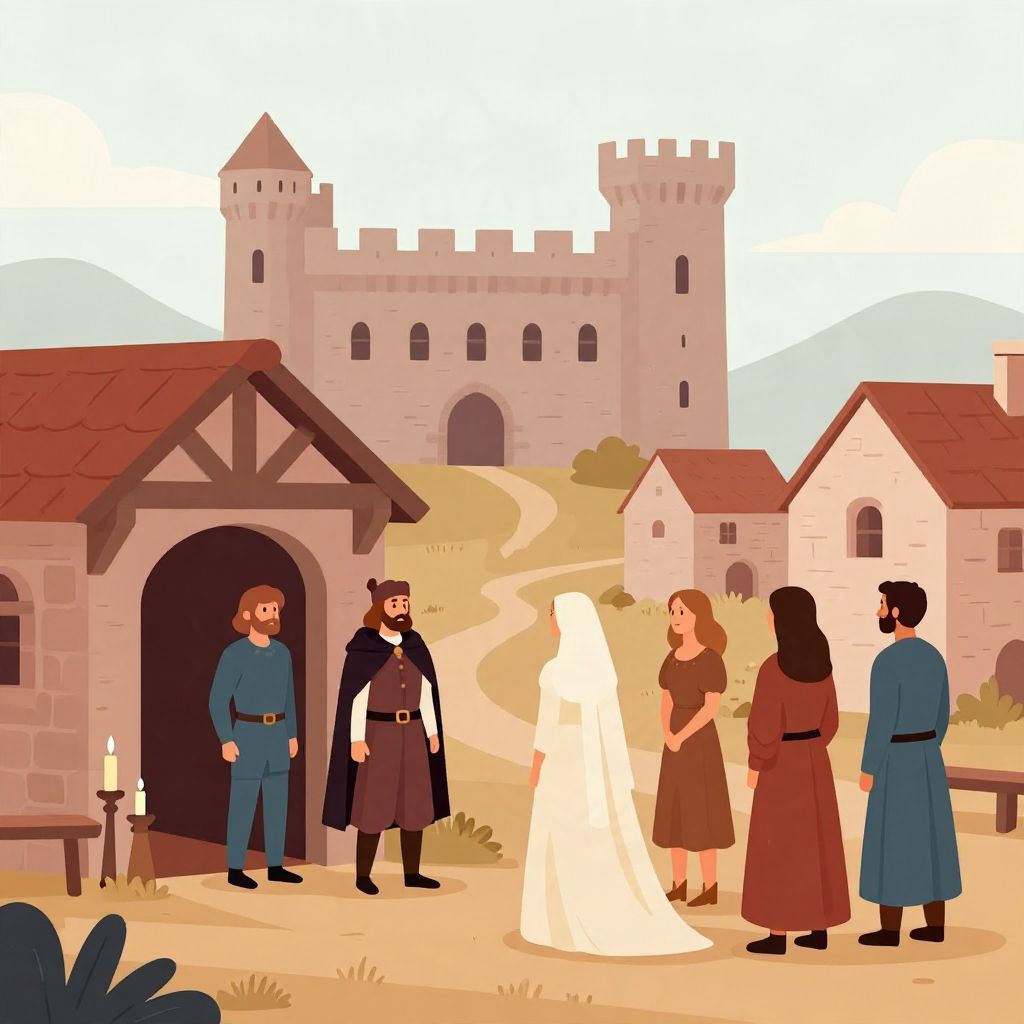
What is prima nocta? The phrase usually refers to a supposed medieval right of a lord or king to spend a newly married peasant woman’s first night with her. It is one of the most famous stories about feudal oppression, but historians generally treat it as a legend rather than a proven legal custom.
Understanding prima nocta matters because it shows how myths about the Middle Ages spread, why they endure, and how later writers turned a dramatic story into a symbol of tyranny.
What Is Prima Nocta?
Prima nocta, also called ius primae noctis or “the right of the first night,” is the alleged privilege of a ruler or landlord to claim sexual access to a bride on her wedding night. Despite its popularity in films and novels, there is no solid evidence that such a legal right existed as a normal, enforceable institution in medieval Europe.
Where Did the Idea Come From?
The concept is often linked to medieval Europe, especially the feudal world of lords, vassals, and dependent peasants. But the story is much older than the phrase itself. Writers in later centuries used it to describe what they believed was the extreme power of aristocrats over ordinary people, and the idea gradually hardened into “historical fact” in popular culture.
Ancient and medieval echoes
Stories resembling prima nocta appear in literature from different periods and places, but resemblance is not proof of a real custom. Ancient texts, folklore, and later moral tales sometimes describe rulers abusing subjects or demanding sexual privileges. These stories may reflect social fear, satire, or symbolic criticism rather than actual law.
The term itself is later
The Latin-sounding phrase ius primae noctis became especially common in early modern and modern writing, not in medieval legal records. That matters: a famous term can make a practice seem ancient and official even when the evidence is weak or absent.
Did Prima Nocta Actually Exist?
Most historians say there is no reliable evidence that prima nocta existed as a general legal right in medieval Europe. No widely accepted legal code from the period clearly grants such a privilege, and the surviving records of manorial and royal law do not support it as a routine practice. The strongest conclusion is that it was a myth or a later exaggeration of lordly power.
Why historians doubt it
- No clear legal documentation: Medieval law codes and customary records do not show a standard right of first night.
- No administrative trail: A practice this intrusive would likely leave more evidence in court records, complaints, or exemptions.
- Inconsistent stories: Claims about where and when it existed vary widely, which is a warning sign for legend rather than institution.
- Alternative explanations: Some supposed examples are better explained as marriage fees, symbolic dues, or local customs unrelated to sexual access.
What may have been confused with it
In some places, peasants paid fees when they married, especially if marriage affected labor obligations, inheritance, or the lord’s income. Later writers may have misread these dues as evidence of sexual entitlement. In other cases, tales of abuse by local elites were turned into a single dramatic rule that never actually existed as law.
Why the Myth Became So Popular
Prima nocta became famous because it is a powerful story about domination. It condenses feudal inequality into one shocking act. For writers, dramatists, and political critics, it was an effective way to symbolize the cruelty of aristocracy, the vulnerability of peasants, and the corruption of unchecked power.
A symbol of feudal oppression
From the Enlightenment onward, critics of the old order often used the Middle Ages as a backdrop for discussing tyranny, ignorance, and privilege. Prima nocta fit that purpose perfectly. Whether or not it was real, it served as a memorable shorthand for the idea that nobles could exploit the powerless with impunity.
Literature and film amplified it
Modern audiences often know prima nocta from novels, plays, and movies rather than from history. Popular culture tends to favor vivid, emotionally charged examples, and this one is especially dramatic. Once repeated often enough, the legend can seem more credible than the archival record.
What Does the Historical Evidence Actually Show?
Evidence for widespread prima nocta is lacking, but evidence for social inequality in feudal society is not. Medieval peasants often lived under heavy obligations: rents, labor services, fines, and restrictions on movement or marriage. Lords had real power over land and justice, even if the specific sexual “first night” right is not supported.
Feudal power was still very real
Rejecting prima nocta does not mean medieval lords were benevolent. They could levy dues, enforce labor, and punish disobedience. In some regions, peasants needed permission to marry, move, or inherit land. Those controls were burdensome enough without adding an unproven sexual custom.
Marriage fees and manorial dues
Some of the confusion comes from marriage-related payments. A lord might receive a fee when a tenant married, especially if the marriage changed who worked the land or who owed service. Over time, these financial obligations were sometimes misinterpreted as evidence of a sexual right rather than an economic one.
Prima Nocta in Scotland and Elsewhere
One of the most persistent versions of the story places prima nocta in medieval Scotland. This claim is often repeated in popular histories, but it is not securely documented. Similar stories also appear in discussions of France, England, and other European regions, usually without convincing proof. The pattern suggests a widespread legend attached to different societies, not a verified institution.
Why Scotland is often mentioned
Scotland’s medieval and early modern history was later romanticized and politicized, especially in literature and nationalist storytelling. A dramatic tale of noble abuse fit those narratives well. But repetition in later sources does not establish medieval reality.
Other cultures and comparative claims
Occasionally, writers have tried to connect prima nocta to non-European societies or to ancient civilizations. These comparisons are usually speculative. Similar-sounding customs, where they existed at all, do not prove the same practice. Historians are careful to separate parallel myths from documented institutions.
How Historians Evaluate the Claim
Historians ask three basic questions: Is there contemporary evidence? Is the evidence legal, administrative, or merely literary? And does the claim appear consistently across sources? Prima nocta fails these tests. It appears more often in later moralizing accounts than in medieval records, and it is usually described as a general custom without the documentary support such a custom would require.
Evidence versus storytelling
Literary works can preserve social anxieties, but they are not the same as legal proof. A tale about a lord’s abuse may reveal what people feared or resented, yet it cannot by itself establish that the act was legally sanctioned. That distinction is central to understanding prima nocta.
The danger of “too good to check” history
Some myths survive because they are vivid, morally satisfying, and easy to remember. Prima nocta fits a simple narrative: powerful men abused the powerless, and the law protected them. That narrative feels plausible, which is exactly why historians insist on checking it carefully.
What Prima Nocta Reveals About the Middle Ages
Even as a myth, prima nocta tells us something important about how people imagine the medieval world. It reflects enduring assumptions about feudalism, gender, violence, and class. It also shows how later generations projected their own fears onto the past, using medieval imagery to criticize authority in their own time.
Gender and power in historical memory
The legend persists partly because it dramatizes women’s vulnerability within patriarchal societies. Medieval women did live under legal and social constraints, but the specific story of prima nocta turns those broader realities into a single sensational act. That simplification can obscure the actual, more complex history of marriage, family, and property.
Feudalism is often misunderstood
People sometimes use prima nocta as a catch-all symbol of feudal cruelty, but feudal society was not a single uniform system. Rights, dues, and customs varied widely by region and period. The legend flattens that diversity into one lurid image, which is why it is so misleading as history.
So, What Is Prima Nocta in Historical Terms?
Historically speaking, prima nocta is best understood as a legend about medieval lordship, not a proven legal custom. It emerged from later interpretations of feudal power, marriage dues, and elite abuse, then grew into a durable symbol of oppression. The phrase survives because it is memorable, not because the evidence confirms it.
In short, prima nocta is less a documented medieval practice than a powerful historical myth. If you want to explore how rulers and titles actually worked in the past, you may also find it useful to read about what a duke was in royalty and how royal titles worked.